They came, they saw, they left: The coaches Nepal couldn’t keep
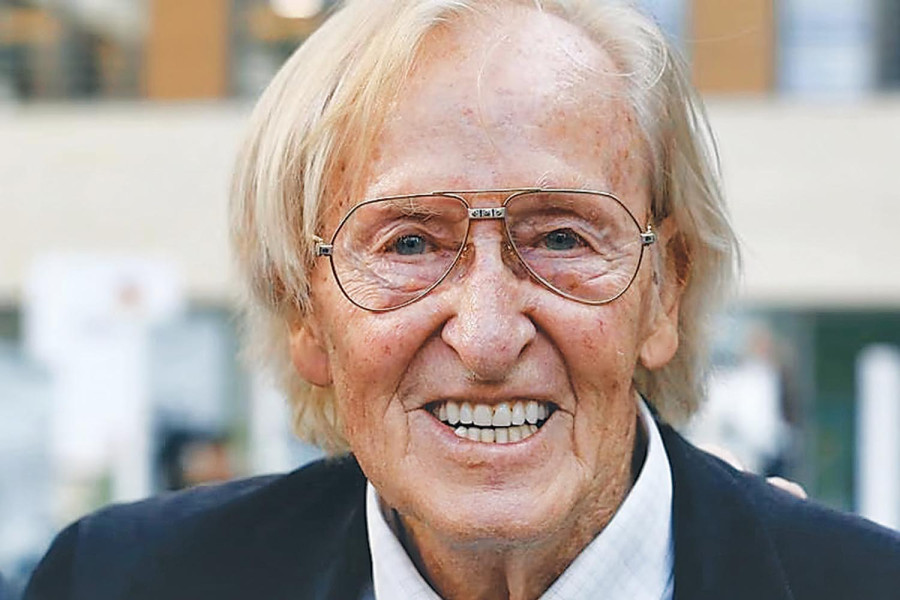
From world-renowned tacticians to rising managers, foreign coaches have found Nepal’s football bureaucracy a tougher opponent than any on the pitch. Germany’s Rudi Gutendorf, who coached Nepal in 1982, coached 55 teams in 32 countries across five continents and died aged 93 in 2019. Photo: Courtesy of UEFA
Around a month ago, Guglielmo Arena arrived at a café in Thamel in casual wear. He hadn’t been able to train with his players for a couple of months, sidelined by the escalating tussle between the All Nepal Football Association and the National Sports Council, which had ultimately triggered FIFA’s suspension on the national football governing body’s on June 24.
It was a casual coffee meet, nothing more. Arena—the Swiss-Italian coach who had signed a one-year contract on March 12—insisted on a caveat: “Whatever we discuss here, it’s not for the press.”
To Guli, the nickname Arena prefers, it was simply a conversation between brothers who shared a profound love for the game. Yet, his passion quickly got the better of his secrecy and he couldn’t help but map out his grand blueprint for the national squad. As it turned out, Guli was a disciple of Pep Guardiola. His ultimate dream was to inject that high-tempo, possession-based Guardiola philosophy into the veins of Nepali football. He was eagerly preparing the squad for the SAFF Championship when the hammer fell in Zurich and Nepali football got suspended on June 24.
Ultimately, Nepali fans never got to see Guli’s style take root. He led Nepal in just a single match—a 1-0 defeat to Laos on March 31, less than three weeks after he assumed the role. Despite the loss, Guli remained confident the team would turn a corner in time for the SAFF Championship. But with the suspension freezing the sport, Guli quietly returned to Italy for a family function and decided not to return.
Guli’s exit marks yet another abrupt, disappointing chapter in Nepal’s football history.
The story of a coach leaving prematurely is one Kathmandu has witnessed time and again. Although Nepal has competed in international football for just over four decades, the list of foreign managers brought in to save, modernise, or overhaul the national team runs long. To trace how Guli’s Pep Guardiola-inspired ambitions dissolved, one must examine the long line of foreign tacticians who came to Nepal with grand visions, only to be swallowed by the country’s endless administrative dysfunction.
Nepal’s international football journey is said to have begun officially at the 9th Asian Games, held at New Delhi in 1982. The men’s national team was then led by a legendary German named Rudi Gutendorf. Gutendorf was the biggest name Nepali football ever secured. He had coached clubs in the Bundesliga and over a dozen national teams—including Ghana, China, Australia and Chile. Gutendorf introduced Nepal to modern football; before his arrival, the only international football Nepalis knew was the regional style of India’s West Bengal.
Gutendorf’s arrival sparked a golden era of German influence. He was quickly succeeded by another German tactician, Jochen Figge, who achieved what had previously seemed impossible. Nepal scaled their first major international peak under Figge’s tutelage, clinching the historic inaugural men’s football gold medal at the 1984 South Asian Games on home soil.
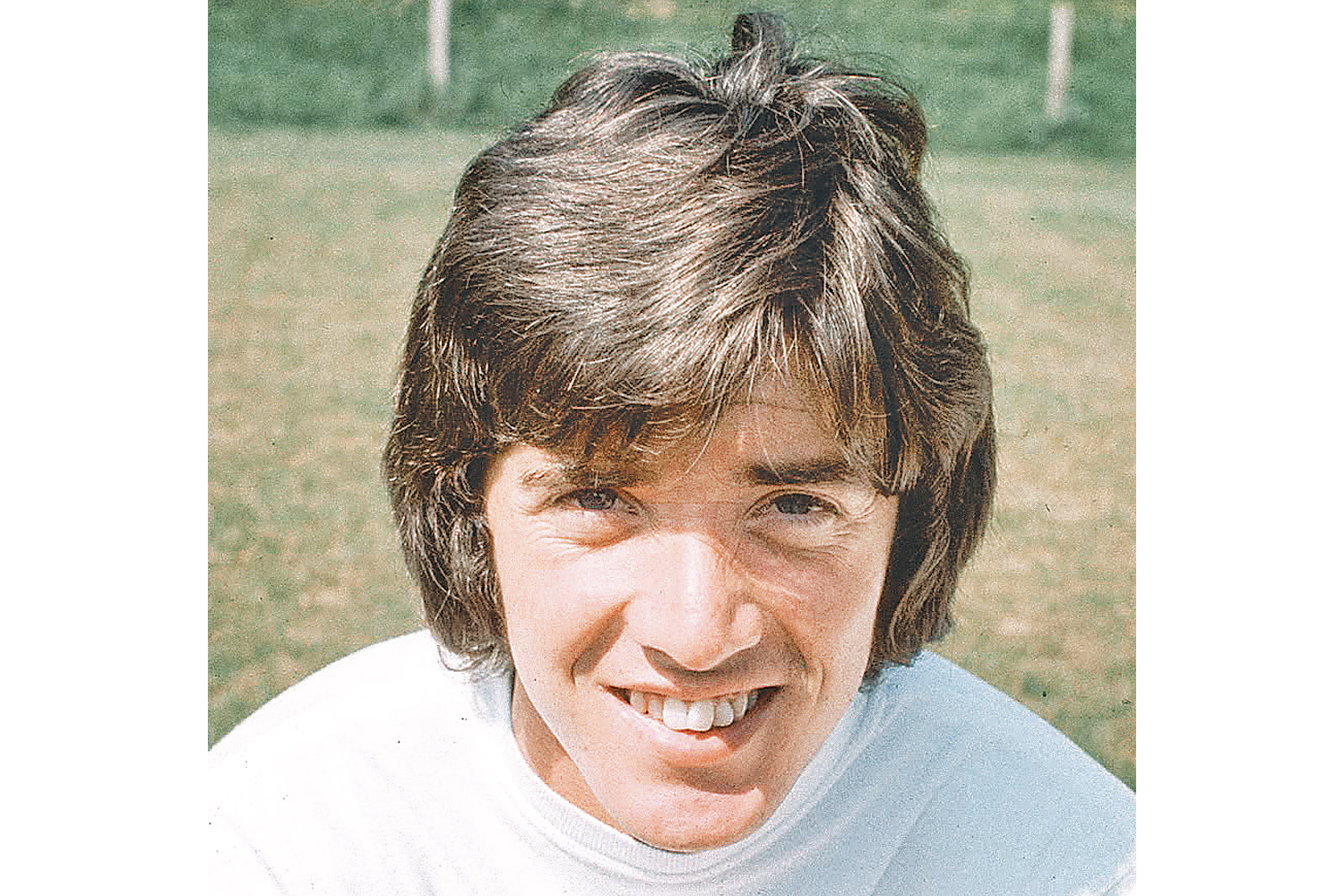
A year later, when Nepal played their first-ever World Cup qualification game, the head coach was the Irishman Joseph Patrick “Joe” Kinnear. Many argue that Nepal is yet to get a coach of Kinnear’s calibre and probably never will again. A former Tottenham Hotspur and Brighton player, Kinnear went on to manage English clubs like Luton Town, Nottingham Forest and Newcastle United.
A former Tottenham Hotspur and Brighton player, Joseph Patrick “Joe” Kinnear, who coached Nepal in 1985, went on to manage English clubs like Luton Town, Nottingham Forest and Newcastle United. He died aged 77 in 2014. Photo: Courtesy of Tottenham Hotspur
That same year, when Nepal participated in the 2nd South Asian Games in Dhaka, the head coach was Manilton Silva Santos. Santos is the only South American coach Nepal has ever had, and his appointment is a stuff of lore.
Santos, a former East Bengal FC midfielder, was still an active player in India’s club football scene when he came to Nepal to trial. Instead of a playing contract, ANFA awarded him the post of the head coach. He was so much a player at heart that he actively trained alongside his squad.
In 1987, Nepal appointed another German coach, Heinz-Jürgen Micheel. It was under him that Nepal played their first Olympic qualification. He was widely remembered as being more of a businessman than a coach. He was followed in 1989 by Reinhardt Fabisch, who oversaw the 1989 World Cup qualifying run as the last German coach from West Germany before the nation’s reunification.
Next came South Korea’s Yoo Kee-heung, a respected former national player who also managed the South Korean women’s team from 1999 to 2001. Kee-heung led Nepal to the 13th Asian Games in Bangkok in 1998. He was notoriously strict, subjecting players to extreme physical training and even resorting to physical discipline on the pitch. Off the field, he was remembered as an honest and deeply polite gentleman.
In 1999, Nepal got their first coach from a unified Germany in Torsten Frank Spittler for the SAFF Championship in Goa. He arrived quietly and vanished just as quickly. That same year, English coach Stephen Constantine arrived as Nepal hosted the 8th South Asian Games.
Constantine loved the spotlight and built an unprecedentedly warm relationship with the local press. He would later go on to manage Pakistan, India and Rwanda.
It was during Constantine’s tenure that the internal disputes of Nepali football reached their absolute peak. Ganesh Thapa led the FIFA-recognised ANFA, while a parallel, rebel ANFA led by Geeta Rana seized control of the ANFA Complex in Satdobato. Years later, Constantine returned to Nepal in unofficial capacities, always speaking of his Kathmandu days with immense fondness.
By 2005, a highly anticipated transition was underway when a fresh squad travelled to Karachi, Pakistan, for the 6th SAFF Championship. The squad was filled with the historic first graduate batch of the ANFA Academy, guided by Japan’s Toshihiko Shiozawa—the first Japanese coach to take the helm.
Shortly after, ahead of the 2006 AFC Challenge Cup, ANFA turned to Shyam Thapa. Whether one considered him Nepali or Indian was a matter of debate, but his singular focus was to elevate the technical standard of the game. His tenure ended in deep mutual frustration; only a small handful of journalists showed up to his farewell programme, where Thapa openly despaired over his inability to execute his vision.
Then came another German Thomas Flath in 2008. A credentialed coach associated with FC Schalke 04, Flath maintained a cold, professional distance from the local media. He led Nepal during the 2008 SAFF Championship, leaving behind one of the most famous quotes in the history of the domestic game: “I need players like a Mercedes, not a Maruti.”
If Flath was reserved, Graham Roberts—who joined in 2011—was loud, brash, and larger-than-life. As a player, the former Tottenham Hotspur captain possessed a legendary pedigree, having won the UEFA Cup in 1984 and the FA Cup in 1981 and 1982. Under his high-intensity leadership, Nepal played with a fierce physical edge, but Roberts’ demanding nature frequently put him at loggerheads with ANFA’s hierarchy.
In 2013, Nepal appointed Polish-American Jack Stefanowski. His tenure was later completely overshadowed by the dark cloud of the infamous match-fixing scandal that had quietly plagued the national team for years, though the details only emerged long after his departure.
By 2015, the reins were handed to Belgian Patrick Aussems for the SAFF Championship, setting up a fascinating tactical subplot against an Indian team managed by Constantine. But Aussems’ time was cut short by internal conflict within ANFA, which culminated in long-time president Ganesh Thapa receiving a definitive 10-year ban from FIFA’s ethics committee.
In 2016, Japan’s Koji Gyotoku took the reins. He guided Nepal to their historic first-ever AFC Solidarity Cup championship in Malaysia, defeating Macau 1-0 in the final.
By 2019, Sweden’s Johan Kalin took over, bringing tactical stability after a successful stint with Machhindra FC, though his tenure was cut short by the 2020 pandemic.
Then came the storm. In 2021, Kuwait’s Abdullah Almutairi was appointed head coach. The most polarising and dramatic figure in modern Nepali sports history, Almutairi was a social media sensation who thrived on attention. He guided a young squad to their first-ever SAFF Championship final in 2021, earning the Best Coach award at the NSJF Pulsar Sports Awards. In a characteristically defiant style, he noted: “The journalists and I never agreed on anything, yet they voted me the best.”
But Almutairi’s theatricality came with a high cost. He smoked incessantly and became the first coach in national history to trigger a full-scale player mutiny. Initially praised as a “father figure” by some Nepali players, his relationships soured so dramatically that he ended up taking a second-string squad of departmental players to the Asian Cup Qualifiers in Kuwait. Constantly locked in battles with ANFA, he made dramatic public spectacles, repeatedly threatening to resign on social media and claiming he needed personal security. He finally resigned in September 2022, after 525 days of chaos.
The coaching seat then became a literal carousel. Pradeep Humagain, a Nepali-American, took over as interim coach for a single friendly against Bangladesh in late 2022. His tenure was marked by defensive play and a rocky relationship with the press.
In March 2023, Italian Vincenzo Alberto Annese arrived, bringing high tactical expectations but departing after a year when his contract was not renewed.
By March 2025, ANFA brought in Australian Matt Ross. He arrived with grand goals of elevating Nepal’s FIFA rankings, but the reality of working with ANFA quickly caught up to him. Frustrated by deteriorating relationships and a lack of infrastructural changes, Ross resigned quietly and left the country midway through his contract, leaving the players in shock.
And that brings us right back to Guli. He arrived hoping to orchestrate a modern revolution in Nepali football, only to see his entire tenure frozen by a historic FIFA suspension before he could even hold a proper training session.
His quiet exit, following a solitary 1-0 defeat to Laos in Vientiane, serves as the perfect, tragic metaphor for forty years of Nepali football history. As he sat in that café in Thamel, cherishing a diet coke, his parting words served as a sobering epitaph for every foreign mind that has ever tried to tame the chaos of Nepali football: “I was never even given the chance to try.”




 23.39°C Kathmandu