



 13.27°C Kathmandu
Wed, Oct 28, 2026
Editorial
A single landslide has choked Kathmandu for weeks. Dependable backup routes must be built
The Prithvi Highway disruption underscores the need for dependable alternative routes.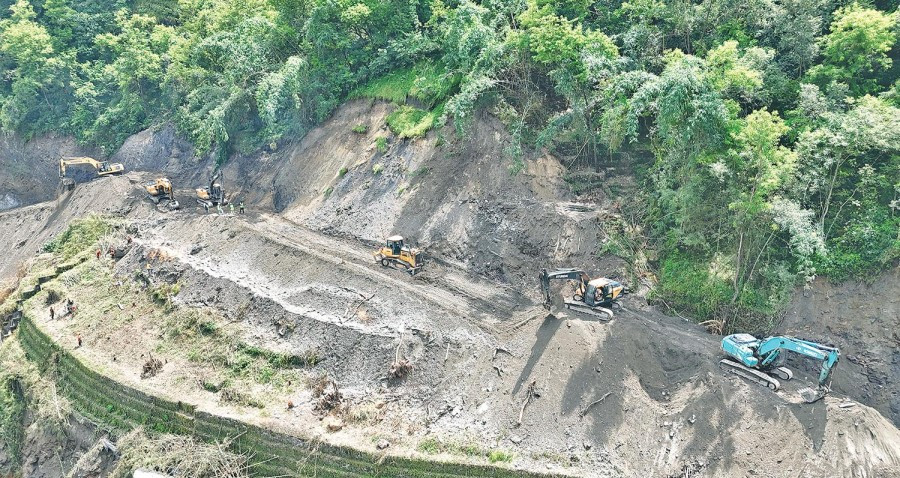
bookmark
Published at : September 15, 2026
Updated at : September 16, 2026 06:59
Two weeks. That is how long a single landslide has held Kathmandu’s lifeline hostage. On August 30, a stretch of Prithvi Highway in Krishnabhir area of Dhading collapsed into the adjoining Trishuli River, and the capital has been gasping for supplies, including cooking gas, ever since. Sharma JV, the contractor for the expansion and widening of the Muglin-Nagdhunga road section of the highway, which includes the Krishnabhir area, was directed to repair the collapsed road. The repair crews have laboured for a fortnight, yet two-way traffic remains a distant prospect. Sunday’s one-way trial eased the chokehold lightly, but it is not a definite solution.
On paper, three other highways connect the capital to the southern parts of the country. In practice, they are detours for smaller vehicles—motorcycles, cars and minibuses—adding extra hours to travel. For lorries, gas bullets and petroleum tankers, there is no alternative to Prithvi Highway.
The lack of proper connectivity has a cascading effect. Cooking gas, already scarce in the country, has grown scarcer still, forced onto a roundabout journey: cylinders filled in Tarai-Madhesh districts, loaded onto mini-trucks, and driven through routes never meant for the job. Commuters to and from the federal capital using alternative highways such as the Kanti Highway have to spend up to 10 hours travelling a distance of around 100 kilometres between Hetauda and Kathmandu, an otherwise brisk drive on a functioning highway. The BP Highway, which was an easier option for those travelling east, is being stitched back together after last year’s flood tore several kilometres out of it.
Every time it rains heavily in areas along the Prithvi Highway, landslides, minor or major, obstruct traffic for hours. Fragile mountains and difficult terrain are partly to blame, but the lack of adequate alternative routes makes the situation far worse. The obstruction of the Highway, therefore, is not a new story. What is new this time is the duration—hours and days have become weeks.
Nepal needs at least one more full-fledged highway connecting Kathmandu with the southern belt of the country, and one is technically already under construction. Since 2017, the Nepali Army has been constructing the Kathmandu-Tarai/Madhesh Expressway. Eight years since the national defence force took responsibility for its construction, less than half of the work is done. At the current crawl, it could take another decade to complete, even though the target is to finish it by March next year.
The longer the project takes to complete, the greater the difficulties the general public will face. Its construction cost will also continue to balloon. It is, therefore, necessary to complete the expressway as soon as possible. The government should allocate the necessary budget and take measures to clear any hurdles to its completion. At the same time, there should be simultaneous efforts to ensure that the Prithvi Highway does not fall into the same trap every time it rains heavily. Constructing a parallel road on the other side of the Trishuli River could be one option.
Disruptions in the lifelines connecting different parts of Nepal with Kathmandu should not become a recurring feature. For that to happen, the country needs not just roads, but reliable alternative highways that can keep essential supplies and people moving when one route fails. The current disruption should therefore be treated as a warning and an opportunity to build a more resilient road network before the next disaster exposes the same vulnerability again.

Most Read from Editorial

Editor's Picks

What to know about the US trial over Mamta Kafle’s disappearance
NPL returns with bigger ambitions and global recognition
What’s new in the Nepal Premier League’s third season?

After Nepal’s recent disaster, it wants to test whether COP31 can deliver climate justice

Why does an hour long flight to Dhangadhi cost more than a flight to New Delhi?
E-PAPER | October 28, 2026

×