After years of delay, Budhigandaki faces another change of plan
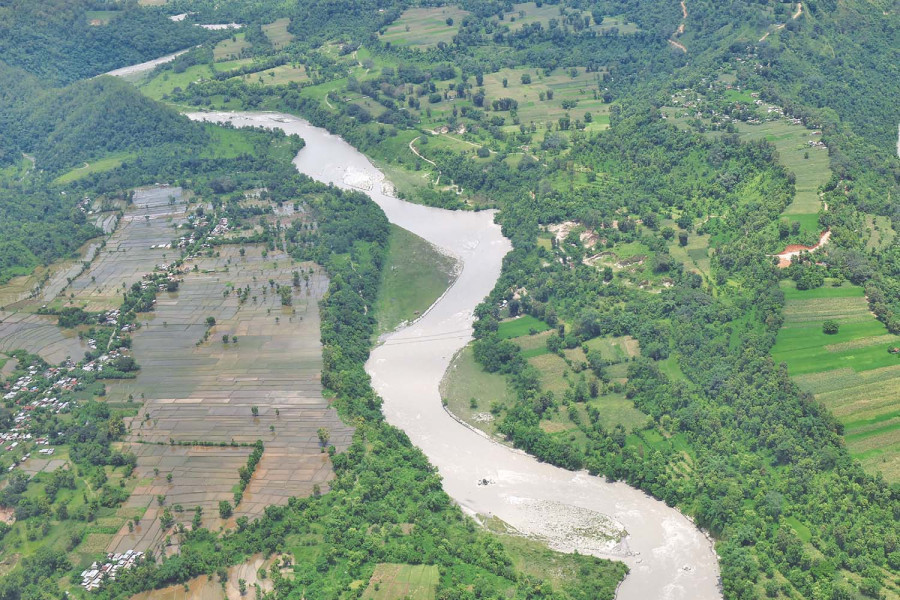
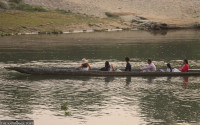
Successive governments have changed the project’s development models. Latest plan to set up an authority has raised new questions over implementation. Budhigandaki river flows through Gorkha in this undated photo. The 1200 MW reservoir-based project is expected to cost over Rs 400 billion. Post file photo
The 1,200-megawatt Budhigandaki Hydropower Project is once again facing uncertainty over how it will be built, as shifting government policies threaten to complicate a financing and implementation framework that had already been approved.
At its October 16 meeting, the Cabinet gave in-principle approval to draft the Budhigandaki Development Authority Bill, reopening the debate over the project’s development model.
In the budget for the current fiscal year, presented to Parliament on May 29, Finance Minister Swarnim Wagle announced that the project would be developed through an empowered authority. In the previous fiscal year’s budget, then finance minister Bishnu Paudel had proposed a public-private partnership (PPP) model. Repeated changes in approach with successive governments and annual budgets have left the national pride project without a settled implementation framework.
After the authority model was announced in the budget, former energy secretary Anup Upadhyay criticised the proposal in a post on X, arguing that an authority was not the way to build the project. He suggested that the government should count its spending on the project so far as equity and invite investment for the remaining amount.
Following the Cabinet’s approval to draft the bill, Upadhyay renewed his criticism, writing: “The government seems full of people who think they know it all. Now they’ve decided that the way to build Budhigandaki is to set up an authority. It’s like rubbing oil on your knee to cure a headache.”
The project was designated a national pride project in fiscal year 2012-13, with completion targeted by fiscal year 2026-27. According to the Office of the Auditor General’s 60th annual report, its initial estimated cost was Rs260 billion. Yet, with the target completion period approaching, the project has spent years without a clear and settled construction framework.
Officials at the Ministry of Energy, Water Resources and Irrigation say the government should not abandon an approved financing model and delay implementation by creating a new institutional structure.
“Once the financing model has been approved and the project has moved forward, it should not be held up again in the name of creating a new structure,” a ministry official said. “We urgently need reservoir-based hydropower projects to address winter energy shortages. Establishing an authority would take considerable time, from drafting the necessary laws to setting up the organisation, and would slow progress.”
The former interim government formed in September 2025 approved the project’s financial structure. Following Cabinet decisions on January 16 and February 24, the ministry formally instructed the project’s promoter, Budhigandaki Jalbidyut Company Limited, to proceed on March 23.
However, the first budget introduced by the government led by Prime Minister Balendra Shah subsequently announced that the project would be developed through an authority. Finance Minister Wagle made the proposal.
Arun Rajauria, chief executive officer of Budhigandaki Jalbidyut Company, said the company had begun preparing a draft of the bill following the Cabinet decision and would send it to the Ministry of Law, Justice and Parliamentary Affairs for consultation.
He maintained that the legislative process and the establishment of a new authority would not halt ongoing work or existing contracts.
“The authority bill can proceed, but contracts and construction work already under way will not be stopped,” Rajauria said. “Once the bill is passed and the new structure is established, all existing responsibilities and activities of the company will be transferred to the authority.”
He said the proposed legislation was intended to accommodate longer-term plans for integrated land development, infrastructure construction, and urban development.
Located on the border between Dhading and Gorkha districts, the project has an estimated base cost of $2.77 billion, equivalent to around Rs374 billion. Including Rs32 billion in interest during construction, the total cost is projected to reach Rs406 billion.
Under the financing model approved by the interim Cabinet, 70 percent of the total cost would be financed through debt and the remaining 30 percent through equity.
Budhigandaki Jalbidyut Company Ltd, the project’s promoter, is owned 80 percent by the Nepal government and the remaining 20 percent by the Nepal Electricity Authority. The plan envisages issuing shares to the public towards the final stages of construction or after completion, depending on the project’s financial indicators, to reduce its debt burden or restructure its shareholding.
Under the approved financing structure, the government would contribute Rs97.47 billion in equity and Rs150 billion in concessional loans, bringing its total commitment to Rs248 billion. The Rs46 billion the government has already spent, including on compensation, has been converted into equity in the company. The government must now secure an additional Rs228 billion in funding, according to the financing plan.
The Nepal Electricity Authority would contribute a further Rs24.37 billion in equity.
The remaining funds are expected to be raised through a combination of share issuance by the electricity authority, energy bonds, loans from banks and financial institutions, the use of infrastructure tax revenue, and investments from Nepalis working abroad and the general public.
Under the plan, the government would facilitate the issuance of Rs30 billion in energy bonds eligible for inclusion in the statutory liquidity ratio (SLR). Banks, insurance companies and public funds would be able to purchase the bonds.
The remaining Rs104 billion in debt would be mobilised through a consortium of the Employees Provident Fund, Citizen Investment Trust, Social Security Fund, Hydroelectricity Investment and Development Company Ltd (HIDCL), Nepal Telecom and commercial banks.




 13.03°C Kathmandu