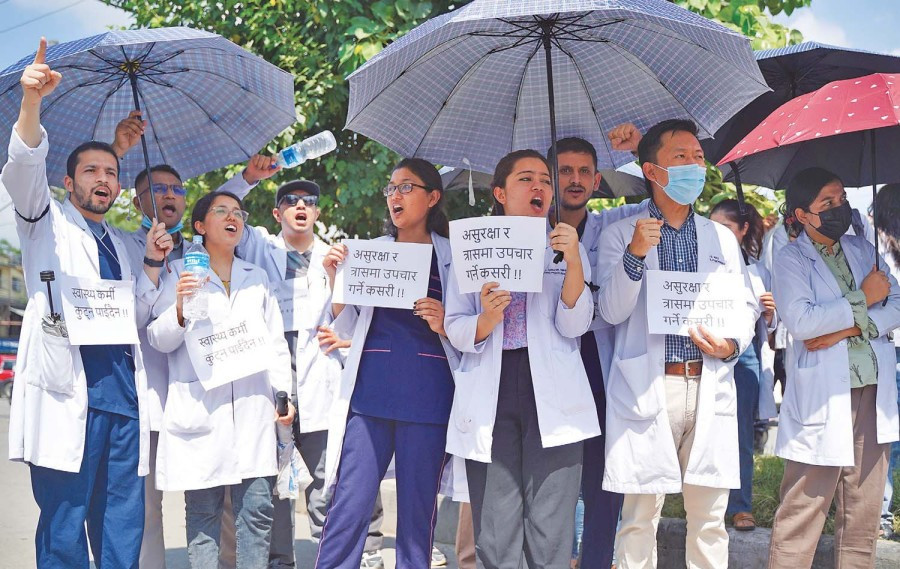
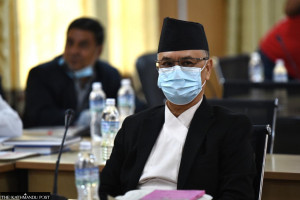
On Saturday, Dr Pramod Ram, a doctor at Narayani Hospital in Birgunj, was assaulted by relatives of a 45-year-old patient who died while undergoing treatment in the hospital’s emergency ward. The attackers also vandalised hospital property and threatened other health workers. The incident prompted the hospital to suspend services, with all staff resigning en masse in protest.
The Nepal Medical Association, an umbrella organisation of medical and dental doctors, supported the protest by halting all non-emergency health services nationwide. While the strike was withdrawn on Wednesday evening, hundreds of thousands of patients were already deprived of medical care on Tuesday and Wednesday. Patients ultimately bear the brunt of such disruptions. Those who reached hospitals and health centres after travelling long distances are forced to return without treatment. People from low-income backgrounds, many of whom have to take loans or borrow money even to afford medical expenses, are hit the hardest.
Ceasing health services, therefore, cannot be justified under any circumstances. Hundreds of thousands of patients cannot be penalised for the wrongdoing of a few individuals. Moreover, suspending health services is illegal. The Health Service Act categorically recognises medical services as essential services that cannot be halted. Similarly, the Public Health Service Act states that no citizen shall be deprived of health services. By suspending essential services, the association has not only increased the hardships faced by patients but has also challenged the legal provisions governing healthcare delivery.
This, however, does not mean that attacks and threats against doctors and health workers should be overlooked. Physical assaults on medical professionals are criminal acts that require immediate legal action. The fact that around 90 incidents of physical attacks and assaults against health workers have taken place within a period of just 10 months highlights the urgency of the issue and demands swift intervention.
Ensuring proper security arrangements in the health sector must be a top priority for the government. Doctors and health workers are there to save and treat patients, not to harm them. Patients and their relatives, therefore, need to have faith in them. However, negligence on the part of doctors and health workers cannot be ruled out. There are bodies responsible for investigating such cases and taking appropriate action. Manhandling doctors and health workers is not the solution. In several instances, the compulsion for junior staff to handle complicated cases, coupled with inadequate resources, has led to unwanted treatment outcomes. It is the state that needs to address these shortcomings.
Medical facilities should be a safe space for doctors and health workers to work, while patients also have the right to receive proper treatment. Both can go hand in hand. Ensuring uninterrupted health services, strengthening security, and holding attackers accountable are of utmost importance. The situation in which health professionals have to work in constant fear, and health services are disrupted under any pretext, should end once and for all.




 15.26°C Kathmandu