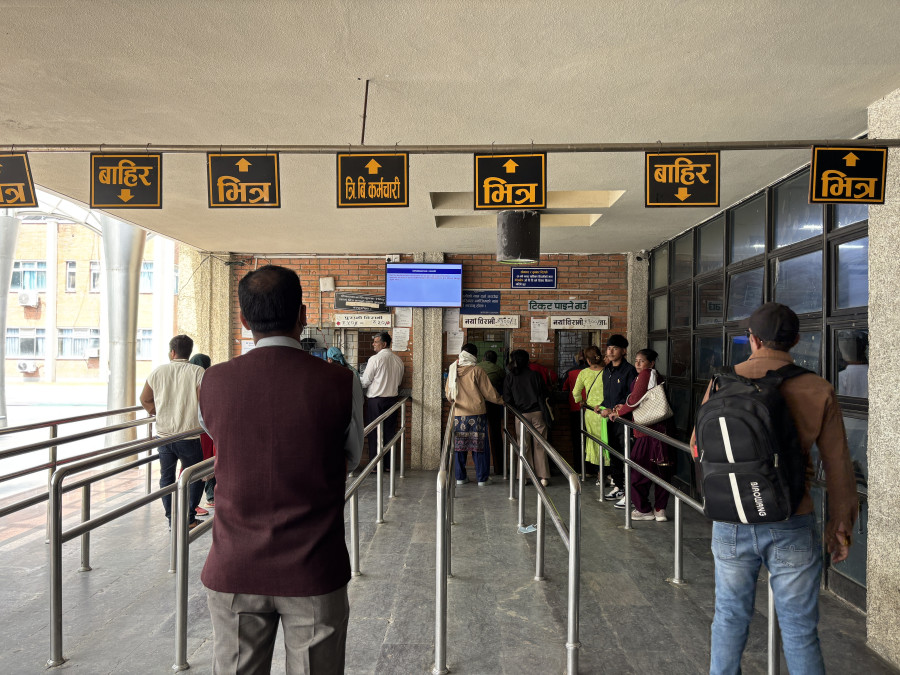
Nepal’s healthcare system has long been under pressure, with overcrowded outpatient departments and overburdened medical staff. Long queues at the state-owned hospitals are a daily reality. Poor patients have no other option but to wait for years to get their surgeries done. Those travelling from far-flung areas to the federal capital for check-ups are doubly burdened as they have to foot medical bills as well as cover accommodation costs.
When Balendra Shah took the oath of office following the March 5 elections, calls for healthcare sector reform heightened. In its 100-point Governance Reform Agenda, the new government included a ‘six-point health sector reform’ plan. This was a welcome move. But soon after the government decided to give public holidays on both Saturdays and Sundays—with a 9 am to 5 pm shift on weekdays, in response to the global fuel crisis caused by the conflict in West Asia—state-run hospitals decided to comply. Following criticism, the Health Ministry instructed the Nepal Medical Association, the umbrella organisation of doctors, to operate services on Sundays; however, the association, citing a lack of manpower in hospitals, didn’t agree. Meanwhile, the patients’ situation in these hospitals is getting dire.
The policy disproportionately affects the poor who solely rely on state-run hospitals, especially for their surgery, among other regular services. Unlike rich folks who can afford to go to private hospitals, poor people are left wondering how many more months they will have to wait. Even though emergency surgeries and care are addressed immediately, patients with non-emergency surgeries generally face long queues. For instance, in normal times, to undergo urology surgery, you have to wait for up to a year; you have to wait two months for neurosurgery; six months for ear, nose and throat surgery; and two to six months for other surgeries. Separately, the waiting time for an MRI is at least 90 days, three days for an ultrasound, and one to 15 days for a CT scan.
In such a scenario, reducing working days will further squeeze the massive crowds into fewer days and further prolong waiting times for surgeries. While the introduction of the two-day weekend is understandable, rooted in economic necessity and with an intent to provide relief to overworked medical personnel, closing hospitals without enough homework goes against people’s fundamental right to access hassle-free care. Unlike administrative services, hospitals deal with matters of life and death. Even non-emergency services involve procedures that are vital to the quality of life and to preventing further damage to one’s health.
The government must adopt a balanced approach. First, it can arrange for patients to visit local or provincial hospitals for minor surgeries by providing the necessary manpower and infrastructure. This can relieve pressure on central hospitals, such as Bir Hospital or Tribhuvan University Teaching Hospital. To clear the backlog, hospitals should follow the Health Ministry’s directive to reschedule surgeries based on patients’ convenience rather to ensure that those who travel to the capital from other provinces and districts for complex surgeries get proper attention. If the two-day weekend policy remains unchanged and no additional measures are taken to ensure affordable healthcare for everyone, inequality will deepen, hospitals will be further strained, and public trust in the very institutions meant to safeguard people’s health will erode.




 14.69°C Kathmandu