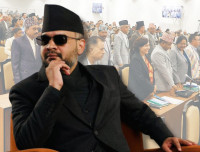
Last month, the government appointed Vice Chancellors (VCs) at seven universities from among the names recommended by the Universities Vice Chancellors Selection and Recommendation Committee. In the second round, the government recently appointed the VC of Kathmandu University (KU). Before that, in May, the government dismissed the existing VCs of those universities along with more than 1,500 officials from various public entities through the ordinance on special provisions relating to the removal of public officials. This appears to align with the ruling Rastriya Swatantra Party’s (RSP) pre-election commitment to reforming and depoliticising educational institutions.
A closer examination of VC appointments reveals that the government has largely followed the same non-transparent pattern as its predecessors. Neither has the UVCSRC publicly disclosed the selection process details, nor has it made the merit scores of the shortlisted candidates available. Moreover, the fact that the Education Minister himself chaired the selection committee has raised questions regarding the transparency and perceived impartiality of the appointment process. On top of that, the academic qualifications and professional experience of some of the members of the VC selection committee were inadequate for evaluating and selecting candidates for the academic and administrative leadership of the universities.
Most of the appointed VCs are known and tested academicians who have held leadership positions at various universities in the past. Some were even blatantly labelled as supporters of certain political parties during their previous academic tenures. Hence, the current VC appointment process is not particularly encouraging, as the selection process appears to have been guided once again by political favouritism rather than merit.
This is further supported by the fact that six of the eight VCs appointed have an h-index below 20—a relatively modest academic metric that reflects both an academician’s scholarly productivity and the citation impact of their publications. International standards show that a VC—the academic and administrative head of a university—should be academically sound, with a high h-index. Although this is not an absolute requirement, many universities prefer an academician with high scholarly productivity and good citation impact.
With a non-transparent selection procedure, it can be suspected that the government and the ruling party might have influenced the selection process of VCs. This is supported by a statement of RSP’s then General Secretary Kabindra Burlakoti that an individual who has supported RSP would receive one additional point on top of their meritocracy score. Moreover, the newly appointed VC at TU, Professor Bhola Thapa, during a television interview, conveyed that he is waiting for the direction of the government to appoint the other vacant lead positions at TU—an indirect confession hinting towards political favouritism. Furthermore, TU’s autonomy seems to be breached by Professor Thapa’s recent statement that an intervention from the Ministry of Education and Sports and the University Grants Commission is required to mend the disarrayed system of the university.
The government had vowed to depoliticise the academic institutions, and hence, the persistent student unions were barred from functioning in universities, saying that educational institutions should not serve as instruments of political parties. This is, indeed, a welcome move and an ideal step towards alienating universities from partisan politics.
However, the existing provision of the Prime Minister and Education Minister being Chancellor and Co-Chancellor, respectively, has not yet been abolished. Political office-bearers at the highest administrative level of universities automatically bring political influence. In fact, this practice may be more detrimental to university governance than the influence of student unions. Therefore, if the goal of the government is to depoliticise universities, the provisions that designate political officeholders as Chancellors and Co-chancellors should be abolished. In their place, an independent board of trustees comprising distinguished academics and respected public figures should be established to oversee university governance.
The VC selection modality at the universities and academic institutes also needs a comprehensive overhaul. Instead of the existing provision of forming a UVCSRC under the prime minister’s directives, an impartial and apolitical academic committee should be formed to transparently evaluate the academic credentials and scientific achievements of aspiring internal and external candidates, preferably through machine-learning algorithms. The short-listed candidates selected through this automated process should be invited to present their vision before all faculty, teaching staff, invited reputed faculty from other universities and student representatives. The audience should be given the opportunity to evaluate the presentations of the aspirant candidates by assigning numerical scores. Subsequently, the candidate with the highest score should be appointed as the VC, provided that the presented vision of the candidate is implemented during his/her tenure.
Such an automated selection process would eliminate much of the controversy surrounding VC appointments by ensuring a transparent, objective and merit-based evaluation of candidates. This would increase the likelihood that each university is led by a capable leader with a clear academic vision. To ensure accountability, an independent supervisory committee composed of distinguished academics should be established to monitor the university’s progress against the strategic vision presented by the appointed VC. This model will help in insulating higher education institutions from partisan political influence.
Despite the odds, the government has now appointed VCs to universities and other academic institutions. The non-transparent VC selection procedure blatantly hints at political favouritism over meritocracy. Now, it is the responsibility of the appointed individuals to justify their selection through their performance and demonstrate that they were chosen based on merit and capability. Subsequently, the government should immediately distance the universities from partisan politics by reverting the provision of political office-bearers being the Chancellors and Co-chancellors of the universities and other academic institutions.




 15.26°C Kathmandu