



 26.19°C Kathmandu

Tue, Sep 29, 2026
Columns
Think Nepali football is dead? Think again
Many observers concluded that Nepali football had hit rock bottom. But it is very much alive and kicking.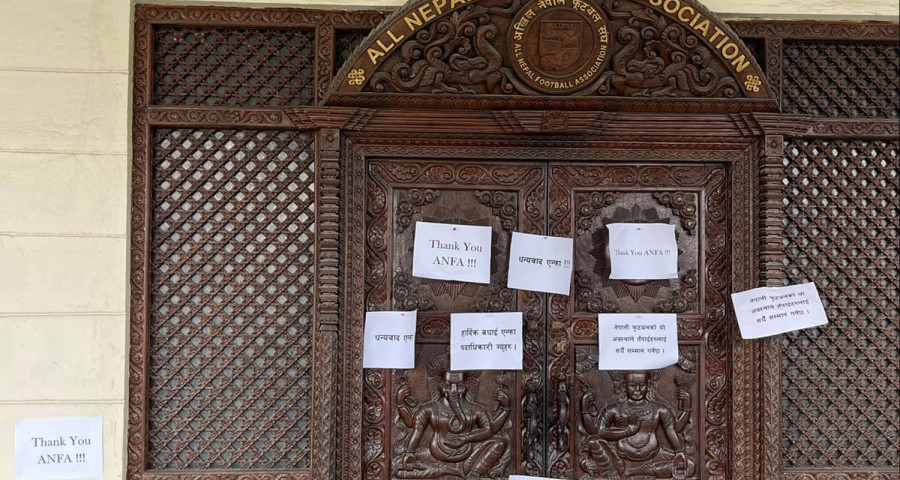
bookmark
Biplav Gautam
Published at : July 4, 2026
Updated at : July 4, 2026 22:14
Last week, Nepali football supporters received some unwelcome news. FIFA, the governing body of international football, suspended the All Nepal Football Association (ANFA) following disputes involving government interference and election-related matters.
Understandably, there was deep concern and outrage across the Nepali football community. News outlets were filled with alarming headlines, social media exploded with criticism, and many observers concluded that Nepali football had hit rock bottom. Some even suggested it was already on its funeral pyre.
But Nepali football is very much alive and kicking. This may sound like a strange statement at a time when Nepal’s men’s league football has faced prolonged disruption, the national teams have been unable to play home matches, tournaments have been suspended mid-competition, and FIFA sanctions now threaten funding and international participation.
These are serious issues. They should not be minimised. But they should also not be confused with the health of football itself.
Debates around Nepali football are rarely simple. Most voices calling for change care deeply about the game and have contributed significantly to it. At the same time, many stakeholders inevitably have their own interests, ambitions and historical baggage. As a result, the conversation often becomes focused on personalities, positions and power struggles rather than on the broader state of the game.
And that broader picture tells a different story. While the suspension of ANFA is undoubtedly serious and carries significant consequences for the administration of the game, it is important to remember that Nepali football itself has not been suspended. Football in Nepal continues to be played, watched, discussed and enjoyed every single day by people across the country.
The hundreds of futsal and indoor football facilities throughout the nation remain open. Children are still playing in gullies and open spaces. Friends are still organising evening kickabouts after work. Families are still gathering to watch World Cup matches. Arguments about Messi versus Ronaldo continue to dominate conversations. School tournaments continue to attract participants and spectators. Youngsters continue to spend countless hours playing eFootball and FC Mobile on their gadgets. An ever-growing number of content creators are producing football podcasts, videos, analysis and commentary.
None of this has stopped.
Football is far bigger than any one institution, and that reality became even clearer to me during a recent visit to Biratnagar.
Near the banks of the Singiya River, I watched youngsters from Biratnagar Sports Academy training with tremendous enthusiasm. Later that evening, a veterans’ tournament was taking place at a local futsal venue. The following afternoon, children were competing in a school tournament at the same facility.
Youth football in the morning. School football in the afternoon. Veterans’ football in the evening. I was witnessing a football ecosystem active throughout the day.
Across Nepal, participation in football has expanded dramatically. It is generally accepted that there are now close to 300 futsal and indoor football facilities across the country. These venues have become community hubs, creating spaces where people of all ages can play regularly regardless of weather or competitive level.
My own son trains at a sports hub in Kathmandu, where dedicated coaches work with him and dozens of other young players every week. Around 700 people participate in football and futsal activities there weekly. Extrapolated over the course of a year, that likely translates into thousands of unique participants engaging with the game through just one centre.
Likewise, youth development-focused clubs have grown into networks serving hundreds of young players across multiple centres while creating employment opportunities for coaches and football educators. Similar initiatives are emerging throughout the country. In fact, all you need to do is search ‘football academy’ on TikTok and start scrolling to see how widespread grassroots football development has become.
The recent launch of the Nepal School Football League (NSFL) is another encouraging development. For decades, the football pathway in Nepal was often viewed through a narrow lens that saw professional football or the national team as the only meaningful destinations. The reality is that football can offer much more than that. School competitions, grassroots academies, coaching, refereeing, content creation, sports management, and recreational participation all form part of a healthy football ecosystem. The NSFL gives young players a new competition to aspire to win. In fact, over lunch recently, a friend told me he was considering transferring his football-obsessed son to a school that participates in the NSFL.
Let’s celebrate something that is often overlooked—Nepal is genuinely a football-loving country. There are supporters’ clubs for most major European teams. Restaurants and sports bars are decorated with World Cup banners and memorabilia. Major matches are widely accessible through television and streaming platforms. Whether in Kathmandu, Biratnagar, Pokhara, Dharan, or countless smaller urban centres, football remains a shared passion. This football culture is not universal, and it is something worth appreciating.
These developments may not generate the same headlines as ANFA politics or national team controversies, but they are arguably far more important indicators of the long-term health of the game.
Professional football and the national teams are important, but they represent only one part of the Nepali football ecosystem. The number of people directly affected at the elite level is measured in hundreds. The number of people who play, coach, volunteer, support, and enjoy football across Nepal is measured in hundreds of thousands, if not millions.
We should absolutely work to resolve the governance issues that have led us to this point. But while we do so, we should not lose sight of the reality that football continues to thrive in countless ways across Nepal and remains its most popular sport. Nepali football is certainly not on life support; it is a game that remains very much alive and kicking.
Biplav Gautam
Gautam is an international sports business and development specialist who remains actively involved in Nepali football. He has previously held roles with Machhindra FC and the Asian Football Confederation (AFC), and is a graduate of the FIFA Master programme.
.jpg&w=200&height=120)
Most Read from Columns
Editor's Picks
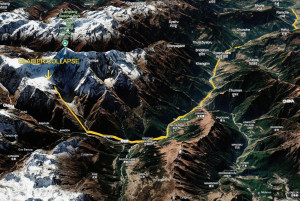
What triggered the Rasuwa flood? Scientists piece together a complex chain of events
The floods keep coming. Nepal keeps starting over
In a settlement destroyed by the Bhotekoshi flood, a disabled couple offer strangers the little they have
Nepal working on detailed assessment as Bhotekoshi flood reconstruction could cost up to $5 billion

Rabindra Dhant gave Nepal a reason to smile. Now his camp wants real action behind the praise
E-PAPER | September 29, 2026

×