



 14.69°C Kathmandu

Sat, Oct 24, 2026
Columns
Constitutional reform, not amendment
Amendment changes what the Constitution says, whereas reform seeks to improve how the constitutional system works and how the constitutional morality or spirit underlying its provisions is upheld in their implementation.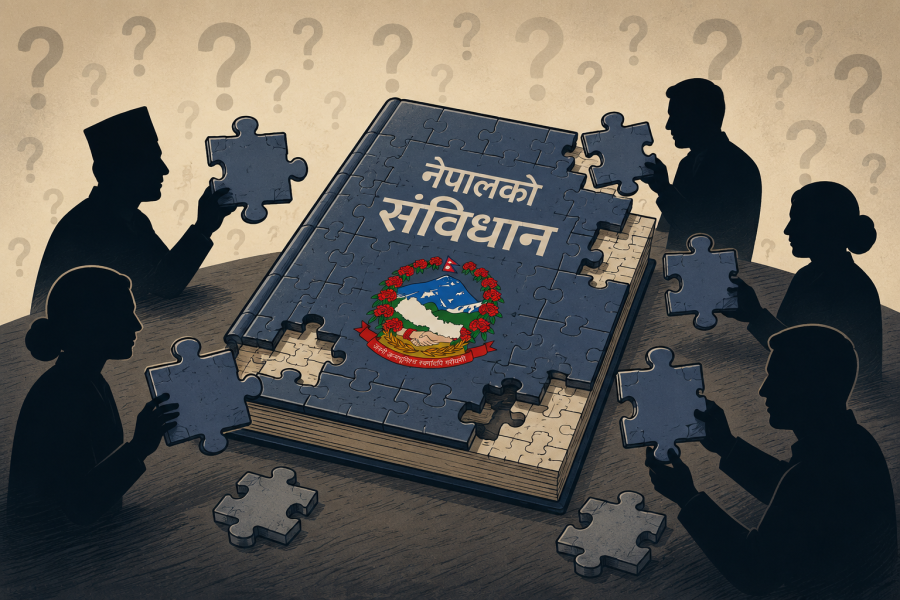
bookmark
Raju Prasad Chapagai
Published at : July 1, 2026
Updated at : July 1, 2026 23:25
What should be the path that best serves our constitutional democracy? This is, in fact, a pertinent question that deserves a well-thought-out answer.
The Government of Nepal has created a committee to prepare a discussion paper on constitutional amendment. The committee seems to have consulted selected groups and individuals and invited public opinion. On the other hand, the outcome of the RSP’s first General Assembly, held in Chitwan, signals predetermined positions on several fundamental constitutional issues, including the federal system and the form of government. As indicated in the resolutions endorsed by the Assembly, the RSP seeks, among other changes, the abolition of the provincial assemblies and the replacement of the parliamentary system with a directly elected executive. These are among the most politically sensitive issues in the present context.
Such a development gives the impression that consultations are being treated as a formality rather than as offering a genuine opportunity to shape constitutional choices and foster wider public ownership. The RSP’s approach also falls short in view of the consultative spirit reflected in the mandate agreement reached between the Gen Z protesters and the Government last year, which envisaged an inclusive and independent constitutional review process.
The real question, therefore, is how we should approach constitutional change.
The term ‘constitutional amendment’ shouldn’t be confused with ‘constitutional reform’. Constitutional reform is a broad-based process of improving or strengthening the ‘constitutional system as a whole’. By contrast, constitutional amendment is only one element of the broader reform process that may also involve genuine implementation, progressive constitutional interpretation, legislative reform, institutional restructuring and strengthening, changes in constitutional and administrative practice, and the deepening of democratic culture.
While constitutional amendment changes what the Constitution says, constitutional reform seeks to improve how the constitutional system works and how the constitutional morality or spirit underlying its provisions is upheld in their implementation. The idea of parliamentary review reflected in Article 265 of the Constitution also indicates the intent of the Constituent Assembly towards constitutional reform. Although the concept of ‘review’ is limited to the ‘other commissions’ under Chapter 27, it indicates that any constitutional amendment should follow the outcome of a thorough review of how the constitutional provisions have operated in practice. This difference is worth considering in our context.
Even a decade after the promulgation of the Constitution, Nepal has faced several difficulties in implementing it. Citizens have expressed dissatisfaction regarding, among other things, the exercise of executive power, parliamentary performance, the implementation of federalism, the performance of constitutional bodies, the application of the representation system, service delivery and the protection of economic and social rights.
These drawbacks were not necessarily caused by flaws inherent in the Constitution. Many of them, no doubt, stem from delayed or lethargic implementation, weak institutions, ineffective checks and balances, legislative gaps, poor intergovernmental and intra-governmental coordination and cooperation, infighting within major political parties, ineffective constitutional adjudication, corruption and poor governance. Rewriting constitutional provisions cannot, by itself, cure these problems.
Before advancing the agenda for constitutional amendment, we should first seek an answer to a more fundamental question: Why has constitutional implementation fallen short? Only the careful, independent and evidence-based review tells us whether a particular problem results from deficiencies in constitutional design or from shortcomings in implementation. Many problems can be addressed through faithful implementation of existing constitutional promises.
If employed well, a holistic approach enables us to understand what has worked, what has not worked, why implementation has succeeded or failed, and what combination of legal, institutional and constitutional measures is required to strengthen democratic governance. It thereby ensures that the constitutional reform is inherently more deliberative and evidence-based. It doesn’t leave room for the perception that the amendment is being pursued selectively to serve vested political interests.
Plain compliance with amendment procedures spelt out in the constitution with a two-thirds parliamentary majority may satisfy constitutional legality, but they do not automatically ensure democratic legitimacy.
Meaningful public participation, broad-based political consultation and consensus, along with inclusive deliberation and public ownership of the reform process, all feed participatory constitutionalism. It’s faulty to assume that Constitutions derive their authority from parliamentary arithmetic. They derive it instead from the confidence of the people and from how their collective aspirations are embodied.
For that reason, we should divert the ongoing debate towards a comprehensive constitutional review, instead of opening Pandora’s box for predetermined amendment proposals. And, honestly speaking, a constitutional review of the Constitution’s first decade of implementation in a holistic way is highly desirable. It objectively evaluates institutional performance, federal practice, judicial interpretation, legislative adequacy, constitutional commissions, governance practices, rights implementation, intra-party democracy and the overall functioning of constitutional institutions. The review can tell us what has worked—the Constitution’s achievements so far and also where it has fallen short. More importantly, it can distinguish failures that come from constitutional design from those that actually arise from political practice.
Only after such a review has been completed should questions about a constitutional amendment be considered. Proper sequence matters here. A review of how the Constitution has been implemented should be followed by a broad spectrum of reforms, not the other way around.
This is not some unfamiliar democratic practice. A number of constitutional democracies periodically look at how their constitutions operate before deciding whether an amendment is required. South Africa offers a helpful example in which parliamentary review of constitutional implementation has been carried out through a Joint Committee. It uses transparent procedures, invites public submissions, holds hearings and weighs expert opinion before recommending constitutional amendments.
India went with a somewhat comparable direction, through the National Commission to Review the Working of the Constitution, after about five decades of constitutional experience. First, the Commission looked at how the Constitution actually worked day to day in practice. Then it mapped out the reforms required to support.
The takeaway for us is pretty plain; mature constitutional democracies depend on constitutional review, and they avoid politically designed constitutional amendments that seem predetermined before independent inquiry. A credible constitutional review should be guided by rational thinking and principles. It ought to start from a presumption in favour of constitutional continuity rather than constitutional disruption. It should, in a practical sense, point out what the Constitution has achieved, and then recommend specific steps to strengthen those achievements.
Equally, it should look at implementation failures in an objective way and ask what really caused them. It also needs to separate governance failures from constitutional deficiencies. A constitutional amendment should be proposed only when careful review shows that the constitutional text is truly flawed.
Most important of all, any amendment must strengthen the constitutional settlement reached through the Constituent Assembly process a decade ago, rather than reopen it. That settlement was also adopted as part of the Comprehensive Peace Agreement that ended the decade-long armed conflict.
The Constitution was not adopted by accident; it was agreed upon to deal with the structural causes of conflict, exclusion and instability. Constitutional reform should, therefore, deepen that settlement, not turn it into yet another place for political rivalry or social and political conflict. This spirit of preserving the constitutional achievements secured so far has also been reflected in the Gen Z–Government agreement.
If we don’t learn from the part and shift the blame towards the Constitution for problems actually created by political actors, it shall only drag us into a vicious cycle of conflict and we will end up repeating the same mistakes. Weak governance, questionable leadership, inadequate implementation and the absence of a democratic culture cannot always be fixed by rewriting constitutional provisions.
As Nepal completed a decade of constitutional implementation, we witnessed an unprecedented Gen Z movement; the following election resulted in the RSP’s absolute majority in the House of Representatives. This is definitely an opportune moment for thoughtful constitutional reflection. A thorough and independent constitutional review to pave the way for broad-based constitutional reform is both natural and desirable. The constitutional amendment rooted in the outcome of an independent, participatory and evidence-based review process will garner lasting legitimacy.
Raju Prasad Chapagai
Chapagai is a lawyer with a concentration on constitutional and human rights law.





Most Read from Columns





Editor's Picks





E-PAPER | October 24, 2026

×