



 18.34°C Kathmandu

Sat, Oct 24, 2026
Columns
The bartering of BP’s soul
To restore the party to its historic glory, Gagan Thapa’s mission cannot be just organisational; it must also be existential.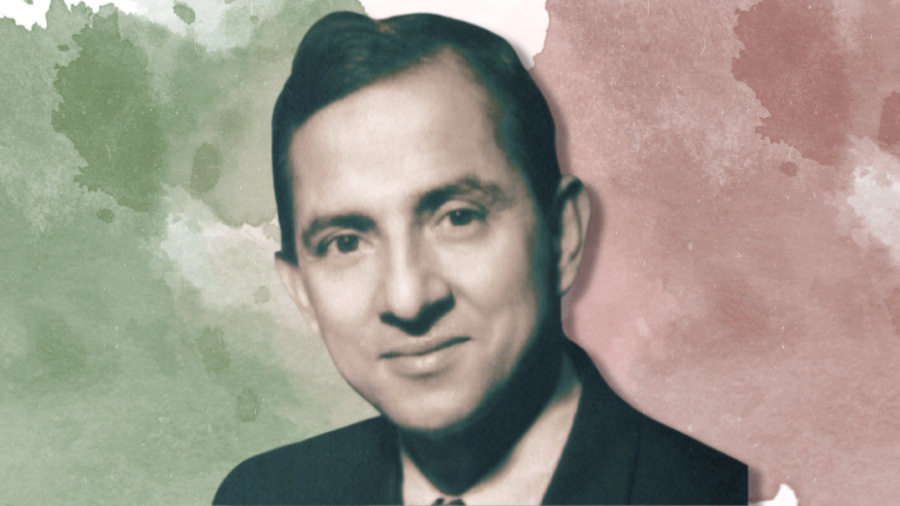
bookmark
Sucheta Pyakuryal
Published at : June 17, 2026
Updated at : June 18, 2026 21:09
Only a handful of homes in Kathmandu opened their doors to Kangressis during the late 1970s, offering them a space to deliberate. From as early as 7 am, they would congregate. Some would bring books worn thin from constant circulation; others carried notebooks scribbled with revolutionary ideas. Their conversations were loud, spirited, opinionated, and, at times, even brash, yet they were all rooted in the Nepali Congress’s core ideals of social democracy, which served as the lens through which they perceived their socio-political and economic realities. Regardless of disagreements, there was a strong sense of fraternity, though occasional political Judases managed to infiltrate these morning congregations to spy for the Palace.
The era was fraught with tension as the Nepali Congress witnessed a division between those who supported BP Koirala’s call for ‘national reconciliation’ and those who resisted it. Against the backdrop of Sikkim’s annexation and the bifurcation of Pakistan, BP faced intense and untoward pressure from the Indian government during his exile. It was under these circumstances in 1976 that he articulated his stance on reconciliation with the King. BP issued a tacit warning, framed as national reconciliation, which cautioned that an annexed or destabilised Nepal would serve no one’s interests. At the time, the state was deeply fragmented between a feudal class that held the monarchy in reverence and Kangressi dissenters who remained fundamentally distrustful of the King.
The 1960 royal coup had dismantled a year-old democratically elected government, spread lies about BP’s supposed pro-China tilt among the international community, orchestrated the defection of Bishwa Bandhu Thapa and Tulsi Giri from Nepali Congress, imprisoned BP and suspended the constitution. All this left a deep scar in the democrats’ psyche and, therefore, it was only natural for at least some of them to be sceptical about BP’s call for national reconciliation. National reconciliation was a strategy motivated by regional realpolitik. What appeared as an extension of an olive branch to the King was, in fact, a warning to a divided nation to unite in the face of an impending regional danger. At the same time, specific warnings of BP are now being used by democratic defectors to advocate for the return of monarchy.
At that time, however, the main reason behind the discord between the pro-monarchist group and the democrats was the feudal structure and whether it should be sustained or dismantled. BP’s aversion to the hereditary feudal structure is profoundly reflected in Atmabritanta. His definition of the concept of traditional muluk, and how its hereditary rulers who owned the land also owned the people of that land, demonstrated his strong inclination towards free and dignified citizenship. It also captures his rejection of political subjugation under hereditary patrons. His stand against the Birta system was the core of his political philosophy that aimed to dismantle the feudal aristocracy, in which land as capital was concentrated in the hands of the few.
By 1952, Nepal’s agrarian crisis was exposed by a United Nations report, which highlighted that one-fourth of Nepal’s cultivable land was classified as Birta, in which massive tracts of land were granted to feudal elites who were exempt from taxation. It pointed out that the remaining cultivable land was owned by the landed class. Rents extracted by this class routinely consumed up to 50 percent of the crop harvested by poor, illiterate peasants who were frequently subjected to forced, unpaid labour. In this backdrop, the land reform that BP envisioned was adopted by the Nepali Congress government as its most important policy initiative.
For the then Kangressis led by BP, preserving Nepal’s feudal architecture was fundamentally incompatible with the tenets of democratic socialism. There was this unanimous understanding among the educated and progressive Kangressis that as long as the majority in Nepal were economically suppressed through land ownership, Nepal could not develop as a modern state. Land reform was the most important, if not the only, strategy to acquire social and economic justice for BP and his followers at that time.
BP’s overarching mission was to liberate ordinary peasants from acute socio-economic exploitation. His commitment to the agrarian underclass was so profound that at the start of his tenure as the prime minister, he suggested that alongside the portraits of the King and Queen in the National Planning Commission, an image of a downtrodden peasant with the plough be added, a gesture among others that reflected BP’s commitment to egalitarianism. Parallelly, BP had also envisioned churning new economic opportunities through state-led industrialisation. For Nepali Congress, that was a powerful, practical strategy for dismantling Nepal’s rigid, caste-based feudal hierarchies, believing that industrial integration would erode social dogmas like untouchability more effectively than any law.
By the early eighties, these morning congregations had started becoming sparser. Amidst BP’s demise, Margaret Thatcher’s onslaught on socialist values and socio-economic equality, Ronald Reagan’s attack on big governments, Milton Friedman’s sermons on turning even a disaster into a profitable opportunity, and the wave of corporate wealth accumulation, BP Koirala’s socialist values started dilapidating. Bureau-pathology had started spreading like wildfire as international financial institutions’ structural adjustment programs began taking rounds in the impoverished regions of South Asia, Latin America and Africa.
Here at home, the Kangressis were experiencing fatigue. The younger generation of Kangressis who had travelled to the West for higher education came back starry-eyed about Western free-market capitalism. They swore by the Hayekian thesis that the free market was a precursor to political freedoms. Government spending was being viewed as a burden, so cutting it became the new ‘democratic norm’ because the western patrons of democracy said so. With the Soviet Union’s disintegration, the West was extremely successful in establishing the narrative that a big government is detrimental for all involved.
In 1990, Nepal transitioned to a democracy and started relying on the democratic West for administrative best practices. Western-trained technocrats such as Ram Sharan Mahat weaved in the neoliberal mantra that ‘the government does not open industries; it provides the environment for the private sector to do so’ in every aspect of the administrative state. By privatising state-owned enterprises, Mahat effectively dismantled the very state-led industrial model that BP believed would create social mobility and enable Nepal to ‘catch up’ with developed nations.
For BP, a state-owned factory was not only an income-generating entity; it was also a platform which would help bust the ancient system of caste-based vocations. The day youths from every caste stood shoulder to shoulder to produce something, Nepal would truly modernise, he had believed. Mahat and his contemporaries’ infatuation with neoliberalism not only quashed this dream; it resulted in immediate job losses, reduced or eliminated agricultural subsidies in a country where over 80 percent population relied on subsistence agriculture, commercialisation of health and education, which subsequently led to severe stratification into urban haves and rural have-nots.
This replaced feudal landlords with crony capitalists. His policies allowed a new elite, well-connected business houses and political insiders, to hijack privatisation. The selling off of public assets at throwaway prices was, in fact, a repeat of the historical injustice where the state’s resources were funnelled to a privileged few, leaving the poor further marginalised. Mahat’s reforms prioritised macroeconomic stability, efficiency and liberalised banking, but they completely lacked social safeguards. Prioritising market efficiency over the welfare of the marginalised exacerbated the very disparities the 1952 UN report had originally decried, essentially creating a new form of ‘economic Birta’, where access to capital replaced access to hereditary land. Nepal was pushed into a state of war with the advent of the Maoist revolution. By that time, the Nepali Congress had not only abandoned BP’s ideals; it had also taken the very path that BP had rejected.
What began as a vibrant, grassroots movement built upon BP Koirala’s brilliant vision was hollowed out from within. The party that once thrived on the intellectual rigour of its dissenters traded its ideological backbone for the cold pragmatism of money and power. The metamorphosis of the present-day Nepali Congress is a story of philosophical and ethical compromises; it is an account of a party which systematically dismantled the very foundation laid by its founder, only to be reduced to a soulless shell of the glorious party that it once was.
To restore the party to its historic glory, Gagan Thapa’s mission cannot be just organisational; it must also be existential. He must be able to flush out the market-driven opportunism that stifled the party’s revolutionary conscience. Bringing BP back means resurrecting his fundamental truth, i.e., that true democracy cannot exist without economic justice.
Sucheta Pyakuryal
Pyakuryal is a Professor of Politics, Public Policy and Gender at the Department of Gender Studies, Tribhuvan University.





Most Read from Columns




Editor's Picks





E-PAPER | October 24, 2026

×