



 15.15°C Kathmandu

Wed, Oct 21, 2026
Columns
The ventilator economy gets its chance—it’s time to act
Exhausted population awaits quick, tangible and meaningful results on the government’s growth and governance promise.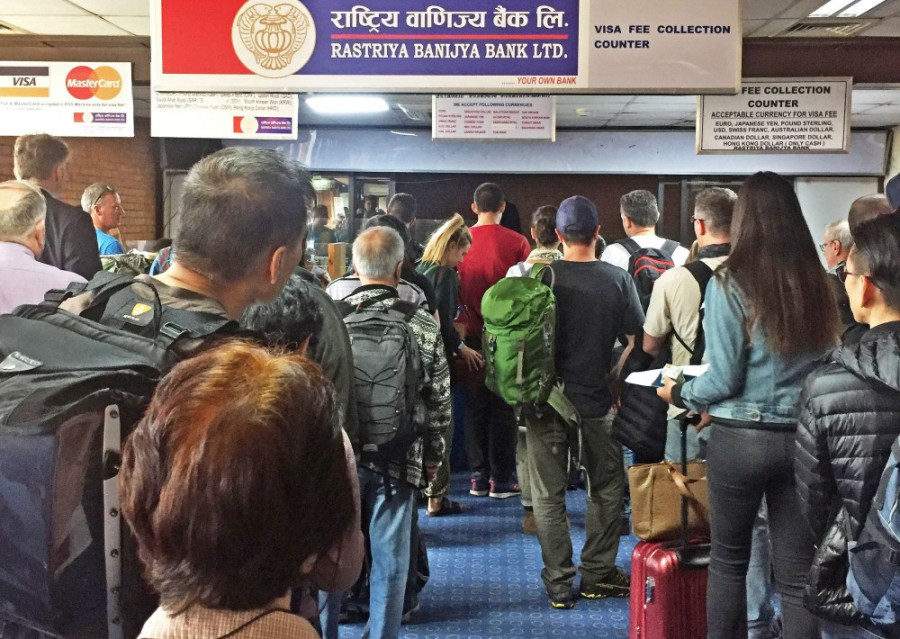
bookmark
Himesh Dhungel
Published at : April 12, 2026
Updated at : April 13, 2026 09:00
Free-market orthodoxy requires functioning institutions, honest courts and a rule-enforcing state. Nepal lacks these. Instead, it has a business community shielded by syndicates, political appointees in ministries and a governing class that confuses rent extraction with wealth creation. Nepal needs a competent government—lean, digital, transparent and ruthless about dismantling the mafias that have stifled productive enterprise.
The generation that elected the Rastriya Swatantra Party (RSP) voted for this. Young Nepalis voted out of exhaustion, not ideology. They rejected ministers appointed for loyalty, border customs that required envelopes, and a country that exports its best people because it can’t employ them domestically. Their verdict was a repudiation of kleptocracy, not a mandate for central planning. The RSP inherited a crisis from their predecessors—20 years of structural negligence, remittance dependency and politicised institutions. They have the opportunity to fix it.
The ventilator economy is a dark picture. Despite foreign reserves at a record $23 billion, enough to cover 18 months of imports, the economy is hollow. These reserves were built by Nepalis working abroad, not by Nepal itself. Remittances, which account for over a quarter of GDP, are crucial to the domestic economy.
The Dutch Disease mechanism is evident as dollars flood in, making imports cheap and domestic manufacturing uncompetitive. Factories close, fields go fallow, and Nepal’s industrial GDP share has nearly halved since 2000. Manufacturing productivity per worker is a fraction of Bangladesh’s, and foreign direct investment, which builds durable jobs, is virtually zero. The economy’s lungs have atrophied, relying on a single tube—remittance.
The tube is now under strain due to the 2026 military escalation in the Middle East, which disrupted Nepal’s labour corridors. Work permits to 12 Gulf countries are suspended, airlines have cancelled routes, and 40 percent of all remittances flow from the Gulf. The government missed its eight-month revenue target by nearly a fifth even before the Gulf conflict started, and petrol prices have risen twice since hostilities escalated. The double bind of less income and higher costs is the crisis economists warned about for years, but their warnings were ignored.
The vulnerabilities exposed by the Middle East crisis are the accumulated consequence of five deliberate political failures.
Education was a migration queue, producing graduates fluent in leaving but few engineers, agronomists or software developers. Vocational training was stripped to nothing. Remittance-fueled speculation captured land, leaving capital idle in Kathmandu apartments and infrastructure projects at irrational prices. Corruption, a hidden tax, priced out foreign investors and pushed domestic entrepreneurs to emigrate. The tax system rewarded imports over production, incentivising the very activity an industrialising economy must crowd out. Industrial strategy was theatre, with ministers appointed by the very syndicates they aimed to dismantle. The conflict of interest was intentional.
The RSP government’s dual mandate—good governance and economic growth—is interconnected through digitisation. Each citizen-official interface offers an opportunity for informal payments. The antidote is removing the human from transactions. Estonia became the world’s first paperless state in a decade, Georgia slashed corruption scores by moving business registration online, and Rwanda transformed its investment environment by making regulatory compliance transparent and enforceable.
The government should urgently implement four reforms: an integrated citizen portal with one national ID and a single login for all government services, eliminating parallel paper processes; digitisation of land registries on a public, tamper-evident ledger; real-time procurement disclosure for contracts above a threshold with beneficial ownership registration; and a digital tax system linked to banking transactions to close the gap between declared and actual income and prevent evasion. These reforms require execution, which the old governments lacked.
Beyond digitisation, two specific reforms deserve immediate action. The first is vehicle taxation. Nepal levies some of the world’s highest import duties on vehicles—a blunt instrument generating one-time revenue while doing nothing for congestion, pollution or urban sprawl. Singapore built its transport policy on a smarter model: taxing vehicle use rather than purchase, hypothecating revenues to public transit, which over time reduces demand for private vehicles. Nepal should do the same. It will generate more revenue over the long run while building functional cities rather than gridlocked ones.
The second is the sovereign wealth question. Nepal’s $23 billion in reserves sits almost entirely in gold and short-term foreign government bonds—a savings account earning modest interest. The surplus above any reasonable liquidity buffer, perhaps $8–10 billion, is dead money. A properly governed Sovereign Development Fund, modelled on Botswana’s Pula Fund, could invest that surplus in diversified global equities and bonds, earning meaningfully higher returns—potentially hundreds of millions of dollars annually. Those proceeds could capitalise hydropower infrastructure, seed industrial parks, improve urban infrastructure, or back a diaspora bond program: a dollar-denominated, premium-yield instrument marketed to Nepali workers and communities abroad. Bangladesh has done this with wage-earner bonds. India did it with Millennium Deposit Bonds. Nepal has the asset base. It lacks only the institutional architecture and the political nerve to use it.
Within 15 years, Nepal’s demographic window closes as the workforce ages. If productive industries, honest institutions and functional infrastructure aren’t built by then, the country faces a fiscal and social reckoning without the safety valve of Gulf migration. The Middle East crisis has accelerated this timetable, demonstrating the consequences of partial ventilator shutdowns. The government must choose between a proactive digital revolution now and a managed fiscal decline later.
In Nepal’s post-democracy history, no government has chosen the harder path when the easier one seemed survivable. The RSP’s mandate, built on a generation raised on broken promises, nepotism and incompetence, gives this administration a public that knows the cost of inaction. The RSP government didn’t create the crisis but has an unprecedented chance to end the conditions that created it.
The region is on fire. The clock is ticking. Exhausted population awaits quick, tangible and meaningful results on the government’s growth and governance promise.
Himesh Dhungel
Dhungel is the CEO of Washington, DC-based strategy consulting firm Ensilium LLC. He has 30 years of experience covering energy, international development, finance and strategy consulting. He provides advice to commercial and public sector clients on designing and executing their business and growth strategies.




Most Read from Columns




Editor's Picks




E-PAPER | October 21, 2026

×