



 13.03°C Kathmandu

Tue, Oct 27, 2026
Columns
Downfall of India’s Parliament culture
It is now defined by disorderly conduct rather than discourse, and by disruption rather than discussion.
bookmark
Ruhi Tewari
Published at : December 1, 2025
Updated at : December 2, 2025 07:12
As India’s Parliament convened for its Winter Session on Monday, the persistent political storm over the Special Intensive Revision (SIR) of electoral rolls threatened to create a logjam in the House, yet again casting a shadow over the conduct of productive business.
The Indian Parliament has been a beautiful space for the exchange of views and counterviews, for debate and discourse, for banter and bonhomie, for stellar speeches and skilled oratory, and for political camaraderie that has lent itself to several memorable captures by sharp photojournalists over the decades. That nature, unfortunately, has seen a marked and quick deterioration in recent years.
Parliament—both the upper house (Rajya Sabha) and lower house (Lok Sabha)—has now come to be defined by dispute more than debate, disorderly conduct more than discourse and disruption more than discussion. The government and the opposition are almost always at loggerheads, more interested in using the floor for political battles than for policy making. The opposition revels in stalling House proceedings and the government in bulldozing its way through.
Backchannel talks, deft negotiations and polite outreach seem to have become a thing of the past, with neither the government nor the opposition interested in digressing from their obstinacy to focus on productive legislative business.
The decline in numbers
Data does well to tell this story. According to PRS Legislative Research, which does some outstanding work in this area, in the Monsoon Session of Parliament earlier this year, the Lok Sabha functioned for just 29 percent of the planned time while the Rajya Sabha was a smidge better at 34 percent. In the entire session, the Lok Sabha spent just about 37 hours on legislative business, while the Rajya Sabha spent 42 hours.
Things weren’t much better last year. In the Winter Session, while the productivity of the Lok Sabha was 52 percent, that of the Rajya Sabha was 39 percent.
“Sitting days in LS have declined from an annual average of 121 days during 1952-70 to 68 days since 2000. Fewer Bills are being passed by Parliament over the past few years. Of all Lok Sabhas that have had a five year term, maximum number of Bills were passed during the 8th LS (355), the least during 15th LS (192),” found PRS Legislative Research in its analysis of 70 years of Parliament in 2022. While the 15th Lok Sabha refers to the period of 2009 to 2014, the 8th Lok Sabha refers to the period from 1984 to 1989.
In fact, in its data crunching of the 15th Lok Sabha—which coincided with the second term of the Congress-led United Progressive Alliance (UPA) government, PRS found a startling fact. “The productive time of the Lok Sabha in the past five years stands at 61%. This has been the worst performance of the lower house in more than fifty years,” it said.
The statistics since then may have improved marginally in some sessions and worsened in others, but the fact remains that Parliament’s functioning has been in free fall.
Numbers clearly demonstrate the extent of the downfall witnessed in the productivity of Parliament and the slide in the conduct of crucial legislative business. This, even as the key purpose of Parliament is to form policy and take up legislative matters in as constructive and meaningful a way as possible. Any digression from this defeats the very purpose.
Then and now
If prolific legislative business is the purpose of Parliament, then fruitful, knowledge-laden and fierce yet congenial debates are its very soul.
The essence of India’s Parliament has been the glorious speeches, the spirited debates and memorable banter. Even the most ardent of critics and most vociferous of opponents have displayed great statesmanship inside the House, engaging in meaningful and respectful debates and often, memorable banter.
Just the other day, I came across this wonderful poetic banter from 2011 between then Prime Minister Manmohan Singh and then leader of opposition in the Lok Sabha Sushma Swaraj. As Parliament witnessed rising temperatures amid a WikiLeaks cable that accused the then ruling Congress of bribing MPs during the 2008 trust vote, Sushma Swaraj took on Manmohan Singh with Shahab Jafari's immemorable lines, "Tu idhar udhar ki na baat kar, yeh bata ki kafila kyun luta, humein rahjano se gila nahi, teri rahbari ka sawal hai.” Not to be outdone, the then prime minister responded with Allama Iqbal's famous couplet, "Mana ki teri did ke kaabil nahin hoon main, tu mera shauq dekh mera intezar dekh". The beauty of this exchange lay not just in the wonderful poetry that was recited, but in the massive cheers both drew from other members of the House, and the smiles Swaraj and Singh brought to each other’s faces with their renditions. That clip captures the undying spirit of the Indian Parliament, one that seems to have dimmed with time. And mind you, this exchange between Swaraj and Singh was in 2011—during the 15th Lok Sabha, which incidentally, till then had been the least productive ever. But even amid dipping productivity, there was bonhomie left, and the spirit of respectful discourse still dominated.
Things since have taken a turn for the worse. There is now animosity amid opponents, which towers above all else. Healthy debates have given way to bitter walk-outs. Gentle banter has taken the form of ugly name-calling. And weighty discourse is now a far second to stalled proceedings.
To be fair, it isn’t any one side that deserves the blame for this. India’s polity has evolved into an extremely polarised, acrimonious and unsporting shape. And that seems to have translated into Parliament as well. Both the government and the opposition are equally at fault, the former for its complete disregard for democratic niceties and its penchant for brazen bulldozing, and the latter for unthinking obduracy and refusal to respect basic norms of the House.
Amid this, however, the biggest loser has been the very spirit of Indian democracy. Parliament has long been hailed as the temple of democracy, and it is this very temple’s very soul that is being crushed today.
As a fresh session of Parliament begins, the government and Opposition would do well to reflect on what their true legacy means, and how crucial their Parliamentary presence is in that story. Elections are won and lost at the hustings, and that is never a constant, but hearts are often won through the simple act of being a great statesperson in the very House of democracy.
Ruhi Tewari
Tewari is a Delhi-based senior journalist and author of ‘What Women Want—Understanding the Female Voter in Modern India’.


Most Read from Columns


Editor's Picks

What to know about the US trial over Mamta Kafle’s disappearance
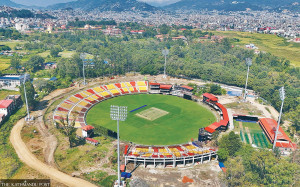
NPL returns with bigger ambitions and global recognition
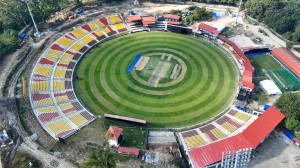
What’s new in the Nepal Premier League’s third season?

After Nepal’s recent disaster, it wants to test whether COP31 can deliver climate justice

Why does an hour long flight to Dhangadhi cost more than a flight to New Delhi?
E-PAPER | October 27, 2026

×