



 29.08°C Kathmandu
Mon, Jun 8, 2026
Entertainment
A striving reader
Pranika Koyu is a member of Chaukath, a network of feminists in Nepal.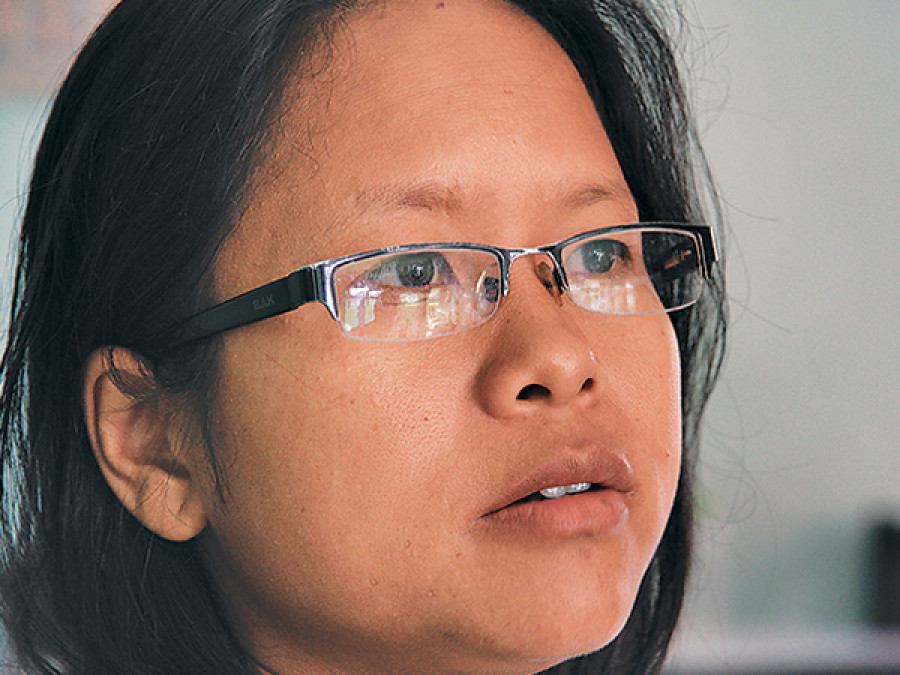
bookmarkPranika Koyu is a member of Chaukath, a network of feminists in Nepal. Also a poet, her writings have been featured in daily newspapers and magazines. She recently released her poetry collection titled Bhav. Priyanka Shrestha of the Post talked to Koyu regarding her love for reading. Excerpts:
Published at : January 5, 2015
Updated at : January 5, 2015 07:58
How did you first come to love books?
I owe my love for books to my father. He was a student of Nepali literature and history and had unusual study habits. He’d ask me to read books aloud to him. I think that was his way of introducing books and reading to me.
During school vacations, my parents would leave me and my cousin in Educational Book House where we would read comic books like Amar Chitra Katha.
What was the last book you read and how did you like it?
Recently, I re-read Saru Bhakta’s Taruni Kheti. It’s is my favourite work by Saru Bhakta and I suggest everyone to read it to see how his articulate use of metaphors is both emotive and provocative of the status of Nepali women in the society.
I also finished The Red Moon by Kuwana Haulsey.
What are you reading right now and how is it going?
I had not read much of Kumar Nagarkoti’s works except for a few of his prose. So at present, I am reading Akshargunj. I am simultaneously reading Ferindo Saundarya by Rajan Mukarung and Abba by Shyam Shah. Owing to the presence of provocation, emotion and humour, all of these books have managed to strike a certain chord in me.
I have also been reading a lot of non-literary writings based on citizenship rights and indigenous movements in Nepal.
What is your favourite genre and why?
Definitely poetry! I really cannot say why, but I just love it.
How do you select books to read?
There isn’t a fixed criterion as such. When I am in a bookstore, I have a peculiar habit of reading the author’s acknowledgement and some random pages of the book. If anything strikes me at that time, I buy it, or else I wait.
However, I am a dedicated reader of a list of writers that I like very much.
Name a book that you would or would not recommend, and why?
The books that I would like to recommend would be Langada Ko Saathi (Lain Singh Bangdel), Taruni Kheti (Saru Bhakta), Mastiskaharuko Mrityu (Rosan Sherchan), Boni (Parijat) and The Heart is a Lonely Hunter (Carson McCullers).
In case of writings in English, I would not recommend The Help (Kathryn Stockett) and Gone with the Wind (Margaret Mitchel) for their superficial representation of racial issues. And regarding Nepali works, I would not recommend memoirs of socio-elites belonging to the fields of journalism and business.
How has reading affected your life?
A lot since reading is not just a mere hobby. A person who reads can decide if his role should be just of a reader or should he actually integrate in life the things that he reads. I think, to some extent, I try to be a little bit of both—the reader as well as the doer. Had I not read, my world could have perhaps revolved around the basic realities of life – food, shelter, clothes.
A friend once told me that my writings—be it a letter, prose or poetry—have impressions of what I read.
How do you evaluate the present trend of Nepali literature?
Among what is being published, memoirs, prose, and pocket-book romance novels are currently trending in Nepali literature. Content wise, I think both mainstream identity politics and romance continue their stronghold. As usual, there are more male writers than female writers.
One book that inspired you a lot and why?
Different books have inspired me in different ways. But if I have to take names, then it would be The Heart is a Lonely Hunter by Carson McCullers, Boni by Parijat, and Langada Ko Saathi by Lain Singh Bangdel.
The Heart is a Lonely Hunter is set during the years of American Depression and it chronicles the melancholic lives of its characters whose dreams get them going against a world tainted by racism and class struggle.
Bangdel’s Langada Ko Saathi has left an impression in me that cannot be expressed.
Parijat’s Boni has fostered a conflicting perspective on ideology, class and decorum of growing up as a woman in Nepal.




Editor's Picks

Together, but apart: Nepal’s growing phubbing culture
Who is Nepal’s egg donation ban actually protecting?

Nepal-India relations in uncertain territory as new government charts assertive course
The sequel trend in Nepali cinema: Story continuity or commercial greed?
Crop-raiding monkeys are leaving hill farmers nothing to live on
E-PAPER | June 08, 2026

×