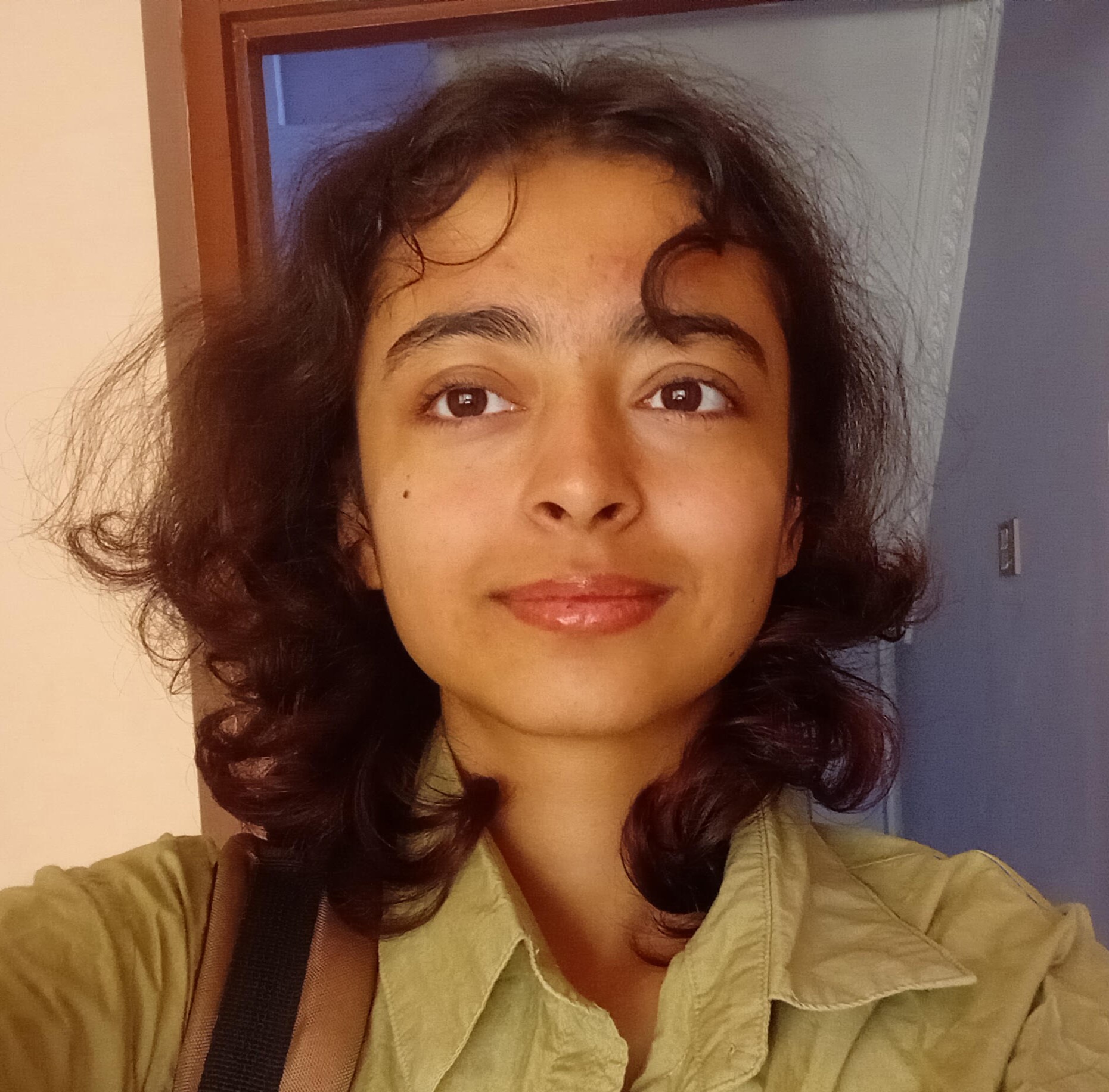
Indu Tharu is a poet, writer, researcher, activist, and a Tharu tattoo artist from Ranamura gaun in Kailari Rural Municipality. She believes her writing journey is an act of resistance rather than a conscious choice. Drawing inspiration from her father’s literary works and stories of her mother, grandmother, and culture, writing also became a medium of preservation for her.
Currently, Tharu is a participant in a year-long Indigenous Studies course offered by Kathmandu University. Individually, she is also researching the tattoo culture of the Tharu community, documenting historical and generational stories that were passed down orally.
In this conversation with the Post’s Jony Nepal, Tharu discusses how writing and advocacy go hand in hand.
What inspired you to write? What meaning did it hold for you initially?
Writing was not a conscious choice; my circumstances made me a writer.
My father, Jokhan Ratgaiya Tharu, was a writer—a krantikari (rebellious) writer. He used to write and publish stories, poems and ghazals. The slave system, which had been around for several generations, had forced the Tharu people to become kamaiya—a male and his family bonded to labourand kamlahri–labour imposed on girls. The Muluki Ain of 1910 had declared the Tharu people as masinya—someone who could be wasted or erased.
My father wrote against this oppression and systemic marginalisation of the Tharu people. Everyone who could read and write had my father’s work called ‘Muktik Dagar’, also known as ‘The Path of Freedom’.
He was killed during the Maoist Insurgency. His works were either buried or hidden. If they were found anywhere or with anyone, the army would ruthlessly torture them, calling them enemies of the state.
A Tharu intellectual, Krishna Raj Sarbahari, preserved some of the books in Kathmandu as it was safer compared to Tharu villages. He kept the physical copies, and provided me with the scanned version of the book.
Even though I was young, I got to read and understand some of his writings. I could draw parallels to the oppression he wrote about and my observations around the community.
While growing up, I asked a simple question: Why was the state scared of my father’s words and poetry? They have police, power, and money. Why were they resisting something as simple as a book?
That is when I realised how powerful literature can be. I had started writing after the 2007 Tharuhat Andolan; however, my literary approach continued after the Tikapur Incident in 2015. A curfew was imposed in Tikapur and Dhangadi. However, only the houses and shops of the Tharu people were destroyed and burnt. Consequently, it seemed as though the curfew was only for the Tharu community. We could not react against it. Inside, we felt suffocated, while on the outside, a narrative of the Tharu people being murderers and criminals was being widespread in the mainstream platforms. That is when I started writing as a form of resistance to this oppression.
Do you believe that literature can be a political act?
Yes, I strongly believe that literature can be a political act. Most mainstream narratives about the Tharu community today are framed from a colonised perspective.
When someone outside the Tharu community describes our culture, their own perspective and bias are intertwined with the description. And even within our own community, the descriptions differ between men and women.
Who writes the stories, who controls the narrative, who gets to read them; the entire process of literature is deeply political.
Anger is one of the most honest emotions a writer can have. How do you articulate anger in your writings?
I had participated in a programme organised by Thames College. There, one of my friends asked me whether I wrote poems. I spontaneously answered, “That is my aakrosh (outrage), not poems.”
I sometimes wonder if I will spend my entire life within this anger, complaining and resisting against this systemic oppression. I cannot express all of my frustrations; however, they reside deep within me. People call mejaatibaadi, as I primarily talk about my caste and culture. The tangible distinction between who is superior and who is inferior pushes this anger within me.
What does intersectionality mean to you and your writings?
I believe I was writing about intersectionality long before I was aware of the term. Initially, I wrote about the broader aspect of the Tharu community and identity. At the time, the Tharu people were happy, and they felt seen.
When I started going to various programmes, I noticed how women, despite their domestic pressures, were marching for justice, but the mic, position and recognition were only given to men. We also have a customary governance system in which one member from each family goes and votes for their leaders.
When I was young, I was proud of this democratic process. But now that I look back, only the men participated. That was not even a democratic process from a single angle.
When I started writing about the position and identity of females within my community, I faced resistance from the Tharu people themselves, who wanted me to explore Tharu culture in general rather than just women. The movement for justice goes in parallel with women’s rights and the equality for the Tharu community in general.
My father’s generation was the first to attend school and learn to read and write. In the case of females, I am among the first generation to have received formal education and literacy. Although we were able to go to school, we were taught in Nepali, so we naturally became accustomed to Nepali in our daily academic life. As a result, reading and writing in the Tharu language was not easy for most of us.
However, in my case, because my father also wrote in Tharu, I was able to develop a good understanding of the language. In contrast, many Tharu children today are no longer proficient in reading and writing in their mother tongue.
Indu Tharu’s five book recommendations
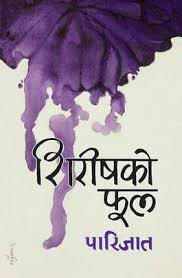
Shirishko Phool
Author: Parijat
Publisher: Sajha Prakashan
Year: 1964
I find myself returning again and again to this classic by Parijat. In moments of loneliness, it offers a quiet kind of companionship.
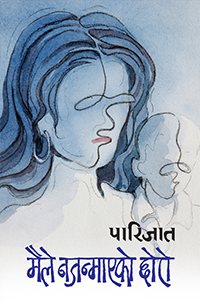
Maile Najanmaeko Chhoro
Author: Parijat
Publisher: Phoenix Books
Year: 2015
‘Maile Najanmaeko Chhoro’ is a powerful Nepali work from a feminist perspective. The stories give me goosebumps.
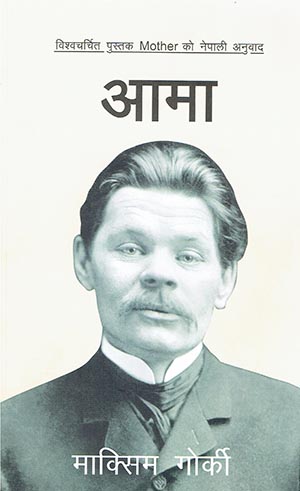
Aama
Author: Maxim Gorky
Publisher: Panch Pokhari Prakashan
Year: 2018
‘Aama’ felt personal. The main character is an uneducated woman, which reminds me of my own mother.
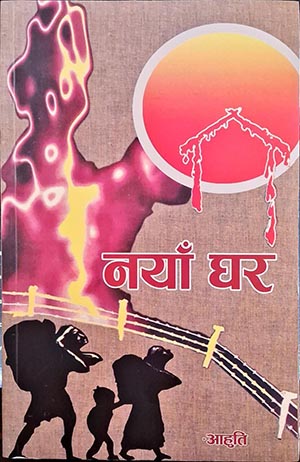
Naya Ghar
Author: Aahuti
Publisher: Pragati Pustak Sadan
Year: 2016
Aahuti’s work portrays the realities of class struggle and encourages young people to reflect on social change.
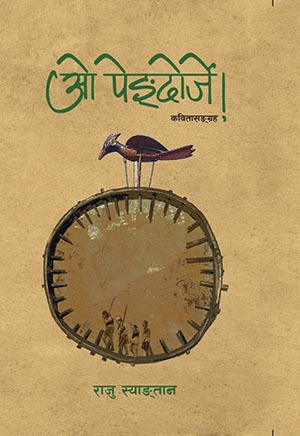
Oh Pengdorje!
Author: Raju Syangtan
Publisher: Publication Nepalaya
Year: 2023
I enjoy poetry. I am drawn to poems that reflect people’s suffering, struggle, and resistance—something deeply present in Syangtan’s writings.




 24.95°C Kathmandu