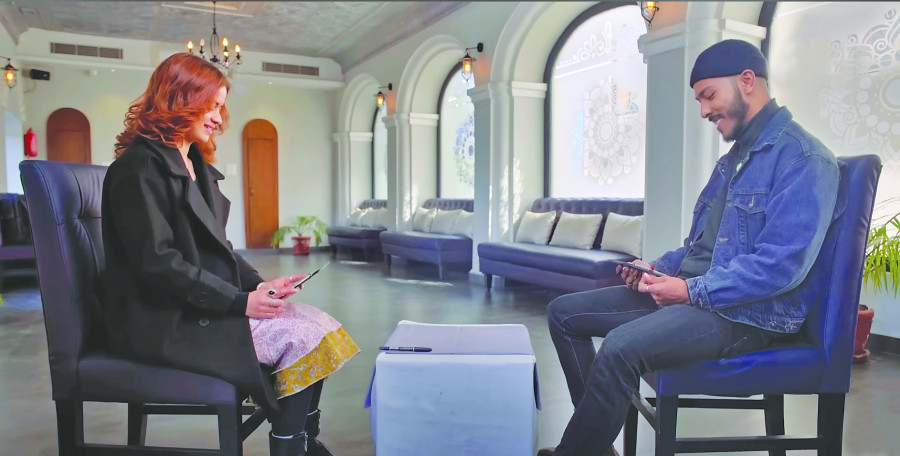
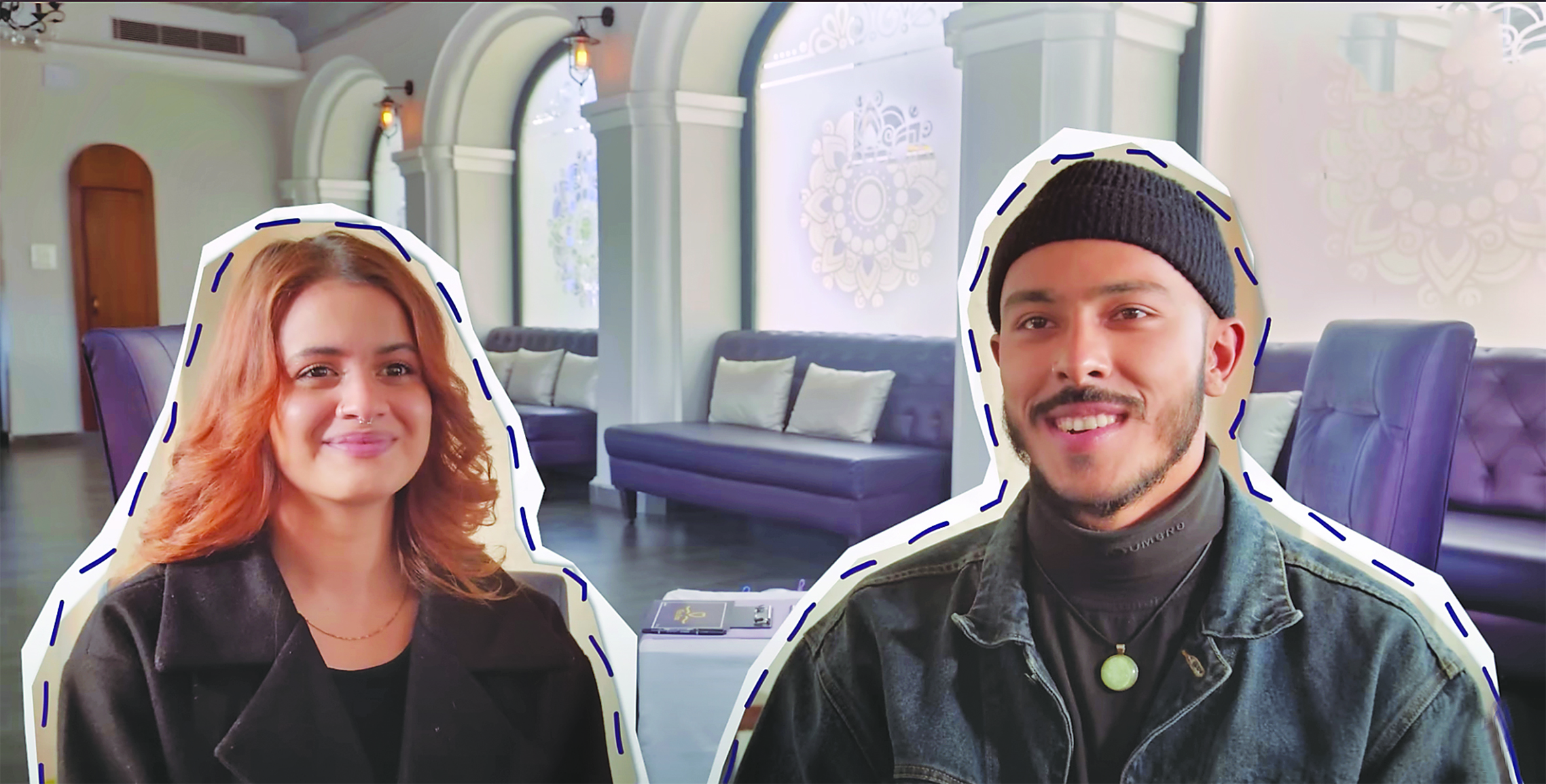
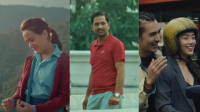
We will never be the same after the sensational ‘Blind Date’. But is there space for a dating show that’s a little more honest? Participants Anushka and Aditya in the second episode of ‘First Date’. Photo: Screengrab from YouTube
It is not a secret that the world is obsessed with watching dating shows. Research done in Australia has shown that people mainly watch dating shows for three reasons: To learn about relationships from reality TV shows about love, to feel reassured that there are other people who are also looking for love and to see yourself and your relationship in the shows. At a time when the lines between the private and the public are constantly blurring, dating shows hook viewers as they show something not just personal—but vulnerable—for the public to admire, speculate and even nit-pick.
When the bizarre world of Devendra and C-lu (and mind you, not Shilu) was brought to us by Superhit Cinema Nepal in the middle of the 2021 lockdown, their exaggerated fights, kitschy proclamations of love became a sort of escape—especially for the urban masses. But ‘Blind Date’ wasn’t—at least for most of us—something we wanted to emulate. It was there for us to gratify ourselves, talk about just how silly it was and observe from a distance.
Despite its corny subtexts, ‘Blind Date’ took off. And it has opened doorways to similar dating shows. ‘First Date Nepal’ is one of them. Started in February, ‘First Date Nepal’ is a show for the urban young, by the urban young. With a much more toned-down and nuanced approach, it has gained notable traction on YouTube under OSR reality and even airs on Space 4K TV. Around 12 episodes, usually 20 to 25 minutes long, have already been uploaded on YouTube. The episodes come out every two weeks. The first episode, which features two young individuals, Sadikhsya and Yunish, has around 150,000 views, a decent number for a show just starting out. Produced by Sudeep Bhaiju and Raymon Das Shrestha, it is shot at Attic in Gyaneshwor.
‘First Date’ has a very simple premise. A dramatic voice-over tells you that two strangers are brought before each other blindfolded. They’ve filled up cue cards beforehand with some ice-breaker questions like: ‘What would you do if you only had a month to live?’ or “Do you prefer tea over coffee?’ and ‘Is sex before marriage okay for you?’ The answers to these questions become the pre-text for the conversation they’ll have over a period of one to two hours. This is followed by some games and other cues. The final result—would they like to date (or even just hang out) after the show? Well, if they do, the show has succeeded in matching two individuals together. “The main thing is whether the show was able to spark an interest or not,” says director Ashwin Neupane.
‘First Date’ has a rather peculiar origin. It was prompted by the breakup of one of Neupane’s close friends. “It was during the first wave of Covid that my friend had just gotten out of a relationship. And thinking about the ups and downs of modern romantic relationships, we thought it would be a fun thing to do,” he says.
‘First Date’ targets a niche audience—young, urban, liberal, English-speaking, and tech-savvy people who are more inclined to consume Western media. Their approach to the show is nuanced—Neupane emphasises that they want to avoid the overtly dramatic, virality-seeking tendencies of reality shows. “We want First Date to be a family-friendly show. One that you can watch with your parents or even younger siblings. There’s also the angle of showing what the young people in Kathmandu think about romance, careers and life,” he adds.
Kathmandu’s and, in fact, Nepal’s urban young have been severely misrepresented in public discourses. Their lives are reduced to either privileged, detached and white-washed brats or hooligans that are only looking for one thing: sex. This narrative mainly comes from books, movies, plays or TV shows written by much older people who see late millennials and GenZ as dangerously ‘modern’ or too wrapped up in their world to care about anything else. There is some truth to this generalisation. But the young have their own set of worries—a growing cynicism towards a world at the brink of a catastrophe (be it climate or economic), the sinister pressures of modern life, from love to education to career. What ‘First Date’ succeeds in doing is humanise the lot and how even the ‘privileged’ young are complex individuals with thoughts, opinions, fears and dreams.
Screengrab from YouTube
Moreover, the show also aims to subvert the meaning behind the word ‘dating’ within the Nepali context. I went to a boarding school for the last two years of my high school back in 2018. And over there, in a highly archaic, conservative environment, ‘dating’ started with saying ‘I love you’ to the other person when what you actually meant was ‘I am attracted to you’. Most of these ‘couples’ would barely even have spoken to one another before the grand proclamation. “We have this idea that dating immediately means getting into a relationship,” says Ashwin. “But there are a lot of stages that one has to cross. And dating is simply trying to see if there is a potential bond,” adds Neupane.
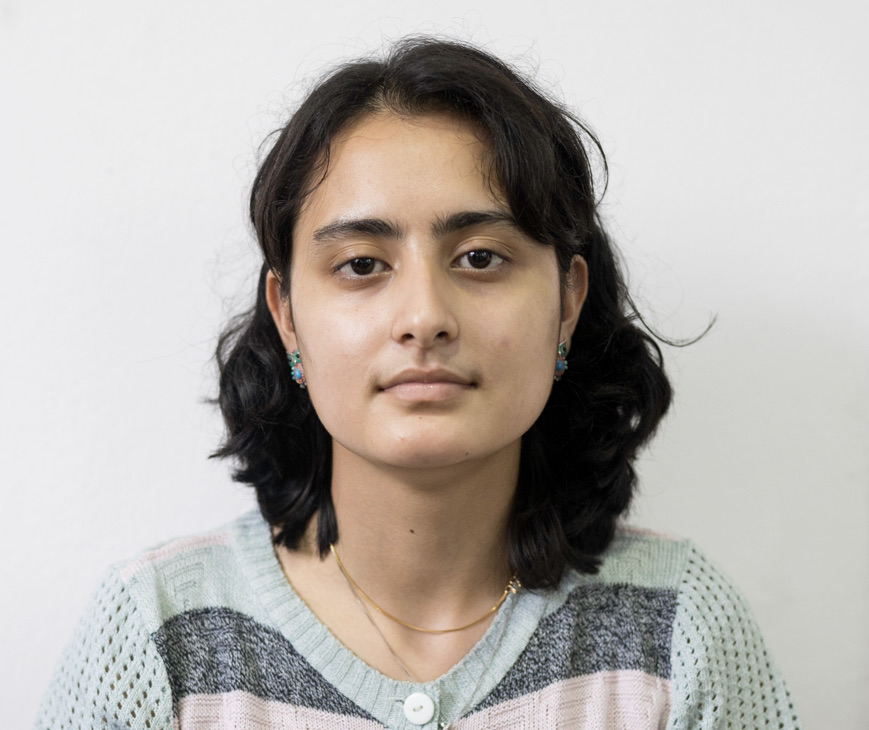
First Date keeps the conversation between participants interesting—some even border flirtation—but it doesn’t force the participators to force chemistry. “The show and the crew were very comforting, and there were no prompts. We were told to be ourselves,” says Anuskha, one of the participants. She was part of the second episode and paired up with Aaditya, a 25-year-old filmmaker. Both agreed that the programme’s simplistic, easy-going nature drew them to participate.
From the YouTube comments, it’s easy to see that the show is loved by many—mainly for just how honest it is; comments constantly reiterate how the show is “authentic”, “not cringy”, “subtle”, and “natural”. “Relatabilty plays a huge factor. Because this is what going on dates is actually like,” says Neupane.
Of course, there is criticism. The frequent ones are that everyone speaks English, it’s not Nepali enough, it’s too modern, too elitist (one commenter wrote ‘Blind date from Durbar Marg’) and the like. “But we can’t please everyone,” says Neupane. But showrunners agree that feedback is, nonetheless, essential. They’ve recently added subtitles after many requests. They plan to bring in more segments to reduce the monotony. “We also want to invite queer individuals to the show. But that’s been especially difficult,” he says.
Dating shows have and will always have space in mainstream media. The countless runs of India’s ‘Splitsvilla’, America’s ‘The Bachelor’ and even ‘Blind Date’ and ‘First Date’ prove that humanity loves consuming (perhaps the right word is gobbling) things related to romantic love. But to meet the unsatiated hunger, shows rely on dramatisations and controversies, which only help exasperate the already twisted notion of what love is. Shows like ‘First Date’ can help combat such portrayals and show that love (and dating) can and should be slow, gentle and unpretentious.




 25.7°C Kathmandu