In Sudurpaschim, tourists are coming. Infrastructure isn’t
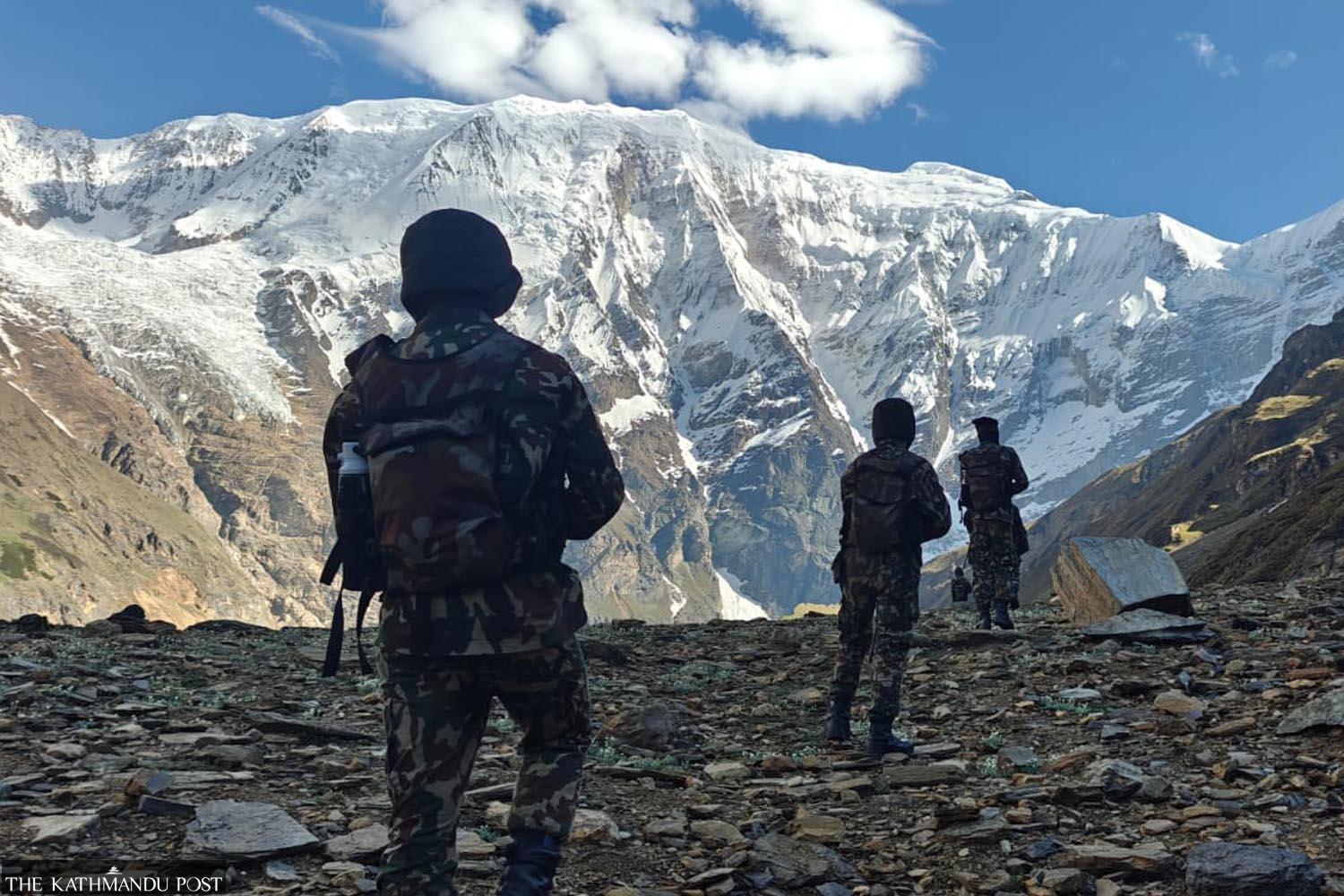
Viral mountain destinations are attracting thousands of visitors, but neglected infrastructure threatens the region’s tourism ambitions. The base camp of Mount Api, with campers’ tents seen in bottom right. Post Photo
On a fine morning last month, a jeep carrying domestic tourists from Bajhang, Dhangadhi and Dadeldhura climbed a dirt road towards Jadalek in Saipal Rural Municipality, Bajhang. Lured by breathtaking photographs and videos shared on social media, the group had travelled hundreds of kilometres to visit the southern base camp of Mount Saipal (7031 metres), the western base camp at Raidughi and the secluded Maza valley, surrounded by towering snow-covered peaks.
Their trek began from Dhalaun, passing Kakarkot before reaching the southern and western base camps. Things were normal until then and the trekkers were excited. But once they left Raidughi for Maza valley, around four hours away, their excitement gave way to fear. The narrow mountain trail soon disappeared beneath thick shrubs, leaving only a precarious footpath clinging to steep cliffs.
“There was barely enough space to place one foot,” said trekker Bir Bahadur Dhami. “We held onto bushes as we moved forward, but eventually there was nowhere safe to step.”
Looking down, Dhami went on, “all we could see was a sheer drop”. Some of the trekkers felt dizzy and the team decided to abandon the trip. “We decided risking our lives was not worth it,” Dhami said.
Dhami said even simple trail markers would have helped visitors navigate safely. Instead, the group abandoned the journey despite coming so close to their destination.
Their experience reflects a wider problem across Sudurpaschim. The province is home to some of Nepal’s most spectacular landscapes that are drawing increasing numbers of visitors but remain constrained by poor tourism infrastructure. Social media has introduced destinations such as Api and Saipal mountains, Khaptad, Badimalika and the Api-Nampa Conservation Area to millions of viewers, yet tourists continue to complain about inadequate trails, limited accommodation, unreliable communications and the absence of basic visitor facilities.
The mismatch between growing demand and weak infrastructure has prevented the region from realising its enormous tourism potential, despite possessing world-class natural attractions.
Until only a few years ago, Khaptad, Saipal and Api attracted mostly experienced trekkers, researchers and mountaineers. Today, YouTube, Facebook, Instagram and TikTok have transformed them into sought-after destinations for domestic travellers.
Interest in Api surged after Prime Minister Balendra Shah posted a short Facebook video of people playing cricket at Api Base Camp. Earlier, while addressing an election rally in Sudurpaschim, Shah had described Badimalika and Ramaroshan as ‘the father of Switzerland’, a remark that quickly went viral and sparked curiosity about the mountain destination.
Colourful images of Khaptad’s rolling grasslands, the vast alpine meadows of Badimalika and the dramatic peaks of Api and Saipal continue to circulate widely online, encouraging more Nepalis to visit every year. Official figures also indicate rising visitor numbers, although local authorities say government records significantly underestimate arrivals.
According to the Department of National Parks and Wildlife Conservation under the Ministry of Forests and Environment, 29 foreign tourists visited the Api-Nampa Conservation Area during the fiscal year 2024-25. However, Api Himal Rural Municipality says more than 5,000 tourists reach Api Base Camp annually.
“The department’s records are based on reports prepared from the district headquarters and differ greatly from the actual number of visitors,” said Bhagat Singh Bohara, chairman of Api Himal Rural Municipality. “Our municipal records show that more than 5,000 tourists, including around 150 foreigners, have visited Api every year over the past three years.”
Among Sudurpaschim’s major trekking destinations, the Api Base Camp trail is generally considered to have the region’s best infrastructure. The trekking route features a relatively safe footpath leading to the base camp, along with four guest houses, four tea shops and homestays operating in five villages along the trail.
Even there, however, infrastructure has failed to keep pace with demand.
“During the Nepali New Year and the Dashain and Tihar holidays, we struggle to accommodate visitors,” said Bohara. “Our facilities can host around 60 people a day, but on one occasion about 250 tourists arrived together. We had to arrange tents and even use shelters built for yarsagumba collectors. We managed somehow, but the existing infrastructure is still inadequate.”
Post Photo
According to Bohara, additional guest houses with larger capacities, designated camping sites, upgraded trekking trails and proper waste-management systems are urgently needed.
Khaptad National Park has experienced a similar surge in popularity. Department figures show that annual visitor numbers, which ranged from just 19 to 46 between the fiscal years 2012-13 and 2017-18, have increased to around 3,000 every year since 2018-19.
Yet the infrastructure has not expanded accordingly in the area. During peak seasons, visitors often struggle to find accommodation and spend freezing nights without adequate shelter. Others lose their way because of insufficient trail signs, while expensive tourism infrastructure funded by the state remains unused.
One striking example is a prefabricated accommodation complex near the park headquarters and another at Bichpani built for travellers entering through Doti. The facilities, designed to accommodate 150 visitors and equipped with technology to keep rooms warm even in freezing conditions, were funded by the Nepal Tourism Board under the 2018-19 fiscal budget.
Construction began in 2019 and the buildings were completed several years ago. Despite this, the accommodation has yet to open for visitors. Trekkers continue sleeping in the cold while posing for photographs outside the locked buildings the following morning.
“We have repeatedly requested everyone, from the chief conservation officer to the department, to bring these buildings into operation,” said Khem Joshi, executive director of the Khaptad Area Tourism Development and Management Committee. “Officials keep saying operational guidelines are being prepared. Meanwhile, the buildings have already started leaking before welcoming a single guest.”
Similar concerns are being raised in Saipal, where annual visitor numbers have increased sharply since the Covid-19 pandemic.
According to Saipal Rural Municipality, an area that received only around 100 to 150 visitors annually before the pandemic now welcomes 300 to 400 tourists each month during the trekking season. Yet flood- and landslide-damaged trails remain unrepaired in several sections, forcing trekkers onto risky paths. In some places, the absence of permanent bridges means visitors must still cross rivers on makeshift log crossings.
Accommodation is available only as far as Dotale, around half a day below Saipal Base Camp. Those wishing to spend the night near the base camp must carry their own tents and supplies.
“We need better trails, bridges and tea houses in several locations,” said Manbir Bohara, chairman of Saipal Rural Municipality. “The rural municipality is working with the Sustainable Tourism Project under the Nepal Tourism Board to improve facilities, including accommodation above Dotale.”
Reaching these mountain destinations remains demanding. Travelling from Kathmandu to Khaptad usually requires around three days, whether entering through Bajhang, Bajura, Doti or Achham. Visitors heading for Saipal travel by road from Dhangadhi through Bajhang district headquarters to Dhalaun before beginning a trek of about one and a half days. Travellers to Api Base Camp first endure a long drive from Dhangadhi to Darchula before trekking for roughly three days from Makarigad.
Tourism campaigner Bharat Bikram Shah said increasing visitor numbers require systematic investment in trekking infrastructure across the region. “Every major route now needs proper trails, information boards, rest areas, rescue points and visitor information centres,” said Shah. “Some sections are unsafe without local guides. We also need trained trekking guides, porters, updated trekking maps for foreign visitors, digital navigation, weather information and emergency communication systems.”
Mobile phone coverage remains another serious challenge. Much of the Saipal and Api trekking routes lies beyond network coverage, complicating rescue efforts during emergencies.
“In many parts of Saipal and Api, mobile networks simply do not work,” said Amar Bahadur Shahi, president of the Korea Tours and Trekking Operators Association Nepal and a tourism entrepreneur. “When someone falls ill or an accident occurs, informing rescuers becomes extremely difficult. Expanding communication networks and maintaining emergency rescue systems are essential if tourism is to grow in remote mountain regions.”
Shahi said inadequate infrastructure also discourages international visitors.
“We may persuade tourists to visit once,” he said. “But if we cannot provide the facilities they expect, they will not return and may even discourage others from coming. Attracting foreign trekkers requires infrastructure that matches international standards.”
Shahi argued that Khaptad, Saipal and Api are valuable not only as trekking destinations but also as centres of biodiversity, Himalayan culture, religious heritage and distinctive mountain lifestyles. If infrastructure expansion, visitor services and conservation progress together, he said, the present surge in interest could become the foundation for sustainable tourism.
Badimalika: Pristine destination devoid of basic infrastructure
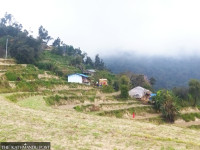
Sushma Bhatta, 55, of Dhangadhi has dreamed of visiting Badimalika for years. Yet stories about difficult trails and inadequate accommodation have repeatedly discouraged her from making the journey.
Badimalika, renowned for its religious significance, sweeping alpine meadows and exceptional biodiversity, is among Sudurpaschim’s most celebrated destinations. Nevertheless, visitors continue to face hardships because of poor trekking routes, limited accommodation, shortages of drinking water, inadequate sanitation facilities, weak communication services and a lack of other basic infrastructure.
The destination has received increasing national attention in recent years. The federal government has since included the Shuklaphanta-Khaptad-Badimalika tourism corridor and the Khaptad-Badimalika-Ramaroshan-Budhinanda-Rara-Swargadwari high-altitude eco-trail in its budget for the current fiscal year of 2026-27. The government’s 100-point governance reform agenda also mentions preparing an implementable plan for the Badimalika trekking route. Yet visible progress remains limited.
A provincial task force recently estimated that around Rs1.79 billion would be required to build safe trails, accommodation, drinking water facilities and other essential infrastructure. However, no dedicated allocation was included in Sudurpaschim Province’s budget for the current fiscal year.
Every year, special worship is held at Badimalika Temple on the eve of Janai Purnima. Pilgrims arrive not only from across Nepal but also from Uttarakhand, Kumaon and Garhwal in India, believing their wishes will be fulfilled after offering prayers.
Local officials say the greatest obstacle remains the absence of basic facilities.
“If we truly want tourism to flourish, we must first build fundamental infrastructure,” said Dambar Mahat, ward chair of Badimalika Municipality-2.
Ramsroshan gains popularity, but infrastructure remains unchanged
Ramaroshan in Achham has likewise become increasingly popular because of its pristine lakes, expansive grasslands and rich biodiversity. Yet poor roads, weak communication services and inadequate accommodation continue to make travel difficult, particularly during the monsoon.
Known as the land of ‘12 lakes and 18 meadows’, Ramaroshan stretches from about 2,000 metres to nearly 4,000 metres above sea level. Its largest meadow, Kinemine, covers around 52 bighas, while the Kailash stream winds through the valley.
“Each lake has its own unique character,” said Purna Bahadur BK, executive officer of the Ramaroshan Tourism Development and Management Committee. “During spring, twelve species of rhododendron bloom here. The forests echo with the calls of Himalayan pheasants, while musk deer, Himalayan serow and goral also inhabit the area.”
Local officials say domestic tourist numbers have increased noticeably since Balendra Shah highlighted Ramaroshan during his election campaign. Yet the rough road from Mujabagar remains the greatest barrier.
“Many tourists turn back because of the road,” said local entrepreneur Shamsher Bahadur Bohara. “During the monsoon, rivers and landslides wash away sections of the route. Everyone asks the same question: why is the road still so poor?”




 22.94°C Kathmandu