For Bhotekoshi flood survivors, the tuin is an ordeal
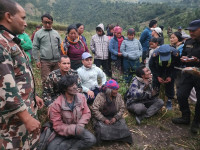
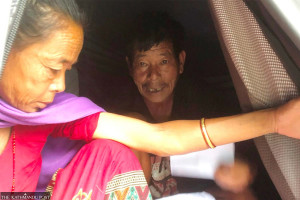
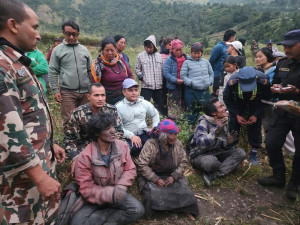
In Nuwakot, locals walk for five to six hours to reach the tuin, an improvised cable crossing, then wait for another four to five hours to cross. Nepal Photo Library
A few days ago, Gokarna Adhikari, a resident of Dandathok in ward 7 in Bidur Municipality, set out for Kathmandu, after his heart patient father ran out of medicines.
He started his journey early in the morning, knowing that reaching Kathmandu has become a major ordeal since the August 26 Bhotekoshi flood swept away bridges and roads connecting the area to the district headquarters and Kathmandu.
After walking for two hours from his home, Adhikari reached a newly installed tuin, an improved river-crossing in which a basket is suspended from a steel cable and is pulled from one side of the river to the other.
But reaching the tuin does not mean people can immediately get across.
First, they have to register their names, collect a slip and wait for hours. Young and able-bodied men are expected to pull the basket themselves, sometimes for hours, until their turn comes. Ailing people, women, children and elderly people do not have to pull the rope.
Adhikari also registered his name, took a slip, and began pulling the rope.
“Only after waiting for five hours and pulling the tuin’s rope did my turn come,” complained Adhikari. “I reached the other side at around 3 pm and took an electric vehicle to Kathmandu.”
After buying medicines in Kathmandu, he returned to the tuin location the next day at 3 pm. He followed the same procedure and started pulling the rope again. After three hours, darkness fell and police stopped the tuin from operating, leaving him stranded on the other side.
Adhikari spent the night at a relative’s house at Battar Bazar and returned to the tuin early the next morning. Even then, he had to wait until around 11 am to get across.
“It is an ordeal just to get across the river,” he said. “For people from Kispang, Dandagaun and Gogane Tiru of Rasuwa, it can take an entire day just to reach the tuin on foot. Even if you need ordinary medicine, you have to set aside an entire day, walk for hours and then cross the river hanging in a basket.”
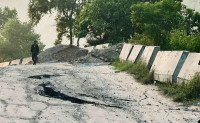
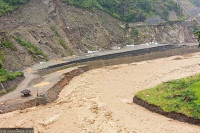
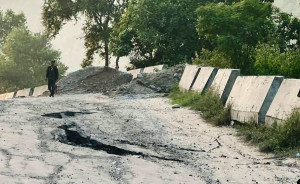
The August 26 Bhotekoshi flood swept away motorable bridges and suspension bridges, cutting off settlements on the other side of the Trishuli.
The tuin has become the only way to reach Battar Bazar, not only for residents of Aangutar and Bhairamkot in Tupche, Kispang of Bidur Municipality and Kispang Rural Municipality and parts of Rasuwa, but also for people living around Trishuli Bazar and Kolani.
Places such as Dhunge, Battar, and Bidur, which could be reached within 10 to 15 minutes before the flood, now take hours to reach. There were markets in Sole and Betrawati, where residents could buy essential goods and medicines without travelling far.
“Why would anyone go to Sole or Betrawati now?” said Damodar Paudel, another resident of ward 7 of Bidur. “There are no fields, shops, pharmacies, roads or vehicles there anymore. Without roads, our area has become even more remote than the remote settlements of Kalikot [in Karnali province. For even basic shopping, we have to go to Battar, but getting there and back is extremely difficult.”
According to Arjun Prasad Neupane, vice-chairperson of Kispang Rural Municipality, travelling from the rural municipality to Kathmandu via Galchhi (Dhading) now takes more than 12 hours.
Neupane himself returned to Kispang from the Nuwakot district headquarters on Monday using the tuin. On his way back, he was stranded at Sisnechaur in Bidur Municipality after heavy rainfall raised fears that the river would swell.
Neupane remembers crossing the Trishuli River on a tuin about 40 years ago to travel from Jayadanda to Sole Bazar and then to Betrawati. He also remembers fording the Salakhu river in 2006, before a permanent motorable bridge was built.
Tuku Prasad Subedi, ward 2 chair of Uttargaya Rural Municipality in Rasuwa, said residents of Dandagaun and other settlements have to walk for five to six hours to reach Kolani in Bidur. Even after reaching Kolani, they have to wait in line for hours to use the tuin.
The flood washed away not only roads but also local markets, leaving Dandagaun without a functioning market.
The few small shops that remain ran out of supplies within two days. Residents now have little option but to rely on whatever relief supplies are brought into the area, Subedi said.
Rabindra Nepal, ward 7 chair of Bidur and spokesperson for Bidur Municipality said residents on the other side of the Trishuli face enormous difficulties simply reaching the tuin and crossing the river.
According to Nepal, an agreement has been reached to install a Bailey bridge connecting Dhunge and Kolani. But installing the bridge will take time.
The bridge could reduce the queues at the tuin, but people from Tupche, Kispang and other areas will still have to walk for hours to reach the district headquarters until roads are restored.
Uddhav Rijal, chief of the Nepal Red Cross Society’s Nuwakot district chapter, said the tuin has become crowded as it is being used not only by local residents but also by relief workers and various groups travelling to the area for research.
“Those who come in the name of research sometimes jump the queue, which further increases the waiting time for locals,” Rijal said.
Arjun Poudel is a health reporter for The Kathmandu Post. Before joining the Post, he worked for Sagarmatha Television, Naya Patrika, Republica and The Himalayan Times.




 20.87°C Kathmandu