Women leaders hail expanded representation at Congress general convention
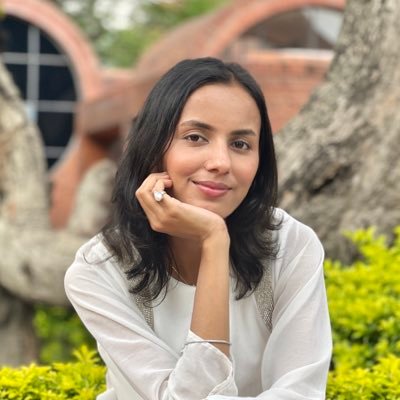
The party has increased women’s presence in top posts, but leaders remain divided over reserved positions and open competition.Pushpa Bhusal files her candidacy for the vice-president post reserved for women at the Nepali Congress’s 15th general convention. Nepal Photo Library
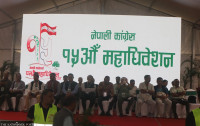
Nepali Congress leaders have welcomed changes to the party’s organisational structure that guarantee women greater representation in its top leadership.
The party’s 15th general convention has amended its statute to reserve one vice-president and one general secretary post for women. It has also guaranteed two women’s posts at the joint general secretary level, one to be elected and the other nominated by the party president.
Congress Vice-President Pushpa Bhusal said the changes would make it easier for women to rise to leadership positions.
“The statute has been amended at the 15th general convention to ensure women’s representation in leadership,” she said. “As women’s presence has increased among active members and regional representatives, their participation at the convention has also grown. That is what inclusion means. Women will now have a place at every level of the party.”
Bhusal said women had previously been underrepresented in decision-making positions.
“We have repeatedly said that unless women are represented in decision-making, they will not be drawn to the party or get the opportunities they deserve,” she said. The statute was amended at the 15th general convention to address this gap, she said, calling it an important step towards establishing women in leadership.
Previously, Congress elected eight joint general secretaries, one each from the Madhesi, Tharu, Indigenous Nationalities, Khas-Arya, Muslim, Dalit, women and disadvantaged-region categories. The women’s category was the only office-bearer post specifically reserved for women.
The party has now increased the number of joint general secretaries to 15. Under the new arrangement, the party president will nominate four, including one woman. Of the remaining posts, two will be elected under an open category and one from the minority or disability category.
Bhusal became the second woman to serve as Congress vice-president after Shailaja Acharya. She was elected vice-president at the party’s special general convention.
The changes have also sparked a debate among women leaders, with some objecting to the perception that women need reserved positions to enter leadership.
Mahalaxmi Upadhyay ‘Dina’, who is contesting for general secretary, said that narrative was misplaced.
“Women face challenges in reaching leadership positions, and there may be times when people come together to prevent them from winning. Perhaps that is why some are afraid,” she said.
But Upadhyay said she had always competed against men and was not afraid of doing so. She is now seeking the post of general secretary on the same footing.
Bhusal described the 15th general convention as historic for women.
“This has to be called a historic convention for women because getting women into policy-making positions is a very significant development,” she said. Congress has long been seen as a party rooted in old and traditional practices, she said, with women often struggling to reach policy-making positions. The 15th general convention, she added, has opened that path.
Breaking with factional politics
Congress has traditionally fielded candidates along factional lines. Leaders say the leadership that emerged from the special general convention has broken with that practice, with no faction putting forward a panel this time.
“In the past, there was strong pressure to align with a particular leader,” Bhusal said. Candidates also believed they needed a leader’s backing to secure a ticket, she said.
The party has also established a Leadership Academy to develop its future leaders. An Election Bureau has been formed to address irregularities in candidate selection, with the party proposing to select candidates through primary elections.
Candidates seeking to contest elections will also have to undergo training specified by the Leadership Academy.
“There have been many more changes inside the party than in the past,” Bhusal said.
Despite the increase in women’s participation at the 15th general convention, questions remain over whether women will be able to win leadership positions by competing in open categories rather than relying on reserved seats.
Upadhyay said the policy changes aimed at increasing women’s participation were broadly positive.
“Everything has now been laid out in policy. We had demanded that one-third of office-bearers be women. We have not reached that target, but the percentage is increasing,” she said.
Women now hold more positions among general secretaries, joint general secretaries and vice-presidents. Although the numbers remain below the one-third target, she said the steady increase was itself an achievement.
She said the changes had made it easier for women to advance and would give them a greater role in the party in the future.
Gen Z leader Juli Pokharel, however, said there was a tendency among some women to seek leadership only through reserved categories rather than competing in open contests.
“Some women are willing to compete only in the women’s cluster and are afraid to contest in the open category. If it is an open category, both women and men should be able to compete. But the way this is being interpreted now is somewhat wrong,” she said.
Pokharel said men and women should not face different standards when competing for party positions.
“Men are addressed as leaders, while women are often treated as ‘sisters’. That mindset needs to change,” she said. Leadership should be based on ability, political experience, grassroots work and public support, not gender.
Pokharel said the party should first ensure equal opportunities for men and women before opening all leadership contests.
The current reserved clusters remain necessary, she said, because women still face barriers to political leadership. Once the gap narrows, the party could move towards open contests without separate clusters.
Krishna Kumari Basnet, 42, who is contesting for a seat on the Central Working Committee, said the 15th general convention would give capable women greater opportunities.
“I believe women who have entered politics with honesty, integrity and ability will find a place at this convention,” she said.




 18.95°C Kathmandu