Journalists raise alarm over police intervention and proposed media laws
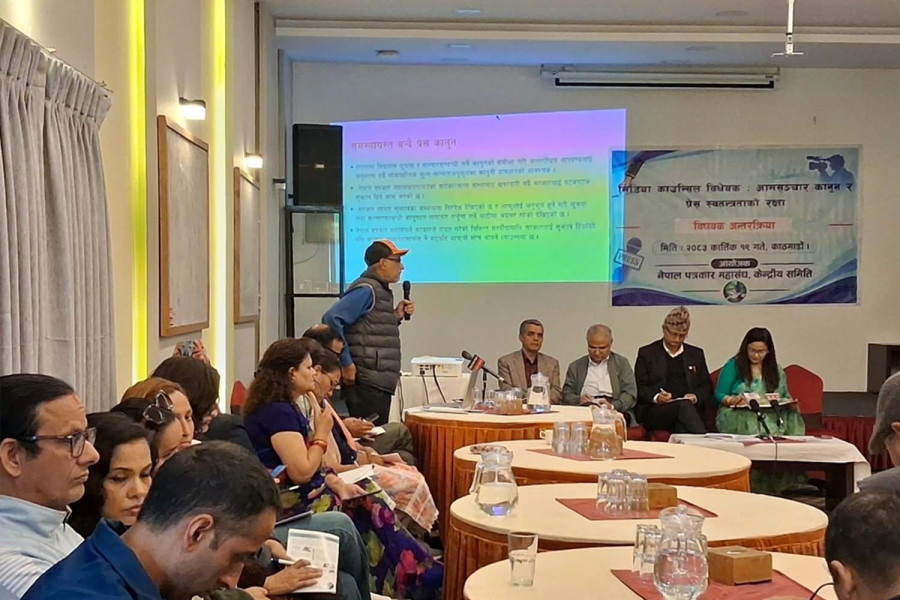
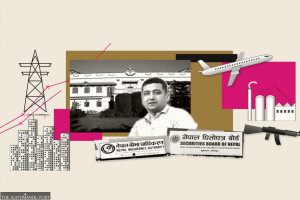
The Federation of Nepali Journalists has questioned the government’s approach to the media, citing police raids on newsrooms, pressure on journalists and proposed legislation it says could undermine constitutional guarantees of press freedom. Post Photo
The detention of three journalists after plainclothes police officers entered newsrooms in Kathmandu last Friday has fuelled concerns over press freedom, with journalists warning of growing state pressure on the media.
Police first entered the offices of Nepal Press and took journalist Bishwamani Subedi into custody. They subsequently detained Shobharaj Baral, editor of Motive News, and Dhiraj Basnet, editor of DNA Khabar. All three were released after a brief period. But the incidents, involving police entering media offices and taking journalists into custody, have raised serious questions about the protection of press freedom.
The Federation of Nepali Journalists has also repeatedly questioned the government over reports of police visits to media organisations, obstruction of newsroom operations and increasing pressure on journalists.
Against this backdrop, the federation on Thursday held an interaction with media stakeholders on the government's proposed Media Council Bill, mass communications legislation and the protection of press freedom.
Former federation president Dharmendra Jha said the organisation was currently engaged in a protest movement, not just to defend journalists’ interests but also to protect democracy and the public’s right to information.
He said the proposed Media Council Bill reflected the government’s intention to bring the media under its control, accusing it of wanting news organisations to operate according to its preferences.
“The government stopped public-interest advertising subsidies, and the court ordered it to resume them. Yet the bill includes provisions that would allow the government to withhold such support, contrary to the court's order,” he said.
Jha also questioned the government's haste in introducing an ordinance without holding further discussion on the proposed bill.
Referring to Friday’s detention of journalists, he said no government agency had taken responsibility for the incidents of police action against media workers. He questioned who would be held accountable if non-state actors also began entering newsrooms and interfering with journalists' work.
“If non-state actors become emboldened by this example and start entering media offices, who will take responsibility?” he said.
Jha also expressed concern that neither the parties in government nor those in opposition appeared willing to openly defend press freedom.
FNJ Vice-president Nitu Pandit said the proposed legislation was driven by a desire to control the media and should explicitly guarantee the full press freedom enshrined in the constitution. “Some of the terms used in the bill are vague,” she said.
She said the federation had previously maintained that it was inappropriate to drastically shrink the Press Council in the name of making it streamlined while expanding its directive committee.
“The bill undermines the Federation of Nepali Journalists,” Pandit said.
Former FNJ president Suresh Acharya said there needed to be clarity on whether discussions should focus on correcting the ordinance introduced by the government or on the government's conduct and the role of the media in the current circumstances.
He accused the government of creating an atmosphere of fear across sectors, not just in the media, and said the discussion should also address how journalists should respond.
Acharya said the federation needed to question the government's treatment of media organisations and demand an explanation for why security personnel were entering newsrooms.
“The state has directly interfered with media freedom,” he said.
Another former president, Bishnu Nisthuri, accused the government of pursuing various measures, both openly and covertly, in recent months.
Referring to the detention of journalists, the deployment of security personnel at media offices and other hostile actions, he said the government was feeling everyone's pulse. “The present government is operating both openly and covertly. It is feeling everyone’s pulse,” he said.
He argued that the government was gauging the capacity for resistance by testing the reactions of journalists, the judiciary and political leaders.




 18.26°C Kathmandu