Fees keep Nepal-Israel farm, care worker deals on hold
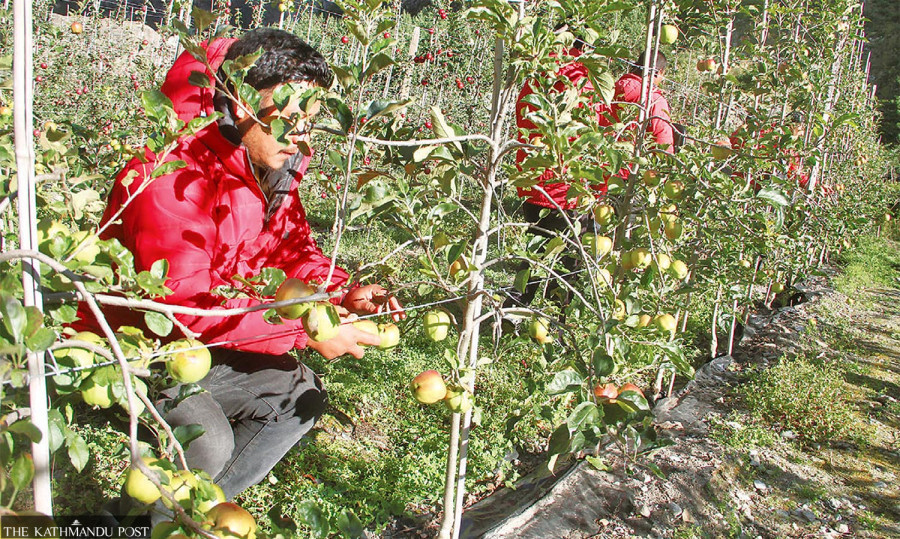
Israel says private agencies are legally entitled to charge foreign workers, while Nepal wants recruitment to remain free or worker-friendly A Nepali worker in Israel. Post file photo
A dispute over recruitment and service fees has stalled two proposed agreements to send Nepali workers to Israel’s agricultural and home-based care sectors, despite demand for labour in both areas.
Under draft protocols sent to Nepal, agricultural workers would have to pay an Israeli agency 3,825 shekels, including VAT, or about Rs193,000. Workers going into home-based caregiving would pay 6,443 shekels, or about Rs325,000, also including VAT.
Nepal has objected to the fees because they do not fit its policy of government-led recruitment designed to minimise costs for migrant workers. Israel, however, says private agencies are legally authorised to charge foreign workers for services related to their placement and management.
Under the proposed arrangements, Nepali workers would be selected and sent to Israel through government mechanisms. Once there, Israeli manpower agencies would take responsibility for assigning them to farms or households and managing their employment.
Workers would also have to cover other costs, including air tickets, medical examinations, English-language tests, visas, labour-related fees and insurance.
For agricultural workers, the draft protocol requires the 3,825-shekel fee to be deposited into the agency’s bank account within one working day of arrival in Israel. The agency would then issue an official receipt.
For home-based caregivers, the proposed 6,443-shekel fee would be paid in three instalments. Workers would pay 3,943 shekels, including VAT, within three days of arrival, followed by 1,250 shekels at the end of their 26th month and another 1,250 shekels at the end of their 38th month.
Israel says the fees cover management, welfare and administrative services. Its Population and Immigration Authority has long involved authorised private agencies in registering foreign workers and managing their employment with employers in the agricultural and home-care sectors.
“Whether workers have to pay a service fee is linked to policy. We are discussing this condition with Israel,” a Labour Ministry official told the Post. “We are saying that agricultural and home-based care workers should be recruited under the same institutional model currently used for caregivers.”
Israel sent the two draft protocols to Nepal about a year ago. The dispute has delayed their finalisation.
Israeli Ambassador to Nepal Shmulik Arie Bass has said Nepal’s hesitation is costing Nepali workers employment opportunities. Speaking to journalists during a recent visit to Pokhara, Bass said Nepal was reluctant to sign a protocol under which workers could earn about $130,000 over 63 months, or roughly Rs20 million.
“The service fee is not paid to human traffickers or brokers. It is paid to companies designated by the Israeli government through tenders for services including health insurance, so there should be no doubt about it,” Bass said.
He also said Israeli law, enacted by parliament in 2001, requires the fee to be paid electronically within three days of a worker’s arrival.
Nepal already has a separate protocol under which caregivers are sent to institutions providing long-term care to elderly and disabled people in Israel. That arrangement is different from home-based caregiving.
On July 16, 1,115 Nepalis were selected through a lottery to work under the institutional care programme. Seventy-five percent of those selected were men and 25 percent women. The Department of Foreign Employment is sending them in groups.
Applications have also been invited for another 1,464 positions under the programme, with the deadline set for October 12.
Bass said the number of Nepali workers entering Israel through the institutional care programme remains limited, while demand for workers in agriculture and home-based care is much higher.
Israel has authorised up to 70,000 work permits for foreign agricultural workers. Israeli officials said about 49,000 foreign workers were employed in agriculture at the beginning of 2026.
Thailand, Sri Lanka and Malawi are among the main sources of agricultural workers, while Israel has also reached agreements with Cambodia and Ecuador. In 2025, Israel agreed with Thailand to bring in 13,000 agricultural workers.
Sri Lanka is also supplying workers for Israel’s home-based care sector.
Hom Karki is a reporter with two decades experience covering migrant workers issues and the Nepali diaspora. He was previously based in the Gulf for Kantipur Daily.




 16.66°C Kathmandu