Youth networks take lead in tackling Chhaupadi and child marriage
Despite resistance from families and limited support from community leaders, child club members in western Nepal are dismantling menstrual huts and helping stop underage marriages. By reporting planned child marriages and monitoring Chhau sheds, young activists are challenging entrenched practices while also pushing child rights and safety higher on the local agenda. Post File Photo
It has been a year since 15-year-old Dhurba Adhikari became president of the ward-level Child Network in Panchadeval Binayak Municipality-3. Soon after taking charge, the network drew up a one-year action plan focused on social practices affecting children.
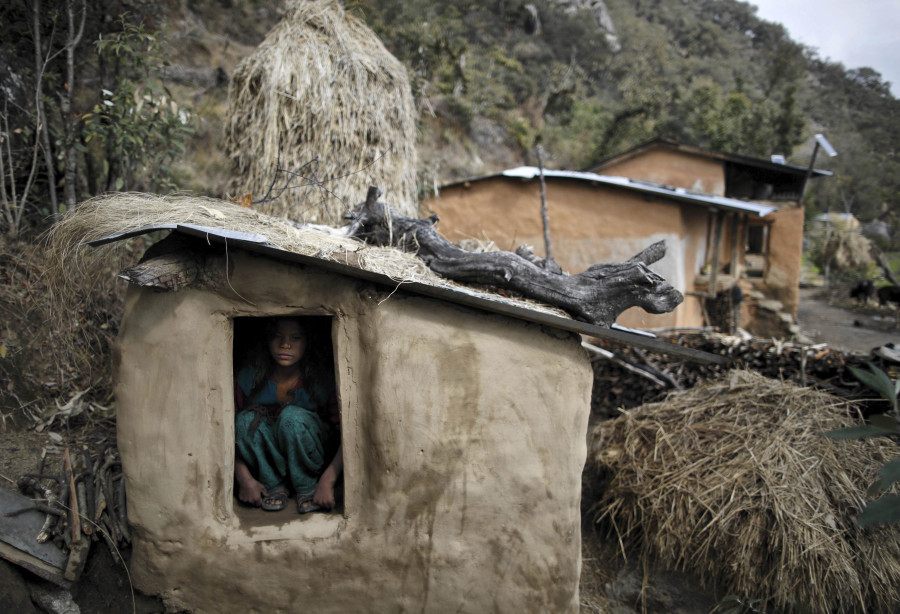
At the top of its agenda were Chhaupadi, the practice of isolating menstruating women and girls in unsafe sheds, and child marriage.
Over the past year, the network has demolished 10 Chhau sheds in the ward. Members identify the huts, talk to families and seek help from the Nepal Police and other stakeholders when necessary. Adhikari said the campaign has also helped stop five child marriages.
“We started demolishing Chhau sheds in our neighbourhood. The locals strongly resisted, but we did not back down,” Adhikari said. “We showed the same resolve in stopping child marriages and prevented five underage weddings.”
But challenging deeply rooted social practices has not been easy. Adhikari said the network receives little of the support it expects from local leaders and elected representatives, making its work more difficult.
Despite the lack of institutional backing, members are trying to lead by example in their own homes.
Ramila Shahi, 14, another network member, persuaded her family to demolish their Chhau shed.
“Going to network meetings while keeping a Chhau shed at home made me uncomfortable,” Shahi said. “My family initially refused and asked where I had learned these things. With support from my friends in the network and the police, we demolished it. I now stay inside the house during my period and encourage other families to do the same.”
Similar child-led efforts are gaining ground in other parts of Achham.
In Kamalbazar Municipality-5, Kuika, the ward-level child network has become an informal information network for preventing child marriages.
According to network member Kuber Devkota, members gather information about planned underage marriages and alert authorities. Acting on their information, ward officials and police recently tracked down and brought back 13 underage individuals who had been taken to India after getting married.
The Kuika network also promotes marriage at the legal age. The legal age of marriage in Nepal is 20. Devkota said the ward office recently honoured 25 couples who married after reaching the legal age, giving young people an incentive to wait rather than marrying as children.
The network also monitors Chhau sheds and urges families to allow women and girls to stay safely inside their homes during menstruation. Reshma Bhul, a network member, said young people regularly visit households to monitor whether families are continuing the practice.
Their persistence appears to be changing attitudes among local leaders as well.
Ratan Bhul, a ward member in Kamalbazar-5 who also serves as a traditional Dhami, or faith healer, said his own views had changed.
“I am an elected representative and a Dhami. Whatever the practices were in the past, I have now joined the campaign to ensure women remain safe inside their homes during menstruation,” he said.
By reporting planned child marriages and monitoring Chhau sheds, the young activists are challenging entrenched practices while also pushing child rights and safety higher on the local agenda.




 13.68°C Kathmandu