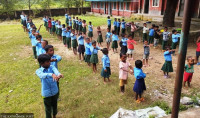
From village schools in Jhapa and Bardiya to CBSE institutions in Birgunj, children from neighbouring Indian communities are crossing into Nepal daily in search of better schooling. Students at Buddha Basic School in Kachankawal, Jhapa. Post Photo
Every morning, children from villages in India make their way into Nepal, some travelling by rickshaw, others on foot. They join their Nepali classmates to sing the national anthem before heading into their classrooms.
The scene has become increasingly familiar at schools in border districts such as Jhapa, Bardiya and Rautahat. Unable to find satisfactory schooling close to home, these children are crossing an international border for their education.
The movement reflects the longstanding social and cultural ties between communities on either side of the Nepal-India border, traditionally described as roti-beti relations, rooted in shared livelihoods and family connections. While many Nepali students travel to India for technical and higher education, the flow also runs in the opposite direction. Schools in parts of Koshi, Madhesh and Lumbini provinces have become regular destinations for Indian children seeking primary and secondary education.
In Jhapa, children from Dalle village in India’s Bihar state travel about two kilometres to attend school in Kachankawal rural municipality-5. The communities on both sides of the border share close social ties, making the daily journey to Nepal a familiar routine for families in Dalle.
Around half a dozen children from the Indian village attend Devi Basic School. They arrive every morning by rickshaw and confidently join their Nepali classmates in singing the national anthem. Unless someone asks, it is difficult to tell that they are Indian citizens. A video of the children singing Nepal’s national anthem alongside their classmates has gone viral on social media.
Headteacher Jaya Singh Rajbanshi says the children attend regularly, despite the distance. Their village has limited access to schooling, and the quality of teaching there is a concern, he said.
“They always come to school by electric rickshaw. They complain that the school in their village is far away and the teaching is not particularly good,” Rajbanshi said. For the children, he added, studying in Nepal is less a matter of preference than necessity.
Another school in the same ward, Buddha Basic School in Khungaru Bhitta, also draws around a dozen pupils from India. Their journey involves crossing the Jhing stream, which separates the two countries.
Headteacher Kushpata Lal Rajbanshi said the children take risks to reach school but remain committed to their studies. “They are dedicated to their studies despite the risks involved in getting here. There is no language barrier, and they work hard,” he said.
Koshi Provincial Assembly member Nimsari Rajbanshi sees the cross-border school journeys as an expression of people-to-people ties that have endured beyond national boundaries.
“Political relations between the two countries or debates about national identity have not stopped them from going to school. Their priority is simply a good education,” she said. Family ties, kinship and social relationships extend across the border, she added, and education has become another part of that shared life.
In Bardiya, too, Indian families are sending their children to Nepal because they see better educational opportunities across the border.
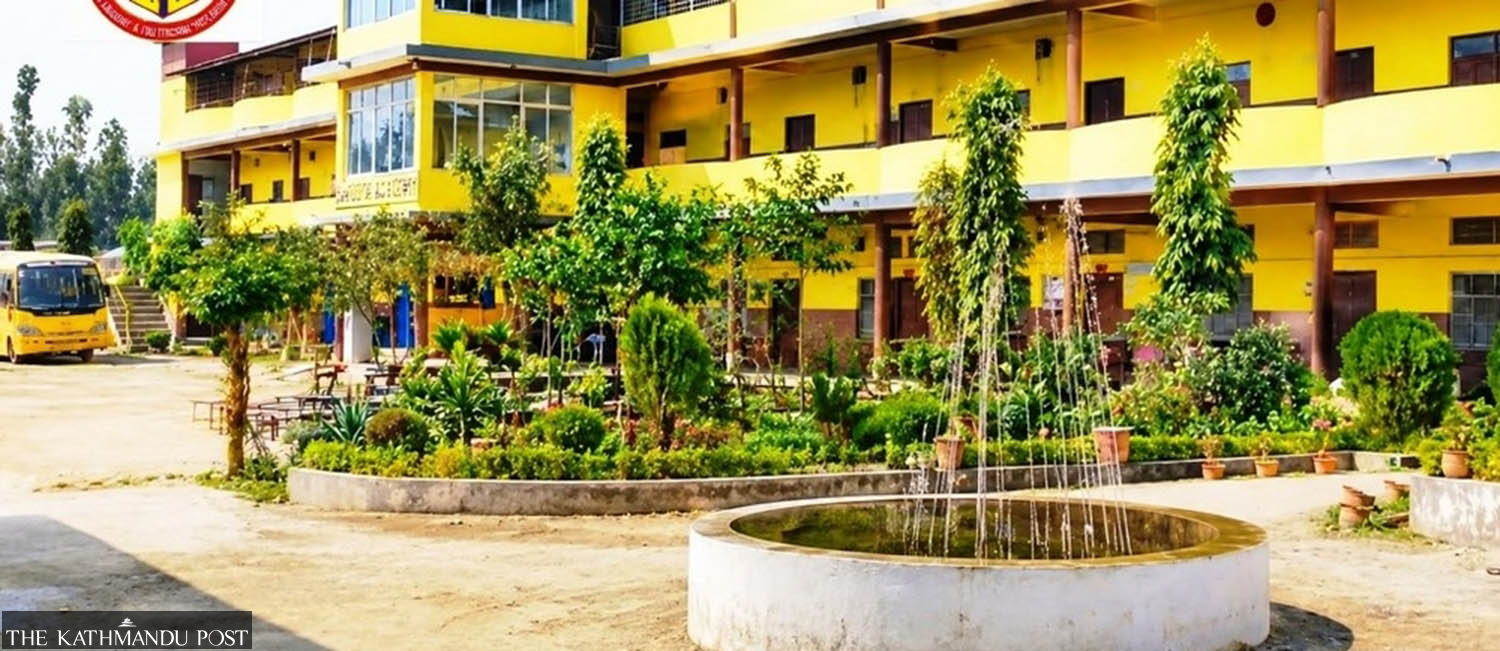
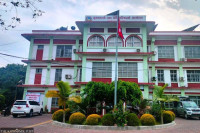
Bardiya Academy and Polytechnic Research Centre in Tilakana, ward 8 of Badhaiyatal Rural Municipality, Bardiya, which attracts students from India. Post Photo
Abhishek Kuswa, from Balai village in India’s Bahraich district, is enrolled at Bardiya Academy and Polytechnic Research Centre in Badhaiyatal rural municipality. A grade 8 student, he said he chose the school because of its experienced teachers and quality of instruction.
His village lacks schools offering English-medium classes and has a shortage of technical teachers, he said, prompting him to continue his education in Nepal.
Umar Khan, another student from Balai, has been attending the same institution since the previous academic year. Dozens of children from the village have studied there over the years. They bring food from home and travel roughly five kilometres to school, either by bicycle or on foot, while some are dropped off by their parents.
The academy, which runs classes from nursery to grade 10, currently has 10 students from Balai. They have also learnt Nepal’s national anthem by heart.
Suresh Kushwa, a parent, said his family chose the school because of the lack of English-medium technical education in their area. He said Bahraich’s border communities did not have schools with facilities comparable to those available in Nepal.
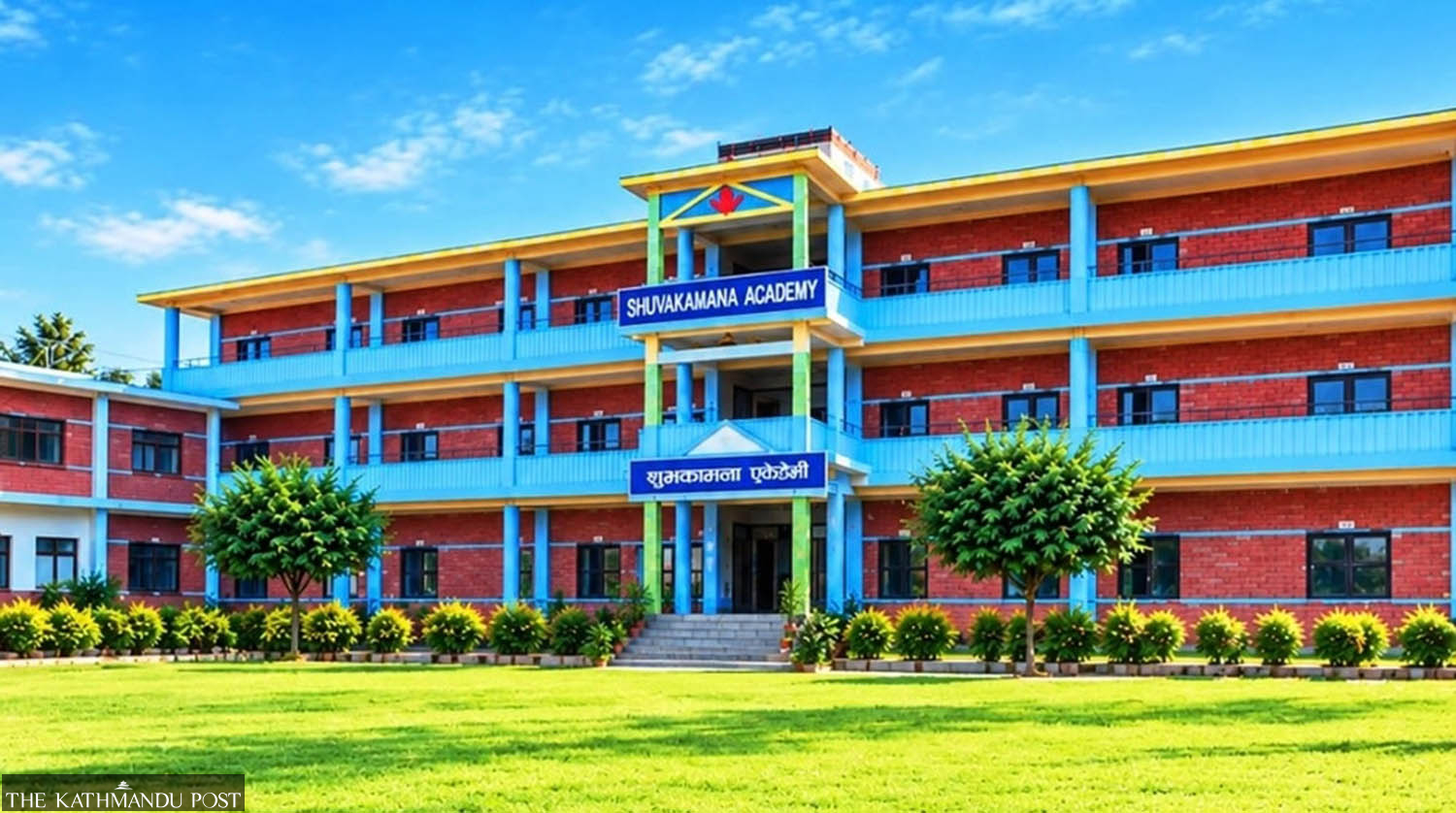
Indian children also attend Shubhakamana Academy in Kanthpur, Badhaiyatal-8. The school provides transport to and from the Indian village of Laukahi, making the daily commute easier.
Principal Sanjay Shrestha said Indian families were drawn by the quality and affordability of secondary education in Nepal. Many students who pass the Secondary Education Examination (SEE) at schools in the area later move to Lucknow in India for higher studies, he said.
The number of students could grow further if transport across the border became easier, Shrestha added.
Their family backgrounds vary. Parents of children attending private schools are mostly traders and businesspeople, while many Indian students enrolled in community schools come from low-income households, said Tejnath Paudel, ward chair of Badhaiyatal-8.
Community schools in Jamuni, Sitapur and Phutaha also have students from India. According to Paudel, the Indian settlements across the border are small and surrounded by dense forests, and government schools there do not always operate regularly. Children have been crossing into Nepal to attend school for the past eight to 10 years, he said.
Buddha Giri, managing director of Bardiya Academy and Polytechnic Research Centre, said the school once operated buses across the border to pick up and drop off students. That service stopped after authorities restricted vehicle movement through border crossings other than Gulariya and Rajapur. The restrictions were imposed two years ago amid an increase in drug-smuggling incidents along the border, he said.
In Rautahat, the lack of a school in Baluwa village on the Indian side has led parents to send young children to Gyanganga Private School in Banjaraha Bazar, across the border in Ishnath Municipality.
The school, which offers classes up to grade 5, has operated for a decade and become a local centre for early education. More than half a dozen children from India have been attending regularly for the past three years, said teacher Birendra Patel.
Most are enrolled in nursery, where they learn basic literacy and numeracy. With no nearby school in their village, parents bring them to Nepal to begin their education, Patel said.
After completing their early schooling, some children move to other institutions for higher grades. They do not take formal academic documents or transfer certificates from Gyanganga. Some return to schools in India after learning to read, write and speak in nursery, while others continue at Gyanganga until grade 2.
The school has become an informal starting point for their education and intellectual development, Patel said. “They study happily and make good progress,” he added.
Grishanandan Singh, a community elder in Banjaraha, said the cross-border relationship was built on more than proximity. Residents share similar climates, lifestyles and cultural practices, and support one another in difficult times.
Shuvakamana Academy in Kanthapur, ward 8 of Badhaiyatal Rural Municipality, Bardiya, which also attracts students from across the Indian border. Post Photo
“The longstanding ties across the border have added a new dimension through education, strengthening the social and cultural closeness between Nepal and India,” he said. Although the border separates the two countries geographically, he added, the daily lives, relationships and connections of local people remain closely intertwined.
Residents say the willingness of Indian families to send their children to Nepalese schools reflects the trust between communities. Shared languages, cultures and ways of life also make it easier for Indian pupils to settle in. They play and learn alongside Nepali children, with few difficulties adapting to their surroundings.
Suresh Sah, a resident, said the informal educational services offered by schools in Banjaraha were helping extend the traditional roti-beti relationship into the educational sphere, deepening people-to-people ties between the two countries.
The trend is not confined to rural schools. In Parsa district, Birgunj has become a popular destination for students from the Indian border town of Raxaul and surrounding areas. Several schools in the city offer the curriculum of India’s Central Board of Secondary Education (CBSE), allowing Indian students to study under the education system of their home country while living across the border.
Many enrol at Gyanada Academy, CG Education (Delhi Public School) and DAV School.
Aditya and Jyoti Kumari, both from Raxaul, are in grade 11 at Gyanada Academy, where they study science. They said they chose the school because classes in their hometown were not held regularly, qualified teachers were in short supply, and academic guidance was limited.
Rajendra Prasad Koirala, principal of Gyanada Academy, said Indian parents were increasingly attracted to Birgunj because of its educational standards and learning environment. Some families believe schools in Birgunj offer a better academic environment than institutions in nearby northern Indian cities, including Motihari, Bettiah and even Patna, he said.
The academy receives around 100 Indian students daily from Raxaul, Sikta and Bhelahi. They range from playgroup to grade 12.
CG Education (Delhi Public School) receives around 80 students from the Raxaul area every day. Saurya Gupta, a grade 12 commerce student from Raxaul, said he preferred the discipline, organised teaching and academic environment in Birgunj.
Shailvi Sikariya, also from Raxaul, studied at the school from play group through grade 12. She said the school offered better opportunities for academic and extracurricular activities, while students also benefited from supportive teachers and a good learning environment. The school’s bus service to Raxaul makes her daily commute convenient.
CG Education principal Rajiv Kumar Anand said English-medium education in Birgunj was of a higher standard than in Bihar. The school follows the CBSE curriculum from junior classes through grade 12.
DAV School in Birgunj also has a substantial number of Indian students. Of its approximately 650 students, around 60 percent follow the CBSE curriculum, principal Rakesh Mishra said. About 40 students travel daily from Raxaul to attend the school.
Children of Indian nationals working or running businesses in Nepal also study at these institutions. Being able to follow their home country’s curriculum while living in Nepal makes the arrangement convenient for their families.
Ruhi Sah, a grade 9 student from Raxaul, is among those who travel to Birgunj every day. She said the city’s schools offered a better learning environment and higher academic standards than those in her hometown.
Nikhit Sarraf, a grade 8 student who also commutes from Raxaul, said the combination of academic quality, extracurricular activities and practical learning had drawn him to schools in Birgunj.
Mishra said the city’s schools benefited from trained teachers, organised classroom instruction and the use of artificial intelligence (AI) in education, facilities he said were not readily available in northern Bihar.
For social activist Prakash Tharu, the growing number of Indian children studying in Nepal is a welcome development that could strengthen ties beyond the border region.
“When children from both countries sit in the same classroom, it brings them even closer,” he said, pointing to their shared cultures and ways of life. Nepal’s schools, he added, have the potential to attract students from other countries too, making education a more internationally oriented sector.




 18.12°C Kathmandu