Nepal stalls UN rapporteur visit amid delays in transitional justice appointments
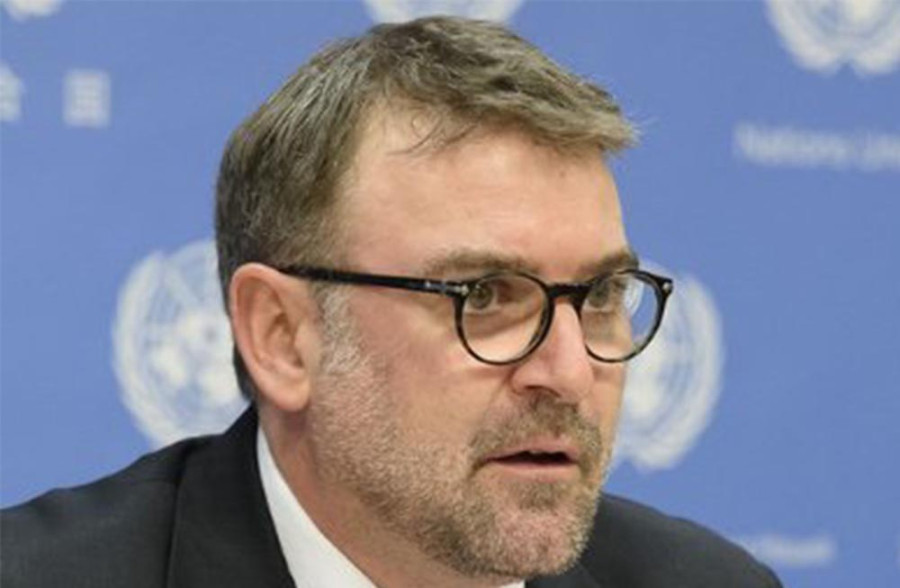
Government cited lack of office-bearers in transitional justice commissions for cancelling Duhaime’s June visit but has made little progress in filling the vacancies. Nepal is seeking a third term on the UN Human Rights Council while repeatedly stalling UN rapporteur Bernard Duhaime’s visit to assess the country’s transitional justice process. Photo: Courtesy of Bernard Duhaime/X
After years of resistance from successive governments, the then KP Sharma Oli government finally agreed in August 2025 to allow Bernard Duhaime—the UN Special Rapporteur on the promotion of truth, justice, reparation and guarantees of non-recurrence—to visit Nepal.
But nearly a year later, the long-awaited visit remains uncertain, with the government yet to respond to Duhaime’s proposal to visit Nepal in November.
The government had initially agreed to a 10-day visit from March 10 to 20, but the dates coincided with Nepal’s general elections. The government and Duhaime subsequently agreed to reschedule the visit for June 9 to 19.
However, after the Balendra Shah government in May first week dismissed the office-bearers of the two transitional justice commissions, along with hundreds of other appointees made by previous governments, it informed Duhaime that the June visit would not be possible.
In its May 18 letter, the government said it would “highly welcome” a rescheduled visit after September. Duhaime responded by proposing his visit for November 17 to 27. Three months later, however, he is still waiting for a response from Kathmandu.
“No formal response from the Nepal government has been received so far,” Duhaime said in an email response to the Post. His visit is intended to assess Nepal’s efforts on truth, justice, reparation, memorialisation and guarantees of non-recurrence in addressing serious human rights violations committed during the 1996–2006 Maoist insurgency.
The Balendra Shah administration cited the vacant leadership of the Truth and Reconciliation Commission and the Commission of Investigation on Enforced Disappeared Persons when it cancelled Duhaime’s June visit. But with the government yet to begin the appointment process for the two transitional justice bodies, it is unclear whether the vacancies can be filled before his proposed visit.
Past appointment processes suggest that filling the vacancies could take around six months, from the call for applications to the final selection. The government itself has no clear answer on when Duhaime will be allowed to visit Nepal.
“We believe his visit would be effective after the appointments in the commissions,” Ramji Danai, chief of the Human Rights Division at the Prime Minister’s Office, told the Post. Danai, however, could not provide a specific timeline for the visit.
The latest uncertainty is part of a longer pattern of Nepal delaying access to UN human rights experts. Along with the special rapporteur on truth, justice and reparation, UN experts and working groups on enforced or involuntary disappearances and extrajudicial, summary or arbitrary executions have repeatedly sought to visit Nepal, with some requests dating back to 2019.
The government’s non-committal position in the special rapporteur’s visit comes as Nepal seeks a third term on the UN Human Rights Council, with elections scheduled for October.
The special rapporteur is a part of the council’s special procedures, through which independent experts are mandated to report and advise on human rights issues.
Human rights experts see a paradox in Nepal seeking a third term on the council while remaining non-committal about a visit by one of the council’s independent human rights experts.
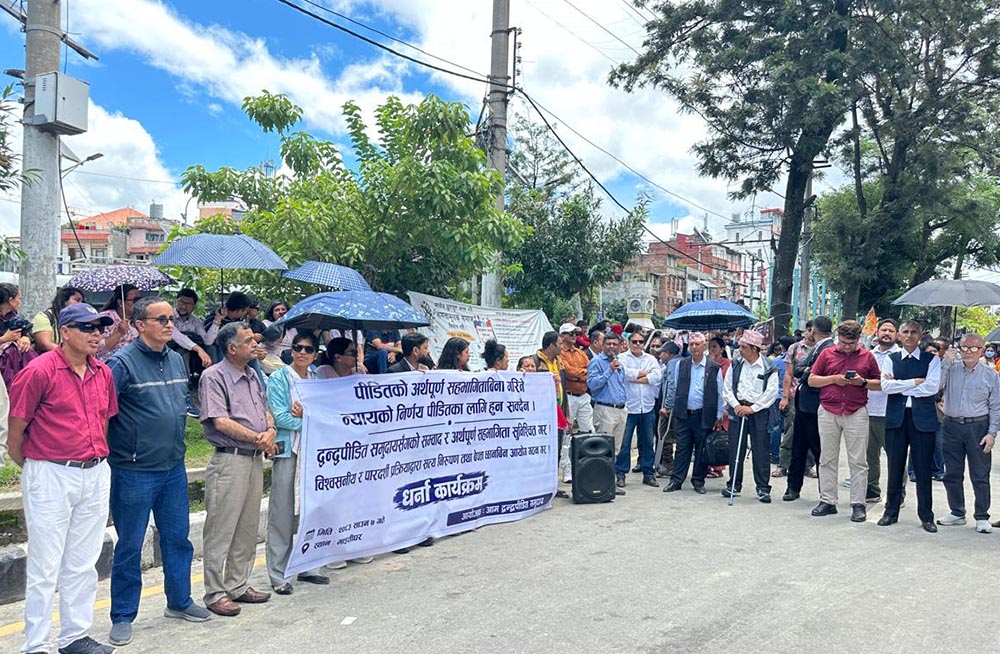
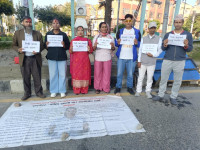
Human rights experts see a paradox in Nepal seeking a third term on the council while remaining non-committal about a visit by one of the council’s independent human rights experts. Photo: Courtesy of Suman Adhikari
Gauri Pradhan, a former member of the National Human Rights Commission, said a democratic country should be receptive to scrutiny from UN human rights experts. “Keeping a UN special rapporteur waiting does not reflect well on the country that has already served on the Human Rights Council twice and aspires for the third consecutive term,” he said.
Pradhan added there was no justification for the powerful government to delay appointments in the commissions responsible for delivering justice to thousands of victims of the 1996–2006 insurgency. “If the lack of office-bearers in the transitional justice commissions is the only reason for delaying the visit, what is stopping the government from making the appointments in time?” he said.
Under the Enforced Disappearances Enquiry, Truth and Reconciliation Commission Act, a five-member recommendation committee headed by a retired chief justice recommends 10 office-bearers—five for each of the two commissions. The law, as well as several Supreme Court rulings, requires the committee to consult a range of stakeholders before making its recommendations to the government. The process is therefore time-consuming.
While the government has already appointed, or begun the process of appointing, officials to many of the positions it vacated in May, it has made little progress towards filling the vacancies in the two transitional justice commissions.
Law Minister Sobita Gautam said her ministry has completed the preparatory work for forming the search committee to select office-bearers of the transitional justice commissions and forwarded the names to the Office of the Prime Minister and Council of Ministers.
“The work that needed to be done by the ministry has been completed and sent to the Office of the Prime Minister and Council of Ministers,” Gautam told the Post. “The remaining work now needs to be carried out by the Prime Minister’s Office.”
The ministry has prepared a list of nominees for the chairperson and members of the search committee and sent it to the PMO. Once the Cabinet approves the names, the legal process for forming a recommendation committee led by a former chief justice can move ahead.
Appearing before the Law, Justice and Human Rights Committee on May 25, Gautam had said political-level dialogue, coordination and consultations were continuing and that the government was regularly engaging with stakeholders to restart the transitional justice process.
Nearly three months have passed since that commitment but the process has yet to move beyond the preparatory stage.
Asked about the way forward, Duhaime said, “It is expected that further dialogue will take place during the coming session of the Human Rights Council, in September 2026.”
Gautam, meanwhile, declined to comment about Duhaime’s potential visit.
Binod Ghimire covers parliamentary affairs and human rights for The Kathmandu Post. Since joining the Post in 2010, he has reported primarily on social issues, focusing on education and transitional justice.




 13.68°C Kathmandu