



 24.64°C Kathmandu

Thu, Oct 22, 2026
National
‘Action-oriented’ home minister’s first 100 days test procedural limits
Amid high-profile arrests and pledges of police reform, Sudan Gurung’s push for rapid action has raised questions about due process and institutional safeguards.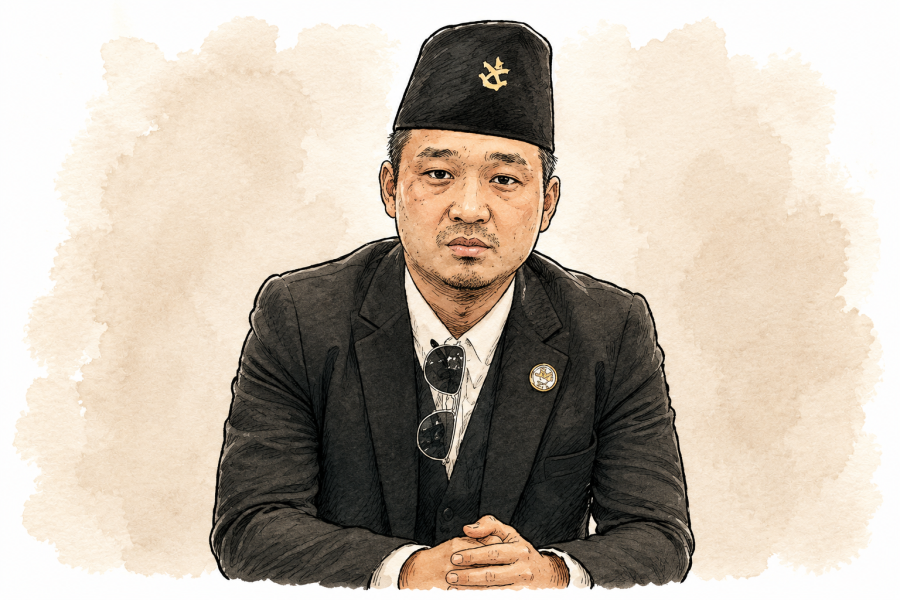
bookmark
Gaurav Pokharel
Published at : July 3, 2026
Updated at : July 3, 2026 20:00
Kathmandu
After returning to lead the Ministry of Home Affairs following a probe into a share investment controversy, Home Minister Sudan Gurung made a high-profile decision to reopen the investigation into the 2001 royal palace massacre. The move was welcomed by some on social media, while others dismissed it as a publicity stunt, questioning the revival of a 25-year-old case file.
Three weeks after the announcement, the ministry is still unclear on how to proceed. Whether the investigation should be handled by Nepal Police or an independent committee has yet to be decided. As a result, the investigation has made no progress.
Devi Ram Sharma, who led the National Investigation Department at the time of the June 1, 2001 massacre, said reopening the case was a positive step but warned of procedural and technical challenges.
“Given the time that has elapsed, complications are inevitable, but it is not impossible,” he told Kantipur. “However, it would have been wiser to hold thorough consultations with relevant experts before announcing such a move.”
Gurung, according to officials, briefed police only after making the decision. During the meeting, officers listed multiple challenges, noting that a high-level commission led by the then chief justice had already investigated the incident and that key procedures such as crime scene mapping, post-mortems and ballistic examinations were conducted differently at the time. Some officials suggested securing cabinet approval before moving ahead.
The episode has come to define Gurung’s working style in his early tenure. An Additional Inspector General (AIG) of Nepal Police said the minister shows strong intent, but rushed decisions are creating unnecessary complications. Police officials also said he has occasionally pushed for direct involvement in law enforcement raids.
Shortly after taking office on March 27, Gurung urged police to implement the findings of a high-level probe commission led by Gauri Bahadur Karki. After the Balendra Shah-led government was formed, its first cabinet meeting decided to implement the report. That evening, Gurung summoned Nepal Police Inspector General Dan Bahadur Karki and Armed Police Force Chief Raju Aryal, instructing them to immediately arrest CPN-UML chair KP Sharma Oli, who was prime minister during the Gen Z protests, and Congress leader Ramesh Lekhak, who served as home minister at the time.
At the time, police had not formally received the report and said they needed time to review it before initiating action. Officials also cautioned that arresting a figure like Oli could trigger political unrest and would require a full risk assessment.
Gurung, however, dismissed such concerns and suggested artificial intelligence could be used to quickly process the documents. He also warned he would personally take to the field if police refused to act.
Following consultations with Prime Minister Shah, police eventually demanded written instructions. A formal letter from the Home Ministry arrived at Nepal Police Headquarters at midnight ordering the arrests of Oli and Lekhak. Both were detained by dawn but were later released following a Supreme Court order, and no charges have been filed so far.
Senior Superintendent of Police (SSP) Dilip Ghimire of the District Police Range, Kathmandu, said, “The matter is still under investigation, and we will file a case once it concludes.”
During his early tenure, Gurung has sought to project an image of an action-driven minister. However, his public sharing of arrest counts and warrants has drawn criticism. In the government’s first 100 days, the home administration has faced allegations of a “shoot first, ask questions later” approach, with arrests made on suspicion and evidence gathered later.
Key incidents include the interrogation of Secretary Krishna Hari Pushkar over an alleged breach of administrative protocol after he sent a text message to the prime minister, and the police taking contractors Ramesh Sharma and Pitambar Badu to the Ministry of Physical Infrastructure over project delays.
Former Central Investigation Bureau chief Hemanta Malla Thakuri said police powers have at times been stretched beyond legal limits, leading to arrests that are later overturned by courts due to insufficient evidence.
The CIB arrested Nepal Investment Mega Bank CEO Jyoti Prakash Pandey and industrialist Shekhar Golchha, both of whom were later released after court orders for further investigation outside custody. Congress leader and former minister Deepak Khadka, whose arrest warrant was publicly shared by Gurung, was also released by court order. During the Gen Z protests, his residence was torched on September 9, with videos of burnt Nepali and foreign currency circulating online. He was later arrested in connection with the incident but released by the Supreme Court on April 16.
UML Lumbini Province lawmaker Rekha Sharma was also released by the judiciary. Expressing frustration, Gurung said on April 16: “I used to think the minister was the most powerful figure who could fix everything. But that’s not true. These days, judges seem far more powerful than ministers.”
He later announced the formation of a legal team to review procedural issues. Advocate Mohna Ansari, former member of the National Human Rights Commission, said a criminal investigation is an act under police jurisdiction and must remain independent from political direction.
Upon taking office, Gurung pledged to insulate police transfers and promotions from political influence and to address internal grievances within the force.
His support for improved working conditions and increased food allowances was welcomed within the police organisation. At one event, where IGP Dan Bahadur Karki described the police uniform as “more bruised black than blue” due to attrition, Gurung publicly applauded in support. He also announced plans for a domestic uniform production facility, though a feasibility study has yet to be completed.
Officials said his several-week absence from the ministry after his resignation slowed progress on several initiatives. “Commitments made earlier will be implemented gradually,” a senior official said.
Gurung has also projected a populist public image, meeting protesters at Maitighar, dining at the Singha Durbar canteen and sharing a photograph of himself resting on a ministry sofa.
That approach has drawn mixed reactions from those involved in the Gen Z movement. Gen Z leader Sarishma Thapa said reform cannot be achieved by the home minister alone and requires coordinated action from the entire state machinery.
Others voice similar concerns. Gen Z activist Majid Ansari said recent trends reflect the same arbitrary use of state power that earlier triggered protests.
“Those exact trends are repeating these days,” he said, adding that police action must strictly follow the criminal procedure code and Police Act, not political instruction.
Officials within the ministry offered a similarly nuanced assessment. They said they rarely work with a minister as active as Gurung. But they added that bypassing legal procedures risks institutional friction.
For now, the tension remains unresolved. While his focus on welfare and institutional reform has raised expectations within the police, officials said the key test will be whether his directives translate into lasting structural change or remain political performance.
Gaurav Pokharel
Pokharel is a journalist at Kantipur Media Group covering national security, defence, and good governance.


Most Read from National

Flood sweeps away houses, bridges in Gorkha

What to know about the US trial over Mamta Kafle’s disappearance

Torrent of black mud and rocks engulfs settlements along Budhigandaki

From blankets to handmade dolls, two foreign women bring comfort to flood survivors

Budhi Gandaki flood washes away three bridges in Gorkha
Editor's Picks




E-PAPER | October 22, 2026

×