Investment surges at Simara SEZ after land rent cut
Nearly a dozen new industries under construction as revised rates attract domestic and foreign investors; over 1,000 jobs expected once operational. Shankar Acharya/TKP
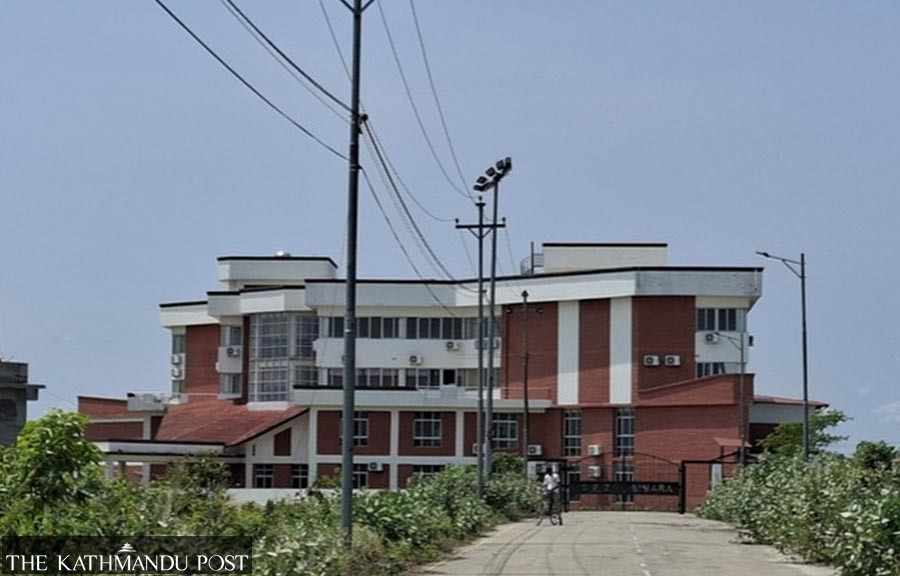
Industrial activity at the Special Economic Zone (SEZ) in Simara has picked up sharply after the federal government reduced land rent in this year’s budget speech, drawing a wave of new investment.
The government lowered the rent from Rs20 per square metre to Rs5 per square metre, a move that has led to nearly a dozen industries now being built within the SEZ area. More than half of these projects involve Indian and Chinese investors.
According to SEZ site in-charge engineer Pappu Giri, Nepovit Ceramics Pvt Ltd is under construction as a joint venture between India’s AGL Group and Nepali investors. The Rs5 billion project will produce tiles and sanitary ware.
South Korean investors are developing an industry which will manufacture cosmetic products. Rainbow Granite Pvt Ltd, a joint venture between Nepali and Indian investors, is building a granite production facility.
Indo Agro, that will deal with palm oil, is also under construction, while Omkar Pvt Ltd, fully funded by Indian investors, is developing another granite production unit. An industry backed by Chinese investors will produce pharmaceutical raw materials.
A Nepali–Chinese joint venture, is building an aluminium production facility. Om Mega Shree Pvt Ltd is setting up a plant to manufacture diapers and sanitary pads, while Hulas Cables Pvt Ltd is constructing a facility to produce electrical wires. Maa Tara Pvt Ltd, with Indian investment, is building a spices production unit. Everest Fashion Pvt Ltd is also developing infrastructure for exporting handicraft products.
Once operational, these industries are expected to create around 1,000 additional full-time jobs at the SEZ.
At present, seven industries are already operational in the zone. These include Pashupati Ceramics (tiles), Brilliant Shoes Pvt Ltd (footwear), Laxmi Granite (granite), Balaji Manufacturing (fans and stoves), Nepal Agro Tools (agricultural equipment), Asian Vehicles (electric vehicles assembly plant with Chinese investment), and Biocomp Nepal, backed by World Bank funding and New Zealand investors.
These existing industries employ around 700 workers directly.
Officials say the recent inflow of investment suggests that earlier high rent had slowed industrial growth in the SEZ. The Simara SEZ spans 833 bigha (about 564 hectares) and is divided into five blocks from A to E. Block A, the largest, covers 343 bigha (232.21 hectares), of which 165 bigha (111.71 hectares) is currently occupied by operating or under-construction industries.
A total of 21 industries have been registered in the SEZ so far, including those already operating and those under development.
SEZ site in-charge Giri said efforts are ongoing to attract more industries, and the rent reduction is part of that strategy.
Industries in the SEZ are offered land on a 30-year lease. They are allowed to sell products domestically for the first three years. After that, they must export at least 15 per cent of production in the fourth year and 30 per cent from the fifth year onwards.




 24.72°C Kathmandu