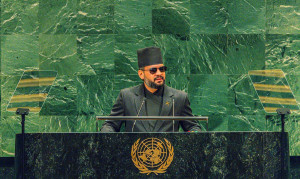
Top US official lands in Kathmandu on Monday. He is scheduled to meet ministers and business leaders during three-day visit. Samir Paul Kapur, the United States Assistant Secretary of State for South and Central Asia. Photo: Courtesy of US Embassy in Nepal
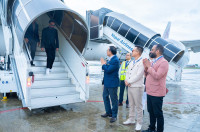
Samir Paul Kapur, the United States Assistant Secretary of State for South and Central Asian Affairs, arrived in Nepal on Monday for a three-day visit.
He is the highest-ranking foreign diplomat to visit Kathmandu since Balendra Shah assumed office on March 27.
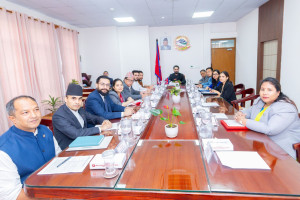
During his stay, Kapur is scheduled to meet government officials, business leaders and cultural experts, the US Embassy in Kathmandu said, with discussions expected to focus on strengthening US–Nepal ties.
Two other officials from the US State Department are also expected in Kathmandu.
Kapur will hear the government’s priorities and convey how Washington intends to support them. It has not been confirmed whether he will meet top political leaders, including Prime Minister Shah.
According to a government official, Kapur is scheduled to meet Finance Minister Swarnim Wagle, Foreign Minister Shishir Khanal, and officials of the Nepal–US Chamber of Commerce and Industry.
He will also visit Patan Durbar Square.
This marks the first standalone visit to Nepal by a US assistant secretary of state. Previous senior US officials typically combined Nepal visits with trips to other South Asian countries.
Kapur travelled from Washington to Kathmandu via Turkish Airlines and is scheduled to return on Wednesday.
Ahead of Nepal’s March elections, Kapur had expressed confidence that the vote would be peaceful and said the United States was prepared to work with the incoming government.
Briefing the House Foreign Affairs Committee in February, he said, “With Nepal, we also trust that we’ll have a secure and peaceful electoral process, and we’re prepared to work with whoever wins.”
In his testimony, Kapur outlined US positions on South Asia, including Nepal and Bangladesh, where recent political developments have drawn international attention. He visited Dhaka in early March following the formation of a new government there.
US lawmakers have underscored Nepal’s strategic location between India and China, with Kapur noting that preventing dominance by any single power in South Asia remains a key US objective.
“A hostile power dominating South Asia could exert coercive leverage over the world economy,” he said.
He added that countries such as Nepal, Bangladesh, the Maldives, Sri Lanka and Bhutan hold strategic importance but remain vulnerable to external pressures, including what he described as “debt-driven influence strategies”.
Kapur said US priorities in the region include expanding trade, increasing defence cooperation, and supporting partners through diplomacy and targeted investment.




 18.04°C Kathmandu