Need for urgent reform push in education and sports
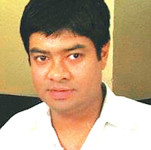
New minister must deliver long-delayed laws, resolve institutional disputes and stabilise two critical sectors amid structural and governance challenges. Sasmit Pokharel, education minister Post photo
Sasmit Pokharel, 30, has been appointed Minister for Education, Science and Technology, and Youth and Sports in the Balendra Shah-led government.
Known for his active presence on social media and clear political views, Pokharel has transitioned from a first-time federal lawmaker to a key minister overseeing two critical sectors. His appointment places him at the centre of long-pending policy reforms and institutional disputes in both education and sports.
Born in Kathmandu, Pokharel studied law at Kathmandu University after completing his higher secondary education in the United States. He is currently pursuing a master’s degree at Tribhuvan University and has also worked as a parliamentary intern.
His political journey began with Bibeksheel Sajha, where he was active during the 2017 elections and supported Ujwal Thapa’s campaign. He later joined the Rastriya Swatantra Party alongside Balendra Shah and played an active role in Shah’s mayoral campaign in Kathmandu in 2022. He contested the provincial election the same year but lost, before later working as an education and urban planning adviser at the Kathmandu Metropolitan City.
Now in office, Pokharel faces an immediate policy challenge, including enacting long-pending legislation in line with the constitution and the federal structure. Drafts of key laws covering school education, higher education and technical education have remained stalled for years. A school education bill that had reached parliamentary committees has been withdrawn after the dissolution of parliament. The issue even triggered a 29-day teachers’ protest ahead of the Gen Z movement.
Education experts say the minister must prioritise legislation. Professor Sushan Acharya stresses that clear laws must come before policy execution, adding that the government must define its stance on public and private education. She also calls for reforms to university governance, including removing the prime minister from the role of university chancellor, and ending politically affiliated unions in favour of a single representative body.
Structural reforms are also needed in appointments across educational institutions, she says, arguing that positions should be filled through competitive processes rather than political allocation. Improving teacher capacity and revising evaluation systems are also highlighted as priorities.
A major concern is the lack of progress in implementing a report on encroached land belonging to Tribhuvan University. Experts say the new minister, in coordination with the government, must act to reclaim institutional property.
Former secretary Hari Lamsal outlines five key priorities: creating a conducive working environment, improving service delivery, restructuring overlapping institutions, aligning the budget with policy priorities, and advancing long-term legal reforms. He emphasises better coordination across federal, provincial and local levels.
Education expert Tika Bhattarai suggests that the minister begin by consulting ministry staff to identify key priorities before engaging external stakeholders. He also urges the minister to act on existing recommendations, including those from the High-Level National Education Commission, and to clarify coordination with local governments under the federal system.
Alongside education, Pokharel faces significant challenges in sports. Nepal’s participation in the 2023 Asian Games highlighted a persistent issue, a large delegation with minimal success. Nepal sent 253 athletes across 29 sports but secured only one silver and one bronze medal, raising questions about participation strategy and performance standards.
Experts say the minister must define clear criteria for international participation, ensuring that teams are competitive rather than symbolic. They also highlight the need to prioritise high-potential sports such as football, cricket and volleyball, which have stronger domestic structures and international support.
Cricket infrastructure remains a key priority. Several stadiums are under construction or incomplete, including facilities in Bhairahawa, Dang, Pokhara and Janakpur. Completing these projects and operationalising the Mulpani international cricket ground are seen as essential steps.
Football also presents an immediate challenge. The All Nepal Football Association has been suspended, and the Dasarath Stadium remains unfit for major international matches. Resolving these disputes and upgrading facilities will be critical for restoring normalcy in the sport.
The minister also faces administrative hurdles, including filling leadership positions within the National Sports Council, which has remained without a member secretary for months. Experts say timely appointments could help stabilise the sector.
Sports policy experts emphasise the need to focus on sports with higher medal prospects, including martial arts such as karate, taekwondo and judo. At the same time, maintaining and improving existing infrastructure is seen as more practical than pursuing large-scale, high-cost facilities.
Pokharel’s challenge lies in balancing structural reforms, policy delays and institutional disputes across two complex ministries. His ability to deliver legislation, improve governance and stabilise both sectors will be closely watched.




 24.79°C Kathmandu