An ex-journalist trying to restore trust in civil service
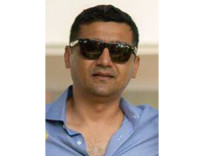
Nepal’s new minister for federal affairs and general administration, Rawal, faces a daunting task: restoring public trust in a bureaucracy widely viewed as inefficient, politicised, and out of touch with citizens’ needs. Pratibha Rawal, land & cooperatives minister Post photo
The minister Pratibha Rawal is now responsible for managing the country’s civil service and coordinating among Nepal’s three tiers of government—federal, provincial, and local. Yet nearly a decade after the country adopted a federal system, public administration remains far from citizen-centred. Administrative reform has stalled, coordination between different levels of government is weak, and service delivery continues to lag. Against this backdrop, the government born from the recent Gen Z movement faces the formidable challenge of translating political change into meaningful administrative reform.
Elected from Kanchanpur district in Sudurpashchim province in farwestern Nepal under proportional representation, Rawal entered politics after more than a decade in journalism. Earlier, she had worked at Galaxy Television, collaborating with RSP chair Rabi Lamichhane, one of Nepal’s most prominent media figures-turned-politicians.
Rawal now shoulders responsibility for nearly 100,000 civil servants nationwide and ensuring coordination between the federal government, seven provincial governments, and 753 local governments. Her appointment carries symbolic weight. Despite politicians from farwestern Nepal holding powerful positions—including prime minister and cabinet ministers—in the past, the region remains one of Nepal’s least developed, lagging in education, healthcare, and infrastructure. As a minister from the region, she is expected to advocate for more balanced development.
Yet the institutional challenges she inherits are enormous. In 2019, the Ministry of Federal Affairs and General Administration announced that 133,000 civil servants had been redistributed across federal, provincial, and local governments. Still, nearly 32,000 positions remained unfilled, with many officials resisting transfers to provincial or municipal offices. Bureaucrats continue to cluster around Singha Durbar, the central secretariat in Kathmandu. Rather than shrinking federal staffing, positions in the capital have grown to more than 50,000, leaving local governments—where citizens most directly interact with the state—chronically understaffed.
The absence of a federal civil service law, which would establish a legal framework for civil service operations, compounds the problem. Officials describe Nepal’s bureaucracy as ad hoc, slowing the implementation of administrative federalism—a cornerstone of the 2015 constitution. Senior ministry officials say entrenched bureaucratic culture and political interference have long undermined governance. One joint secretary explained that bureaucrats often attempt to sway political leaders to serve their own interests.
“Political leaders must free themselves from bureaucratic influence,” said the joint secretary. “When ministers fall under that influence, they even intervene in minor administrative matters such as the transfer of office assistants.” Experts argue that promotions, transfers, and performance evaluations should follow a transparent, predictable system, rather than discretionary political decisions, but successive governments have failed to implement such reforms.
A major setback for Nepal’s civil service has been the failure to pass the Federal Civil Service Bill. In 2017, the government led by then-prime minister KP Sharma Oli with a near two-thirds parliamentary majority, prioritised political manoeuvring over civil service reform, and dissolved parliament when political conflict escalated. A bill approved by the parliamentary State Affairs and Good Governance Committee in 2020 could not clear parliament. Later attempts were also derailed, reportedly by senior bureaucrats lobbying against provisions such as a mandatory “cooling-off period” for officials taking political or diplomatic roles after retirement. Political upheaval following the Gen Z movement again led to parliament’s dissolution and left the crucial legislation unresolved.
Another challenge lies in the unclear division of authority among federal, provincial, and local governments. Bagmati Province Chief Minister Indra Baniya says provinces remain effectively paralysed because the federal government has yet to enact laws on civil service management, forestry, industry, land administration, and policing. This ambiguity disrupts service delivery. For example, secondary education is assigned to local governments, but the precise roles of federal and provincial authorities remain unclear, leading to conflicting rules that hinder service delivery.
The ministry has prepared standards for the implementation of development projects, but these guidelines remain largely unenforced. Local governments often bear unpaid obligations from prior fiscal years. This discourages senior civil servants from accepting local postings. Training programmes, including the donor-supported Provincial and Local Governance Support Programme (PLGSP), have also struggled and spent less than 40 percent of their allocated budget in its first five-year phase.
Nepal has a long history of reform efforts, from the Buch Commission [headed by Indian civil servant NM Buch] of 1952 to the 2028 High-Level Economic Reform Commission, which recommended dismissing underperforming civil servants and offering voluntary retirement to long-serving employees lacking specialised expertise. Yet meaningful implementation has rarely followed.
For Rawal, the challenge is as much political as administrative. Experts say success will require decisive leadership, transparent personnel systems, and stronger coordination across federal, provincial, and local governments.
“If Rawal can introduce clear laws and establish transparent systems, she may restore public confidence in the state,” said a senior administrative expert. But after decades of stalled reforms, transforming Nepal’s bureaucracy into a responsive, accountable institution will be anything but easy.




 12.97°C Kathmandu