The inhabitants of the remote highlands of Makwanpur are increasingly turning to commercial yam cultivation, finding a lucrative source of income in crops that were once grown solely for subsistence.
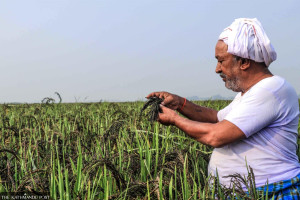
In the rugged terrain of Raksirang Rural Municipality-7, 66-year-old Khair Singh Chepang recently earned Rs 20,800 from a single sale of yams. He sold 104kg of the ploughshare yam, directly from his village at Rs 200 per kg.
“This is the first time I have earned such a significant amount from yams,” said Khair Singh, who cultivated the crop across 10 ropanis of terrace edges. He noted that the yams he sold were purchased specifically to be used as seeds by other farmers.
To promote indigenous food security and preserve native crops, the Nepal Little Power Society (NLPS) has been implementing the ‘Chepang Identity and Food Promotion Programme’ for the past three years. The organisation sourced ploughshare yam seeds from Dhading and Tanahun districts and distributed them to farmers in Damarang, Darang, Dhirang and Garling.
Somlal Chepang of Darang also sold over 70kg of surplus yams after feeding his family of seven. The NLPS currently purchases the produce directly from the community and redistributes it as seeds to other farmers.
Bishuman Chepang, the programme coordinator, said the organisation has supplied seeds to more than 75 farmers in the area. “We are working to promote root crops such as yams, sweet potatoes and taro, which were on the verge of disappearing at the local level,” he said.
Raj Kumar Malla, chairman of the rural municipality, observed that guaranteed market linkages have encouraged farmers to scale up production. “Root crops are now putting cash in farmers’ hands while also addressing hunger,” Malla said. “We are mobilising the community to preserve underground food sources such as air potato, sweet potato and wild yam, which are intrinsically linked to the Chepang way of life.”
NLPS said its report shows that more than five species of yams are found in the region. The ploughshare, locally known as the ‘Halo’ variety, remains the most popular due to its fast growth and distinctive taste.
The ward, home to around 400 households, is inhabited entirely by the Chepang community. Traditionally, food produced on their own land lasts barely three months of the year.




 21.22°C Kathmandu











.png&w=300&height=200)