Patihani-Dudhaura safari route reopens in Chitwan buffer zone
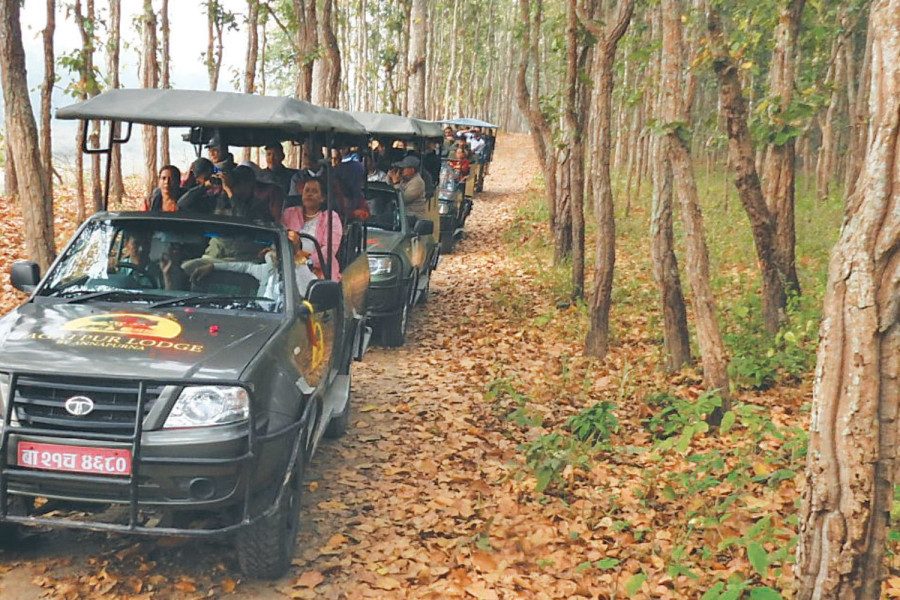
On a scenic 12‐km ride, visitors may encounter rhinos, deer, gharials, even the elusive tiger. A line of jeeps on the Patihani-Dudhaura safari makes its way through a leaf-strewn road along the buffer zone at Ghatgai, Sunday. POST PHOTO: RAMESH KUMAR PAUDEL
Eco-Tourism in the Chitwan National Park’s buffer zone is set to get a boost with the official opening of the Patihani-Dudhaura jeep safari route on Sunday. The route links Ghatgain of Patihani to Dudhaura through Belsahar.
Ganesh Pant, the chief conservation officer of the Chitwan National Park (CNP), inaugurated the service, which traverses both the park’s buffer zone and community forest areas. Operated jointly by the Patihani Buffer Zone Consumer Committee and Belsahar Community Forest, the initiative aims to decentralise tourism benefits.
"Patihani’s tourism landscape has evolved significantly. We launched this to provide premier services while ensuring conservation benefits directly reach our community,” said Sajan Mahato, coordinator of the safari committee. “Visitors can expect to spot one-horned rhinos, spotted deer, and gharials along the Rapti riverbanks, with the occasional tiger sighting." According to him, the 12-kilometre journey lasts approximately two hours, offering scenic stops for photography.
According to Pant, the park has set strict guidelines to prevent noise and waste pollution. "Sustainability is paramount. We are conducting 24 daily trips, 12 in the morning and 12 in the evening, with a maximum of ten passengers per vehicle," he said. "We must learn why previous safaris stalled and ensure this remains environmentally sound."
Nepali nationals are charged a conservation fee of Rs 200 per person, while the fee for international tourists is set at Rs 500. Additionally, a standard entry fee of Rs 1,000 applies to each jeep for every excursion
Patihani, situated near the CNP’s head office in Kasara, has been a tourism hub since the 1980s. While the core national park closes during the monsoon, buffer zone safaris remain operational, providing a year-round alternative. Currently, 17 of the 79 buffer zone community forests across Chitwan, Nawalparasi East, Makawanpur and Parsa offer such services, catering to over 300,000 annual visitors.
These forests play a crucial role in human-wildlife coexistence, as highlighted by Abinash Thapa Magar, information officer of the park. The revenue generated from these safaris is vital for local development and anti-poaching initiatives. As tourists increasingly seek sustainable experiences, the Patihani route is poised to become a flagship destination.
Local hotelier groups have also welcomed the move, noting that high-end resorts in the area will now have more diverse activities for international guests. With the backdrop of the lush Churia hills and the serene Rapti, the new route represents a balanced approach to conservation and commerce. "We are optimistic that this will not only protect our woods but also provide dignified livelihoods for our youth,” said Mahato.




 14.81°C Kathmandu
1.jpg)