Industrial estate authority cuts power and water to 167 factories over unpaid dues
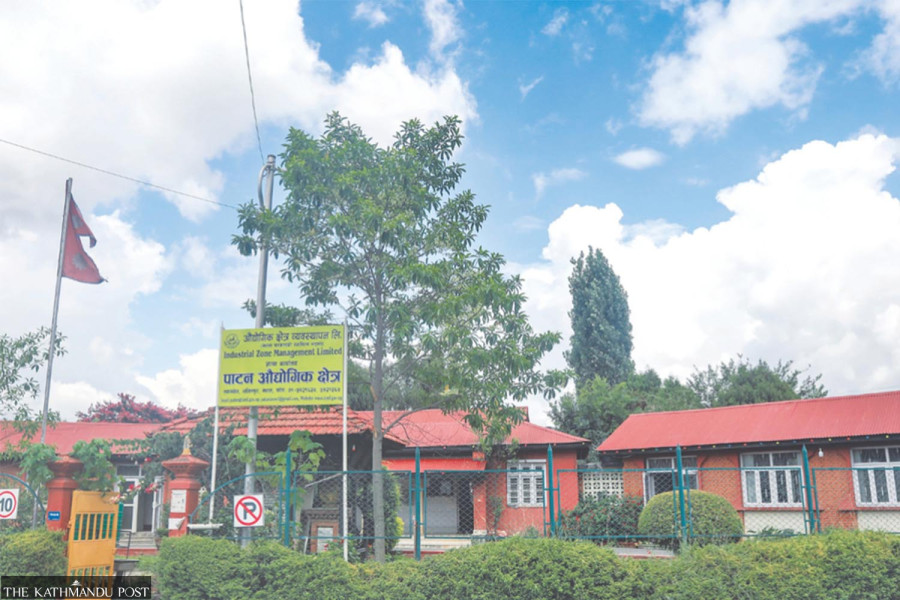
State-owned Industrial Zone Management Limited disconnects utilities amid an ongoing rent dispute, while business groups warn the move will disrupt production and deter investment. Post file photo
Nepal's state-owned Industrial Zone Management Limited has begun disconnecting electricity and water supplies to factories operating inside industrial estates that have failed to clear outstanding payments for land leases, buildings, water and electricity.
The company said it cut utility connections to 167 factories across ten industrial estates on Wednesday and Thursday after they failed to pay their dues despite a seven-day notice issued on June 8.
Of those, 87 factories cleared their outstanding payments and had their utility services restored on Thursday, while 80 remained disconnected as of Thursday evening, according to Padam Oli, general manager for IZML.
The company said utility disconnections are still pending for another 74 factories that have yet to pay their dues, while 62 industries have already vacated the industrial estates.
“The disconnection drive will continue on Friday if the remaining factories fail to clear their dues,” Oli said.
Factories that had failed to pay both revised lease charges and utility bills had both electricity and water disconnected.
The enforcement follows years of legal disputes over revised industrial estate rental rates.
A High Court ruling certified on April 6, 2024, had ordered industries to pay increased rents retroactively from 2018. Factory operators challenged the decision at the Supreme Court, which ruled on March 25, 2025, that applying the revised rates from July 2018 was neither lawful nor justified. Instead, the court ordered that the revised rents could only take effect from July 6, 2022.
Despite that ruling, IZML’s board decided in January this year to seek a review, arguing that implementing the Supreme Court's decision would require refunding or adjusting four fiscal years of lease income and significantly reduce the company's annual revenue.
The Federation of Nepal Industrial Estate Industries and other industry groups also sought a review, although for different reasons.
On Thursday, however, a three-member Supreme Court bench comprising Justices Binod Sharma, Sunil Kumar Pokharel and Nityananda Pandey refused to allow the review petitions to proceed.
Supreme Court spokesperson Arjun Prasad Koirala said the earlier ruling now stands, meaning industries are required to pay revised lease rates only from July 2022 onwards.
Ajaz Alam, president of the Federation of Nepal Industrial Estate Industries, said factory owners have consistently maintained that they are liable only for the revised rent applicable from 2022, not from 2018.
“We have already informed all industries to clear their dues based on the revised rates effective from 2022,” Alam said. “Both review petitions have been rejected. We are prepared to pay according to the Supreme Court's decision.”
However, he criticised the company for giving industries only seven days to settle their dues and alleged that some factories had their utility connections cut on Wednesday without prior notice.
“At the very least, there should have been written notification before disconnecting services,” he said.
Oli said the dues published by IZML still reflected unpaid amounts dating back to 2018 because the company had been pursuing a review of the Supreme Court's decision. Nevertheless, he acknowledged that many factories had also failed to pay dues accumulated after the court's 2022 benchmark.
“Industries have not cleared even the dues payable under the Supreme Court's ruling,” Oli said. “At a minimum, they must now pay the outstanding amounts from 2022 onward. Otherwise, utility disconnections will continue.”
According to IZML, unpaid lease and service charges owed by industries operating within the industrial estates exceed Rs890 million.
Following the utility disconnections over the past two days, factories have paid more than Rs280 million in outstanding dues, the company said.
IZML said the mounting arrears have directly affected its ability to build and maintain infrastructure and provide services within the industrial estates.
The utility disconnections have also drawn criticism from Nepal's leading private sector organisations.
The Confederation of Nepalese Industries urged the government not to disconnect electricity supplies until all legal proceedings over the rent dispute had been fully concluded. The organisation also asked authorities to reconnect factories where power had already been cut and extend the deadline for payment, saying seven days was insufficient for many businesses that were already trying to comply with the court's ruling.
The Federation of Nepalese Chambers of Commerce and Industry also condemned what it described as the use of administrative force against industries in ten industrial estates.
The federation said factories had repeatedly sought detailed calculations explaining the revised rent but had not received them before being ordered to pay within a week.
It argued that disconnecting electricity and disrupting production at a time when Nepal's economy remains sluggish was unjustified and risked undermining investor confidence.
“Cutting electricity supplies and forcing factories to halt production during such a sensitive period cannot be justified from any perspective,” the federation said in a statement.
The organisation called on the government, the Ministry of Industry, Commerce and Supplies, and IZML to immediately stop measures that disrupt industrial production and instead facilitate the uninterrupted operation of manufacturing businesses.




 26.19°C Kathmandu