



 15.26°C Kathmandu
Tue, Oct 13, 2026
Money
Smart toilets reshape sanitation landscape in Dhangadhi
From open defecation to sensor-based public toilets, Dhangadhi’s investment in modern sanitation is easing daily hardships, especially for women and children, while reinforcing hygiene and public health.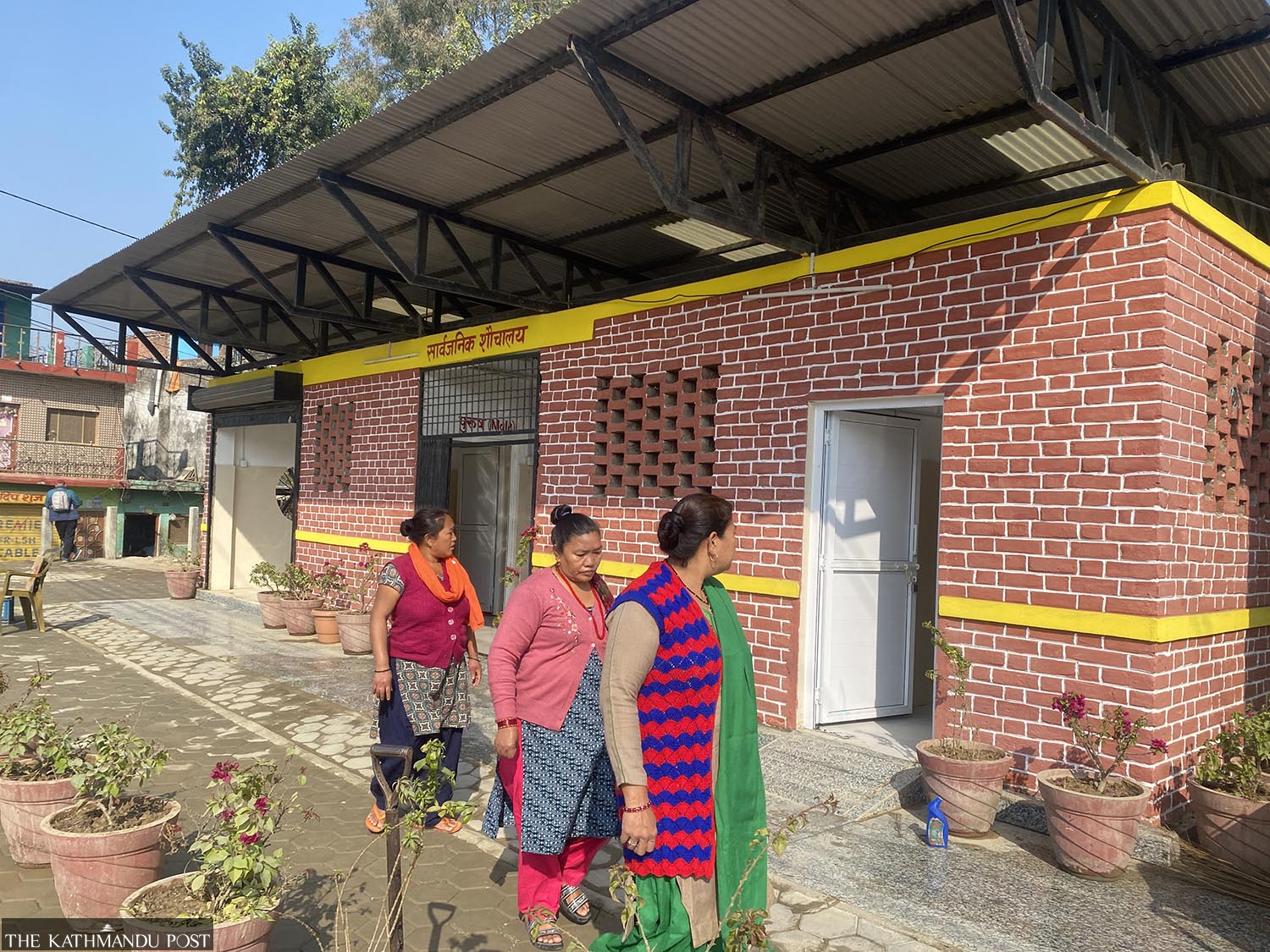
Sangam Prasain
Published at : December 25, 2025
Updated at : December 25, 2025 07:20
Along the busy streets of Dhangadhi’s core areas, red brick buildings topped with tin roofs have begun to draw curious glances. A towering water tank stands nearby, flower pots line the premises, and the structure itself looks strikingly modern amid the surrounding shops and traffic.
Locals call it a “smart” toilet.
These newly built public toilets are designed with separate compartments for women, men and persons with disabilities.
The planned facilities include sanitary pad vending machines and hand dryers. Sensor-based taps and lighting systems have been installed to reduce physical contact and improve hygiene standards.
Some of the units also include shuttered spaces that can be used for small snack shops, along with a room for a caretaker to stay on site. City officials say these features are meant to ensure better operation, management and maintenance.
For Dhangadhi Sub-metropolitan City in Kailali district, the transformation marks a major shift.
Streets that once witnessed open defecation are now equipped with public and mobile toilets, reflecting a broader push to improve health and sanitation in Nepal’s far-western urban centres.
For years, residents and travellers alike suffered from the absence of public toilets, particularly in Dhangadhi’s main commercial hubs, busy intersections and areas around government offices.
Despite Kailali being officially declared open-defecation-free on April 30, 2018, the lack of accessible urban sanitation facilities remained a persistent problem.
For women, the situation was especially difficult.
Saraswati Upadhyaya, a Grade 12 student from Buddha Chowk, recalls how stressful it used to be to move around the city. “Even in an emergency, we had no option,” she says. “We had to look for bushes to urinate. There were hotels in the city, but no access to toilets for pedestrians."
A few public toilets existed, she says, but most were filthy and unusable.
“Now modern and clean toilets are everywhere. It has really made life easier,” she adds.
Pratima Kumari Chaudhari, another Grade 12 student, echoes the sentiment. “We struggled in the past,” she says. “Now, things have changed.”
She also remembers frequent cases of diarrhoea and other infections linked to open defecation and poor hand hygiene, with children being the most vulnerable.
In Dhangadhi, the service charge for using public toilets has been fixed at Rs5 for urination and Rs10 for defecation.
On September 30, 2019, then prime minister KP Sharma Oli declared all 77 districts of Nepal free of open defecation, announcing a national campaign aimed at bringing about long-term behavioural change.
At the local level, Dhangadhi Sub-metropolitan City has been expanding its sanitation infrastructure.
Ashok Awasthi, an environment officer at the sub-metropolis, says the city currently has three mobile toilets, each with four gender-friendly compartments.
“Construction of four permanent public toilets has already been completed,” Awasthi says.
The mobile toilets are deployed during public events. For instance, during the job fair scheduled for January 29, the city plans to place mobile toilets at Khula Manch for a month.
Beyond events, the city has also been leasing the mobile toilets for private functions.
“We send them to marriages and other programmes upon request,” Awasthi says, adding that the Rs5,000 fee applies.
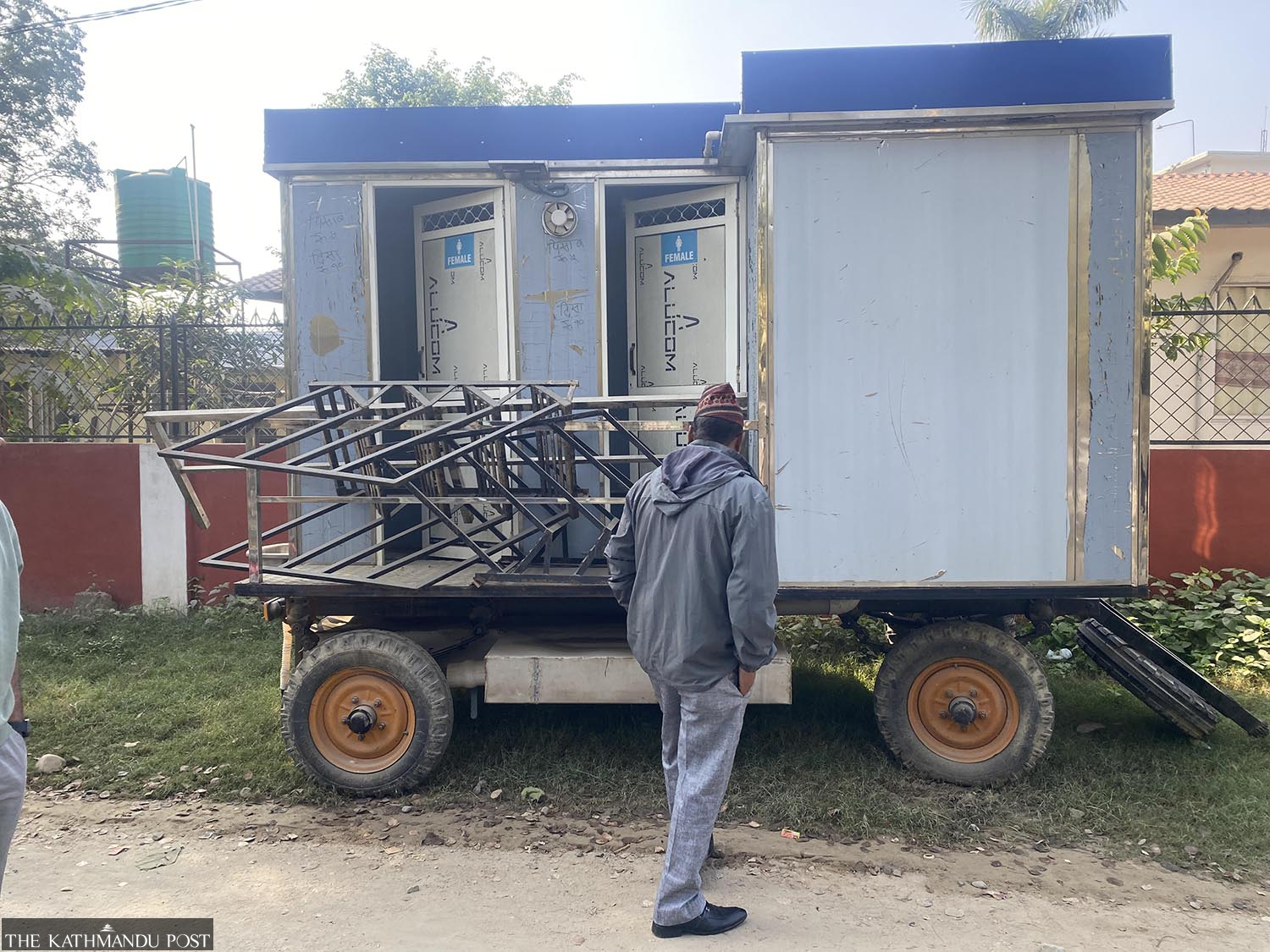
To further curb open defecation, the sub-metropolis has identified 20 locations across the city to station mobile toilets. In addition, 128 handwashing stations have been installed.
“Awareness is crucial,” Awasthi says. “People’s habits have changed and hygiene has improved. From schools to offices, and public places to bus parks, handwashing is now actively promoted.”
Access to drinking water and sanitation is recognised as a fundamental right under Nepal’s constitution. The Water Supply and Sanitation Act, 2018, guarantees the right to quality sanitation services and prohibits the direct discharge of wastewater and sewage into water bodies or public spaces.
Dhangadhi is constructing additional toilets at locations including the bus park, Traffic Chowk, the electricity office area, Boradandi, Kabaddhal and the open stage grounds.
The sanitation push has also been supported by international assistance.
With a $5 million grant from the Japan Fund for Resilient Asia and the Pacific, channelled through the Asian Development Bank, the sub-metropolis has received multi-hazard-resilient multipurpose shelters, mobile toilets and handwashing stations.
Under the project, 30 gender equality and social inclusion (GESI)-resilient mobile toilets, 15 GESI-responsive public toilets, 130 health screening desks and essential medical equipment have been provided across 15 municipalities.
Two multipurpose shelters handed over to Dhangadhi a year ago can each accommodate 16 hospital beds with oxygen cylinders and are now being used for public services.
One such shelter in Ward 18 of Fulbari has been converted into a basic health centre, addressing long-standing demands for nearby healthcare in the area. It’s located about 20 kilometres east of the city’s main market.
“These gender-responsive mobile toilets are aimed at eradicating open defecation,” says Roman Bhattarai, project analyst at the ADB. “Dhangadhi has effectively utilised mobile toilets, public toilets and shelters for the benefit of the community.”
For residents, the impact is already visible. What was once an everyday struggle has been replaced by cleaner streets, improved dignity and a growing sense that sanitation is no longer a luxury, but a public service the city is determined to deliver.
Sangam Prasain
Sangam Prasain is Business Editor at The Kathmandu Post, covering tourism, agriculture, mountaineering, aviation, infrastructure and other economic affairs. He joined The Kathmandu Post in October 2009.
Related News



×