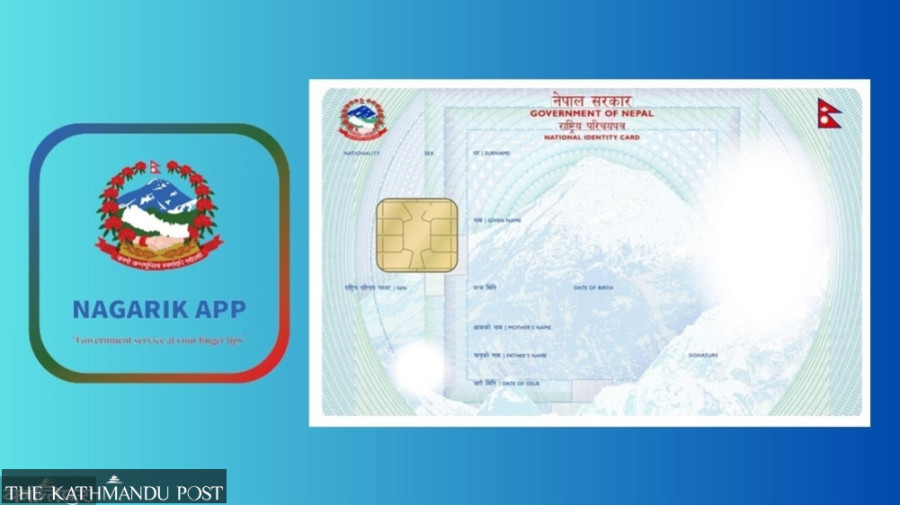
Nepal has long pushed for digital governance, aiming to do away with a paper-based bureaucratic system. To achieve this, the Department of Information Technology (DoIT) under the Ministry of Communication and Information Technology developed a flagship platform called Nagarik App for storing official documents—including citizenship, driving license, passport, PAN and voter ID—so citizens would no longer have to carry photocopies, queue at counters, or navigate redundant verification processes. Yet, as highlighted in a recent report in this paper, people are questioning the app’s worth, as they are still forced to carry documents to banks, hospitals and even government offices.
The vision of reducing in-person visits to government offices through the Nagarik App is blurry due to institutional inertia. Even as the Digital Nepal Framework 2.0 and the Good Governance Regulation promote digitalisation, outdated laws hinder progress. As a result, many institutions still require paper-based verification. Notably, the DoIT has no authority over other ministries that own the data, and unless their laws are amended, one bit of regulation cannot bypass them. Government officials also fear fraud, data inaccuracies or leakage and therefore resort to a so-called ‘safer zone’ by requesting physical copies. Such a mindset, however, undermines the fact that the app is secure and has already been tested by several other bodies.
Scanning QR codes for driving licenses documented in the Nagarik app is now a tried-and-tested daily reality across Kathmandu. The service has not only eased the process of paying fines and vehicle tax. It has also improved transparency, helped police enforce traffic rules and reduced paperwork. Similarly, the Inland Revenue Department also enables taxpayers to verify their identity and pay tax through the app. What made the processes seamless were citizen demand, service providers’ readiness and system integration. But in many cases, citizens’ readiness alone isn’t enough, as service providers are unprepared and ill-equipped to digitalise their systems. Separately, while offices in urban centres provide digital services, those in rural areas continue to seek original and photocopied documents.
When citizens are sold the dream of digital Nepal without actually adopting digital processes and investing in them, credibility suffers. Therefore, taking a cue from experts, there is a need to provide full legal validity to Nagarik App documents. Even a straightforward, formal notification in the Nepal Gazette that obliges institutions to acknowledge documents in the app would help. QR codes that redirect service providers to a government portal to verify authenticity are as effective.
The incoming Rastriya Swatantra Party envisions making government services easy and fast through digital transformation. Removing the implementation hurdles faced by the Nagarik App would be a good start. The previous government had initiated the concept of ‘Data Exchange Platform’ to ensure an effective digital service system by removing the obligation to repeatedly submit personal details for different government services. The E-Governance board is expected to submit the report by the end of this month. Nepal has already orchestrated an app to streamline public services; embracing the data exchange platform would be a win-win for both the government and citizens.
What remains more challenging is changing the habits of bureaucrats accustomed to paperwork, originals and photocopies. They must be trained to embrace digital processes and be held accountable when they don’t. Until then, the promise of digital Nepal will remain far from most people’s reach—and multiple office visits will continue to define their experience with service delivery.




 15.33°C Kathmandu