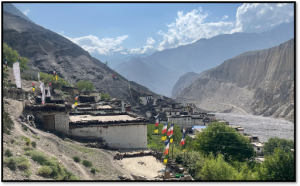
With recurrent floods and landslides across Nepal, farmers watch the same rivers that irrigate their fields wash away their harvests during the monsoon occasionally. Floods of varying scale and severity strike the valleys and plains, while the hills and mountains endure landslides of different magnitudes. In the aftermath of such events, attention typically centres on the dead, the injured, and the loss of physical assets. Far less is said about those who lose their farmland.
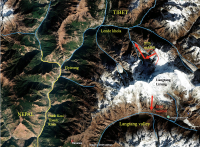
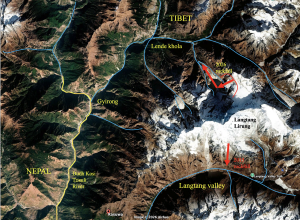
While state-led damage assessments, including the Rapid Damage and Needs Assessment (RDNA) report on the recent Bhotekoshi disaster, record agricultural losses primarily as production losses, they do so without clarifying what happened to the land itself: whether it was buried under debris, washed away, or remained intact. This distinction is crucial. Although loss of crops is a common and devastating form of damage during disasters, the more lasting but often overlooked impact is the permanent loss of farmland. This loss is a major driver of livelihood loss, leaving families displaced with little or no prospect of returning to their original income source.
According to the Nepal Disaster Report (2009), Nepal lost approximately 197,000 hectares of land to floods and another 21,000 hectares to landslides over 35 years from 1971 to 2006, amounting to an average of roughly 5,900 hectares per year. This loss has gone largely unaddressed for generations, leaving hundreds of thousands of once-productive farmlands abandoned across the country’s mountains and valleys.
Given that the average landholding size in Nepal is about half a hectare, even a conservative estimate suggests that around 10,000 families lose their primary livelihood each year. If only half of these households are permanently displaced, the figure still stands at approximately 5,000 households annually. Data on land lost to disasters after 2006 are not readily available. However, a proxy indicator—the number of people internally displaced by disasters—offers some insight. The latest figure shows about 19,000 people were displaced by disasters in 2024, roughly aligning with the estimated number of families displaced by the annual loss of farmland.
Compounded consequences
Once farmlands are damaged, the consequences extend far beyond the lost land itself, piling on top of each other. The immediate impact is that families are forced out of self-employed farming and into precarious searches for other income sources. This erodes their resilience to future disaster-related shocks. Vulnerable populations are at a heightened risk of exploitation. At the aggregate level, cumulative land loss erodes the country’s food production base and increases reliance on imports.
Nepal is already importing growing quantities of food. Its annual agricultural and food import bill reached Rs434 billion in the last fiscal year, making food the country’s second-largest import dependency after fuel. Continuing to rely on imports at the current growth rate is unsustainable. Global food shortages are intensifying due to climate and geopolitical factors, and food-exporting countries will have strong reasons to restrict or halt exports once their own production is barely sufficient to meet domestic demand.
Not every family that loses land to disasters can relocate or switch occupations overnight. Consequently, thousands are unwittingly pushed into poverty each year, compounding Nepal’s already widening inequality. Currently, the top 1 percent of Nepalis own roughly 24.5 percent of the country’s wealth, while the bottom 50 percent hold only around 4.7 percent. The wealthy also influence policy-making and the priorities of recovery programmes. By contrast, the bottom half, who own very little and lose even that, remain marginalised from policy formulation and lack the power to shape decisions that affect them. Such extreme disparity inevitably fuels frustration with the state, often sparking unrest and desperate acts, as we have repeatedly seen in recent years.
Another issue that warrants attention when discussing cropland loss to disasters is the rapidly growing volume of remittances. They have gone from around 26 percent of GDP until 2023 to now 35.8 percent of GDP, which could well be due to a large-scale outflow of the country’s productive workforce, though some reports attribute it to the decline in new migrant workers. While multiple factors drive young people abroad, this is not simply a normal global pattern.
In Nepal’s case, rising inequality and the need for those who could otherwise contribute to domestic growth to leave simply to earn a living reveal a deeper and more intricate predicament. This outflow of labour further undermines prospects for agricultural improvement and is closely linked to the country’s rising food imports. Disasters, therefore, should not be viewed solely as the loss of lives and infrastructure; they also signal a more troubling pattern—a vicious cycle of disaster, land loss, labour migration, and growing dependence on food imports—weakening the country from its base.
Land reclamation
Nepal’s valleys and plains are fertile precisely because they flood, while hill settlements sit on colluvial deposits created by past slope failures—the same geological processes that can destroy them again. This is the ‘disaster paradox’ of living with both the benefits and recurring threats of these natural forces.
Agricultural lands in Nepal are privately owned. Farmers themselves often attempt to restore their fields when they are buried under only a thin layer of sand or gravel. However, when land is buried under thick layers of gravel and boulders, or when it is completely washed away, reclamation becomes arduous. Similarly, farm terraces damaged by landslides in the hills cannot be re-established. Several factors further reduce farmers’ willingness to restore damaged land, including declining farm incomes, the availability of alternative employment elsewhere, and the highly labour-intensive nature of reclamation.
The loss of land to disasters at home, combined with shrinking prospects of importing food from abroad, only heightens the risk of food insecurity for the poor, including the very people who once produced their own food. However, because land reclamation has never been a priority in Nepal’s disaster recovery efforts, these damaged farmlands rarely appear in rehabilitation plans.
Given the mounting climate shocks confronting Nepal’s agriculture, we must urgently examine how the growing risks of farmers being removed from farming as well as ensuing food insecurity can be avoided or at least minimised. Part of the answer lies in a clear willingness to help farmers reclaim damaged farmland a state priority. A concrete starting point should be restoring agricultural land damaged by numerous floods and landslides this year alone, including the Bhotekoshi and Budhigandaki events, as the entry point for a wider, effective rehabilitation effort.




 15.56°C Kathmandu


.PNG&w=200&height=120)