



 14.81°C Kathmandu

Sat, Oct 24, 2026
Columns
Nepal wants no Caesar
Democracy in Nepal will be measured by creating stronger institutions, not by relying on a Nepali Caesar to save the country.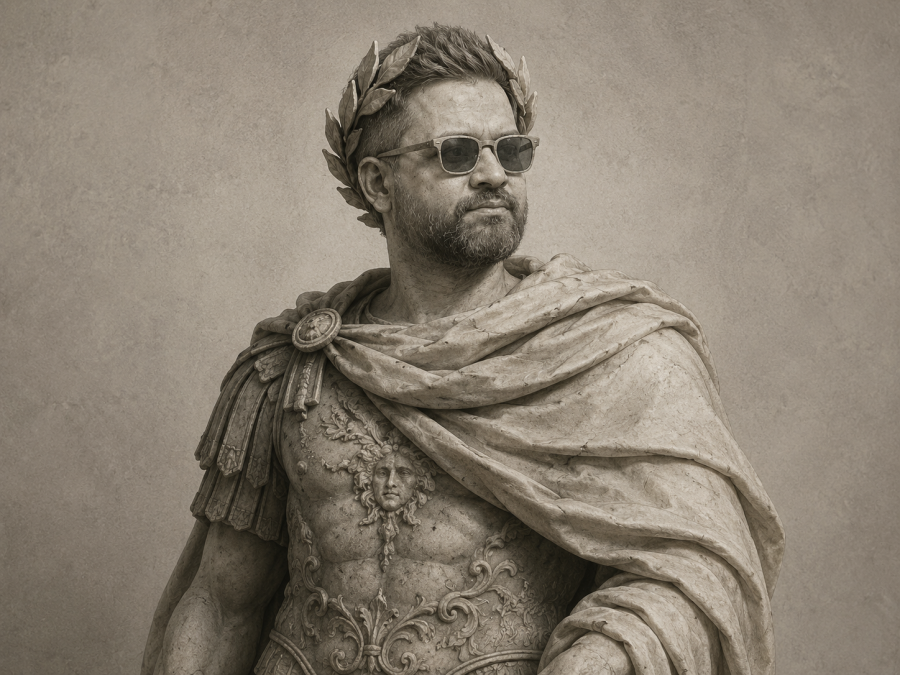
bookmark
Samar SJB Rana
Published at : August 23, 2026
Updated at : August 24, 2026 13:18
In 1937, The Modern Review (India) published an article titled The Rashtrapati written under the pseudonym Chanakya. It was written against the backdrop of rising strongmen in European states—Hitler in Germany, Stalin in Russia, and Mussolini in Italy. Chanakya is critical of Jawaharlal Nehru, whose popularity was rising among the Indian populace and the cadres of the Indian National Congress. The article was an early warning against the hero-worship of politicians and about how such behaviour from the citizenry, seeking a saviour, could jeopardise democracy. Chanakya recognises this peril and writes, “Therein lies the danger for Jawaharlal and for India.”
A new democracy like Nepal could also succumb to such a threat when personality cults are welcomed with adulation while dissent against deified political leaders is met with severe derision and cyberbullying. In a democracy, when citizens seek salvation from only one individual, it could undermine the distribution of power among public authorities.
In the aftermath of the Gen Z uprising of September, the Rastriya Swatantra Party (RSP) secured a near two-thirds majority in March’s snap polls, instating Balendra ‘Balen’ Shah. The protests voiced a rejection of the older political parties, given their repeated failures to deliver, poor governance, sycophancy, economic stagnation, and corruption. The election slogan, Ab ki bar Balen sarkar and the RSP campaign were somewhat fixated on Balen’s popularity and on placing him in the prime minister’s chair.
Despite receiving an overwhelming mandate, the incumbent’s modus operandi has been called into question in terms of parliamentary processes, issuing ordinances, dealing with a constitutional body and at the diplomatic level.
Recently, the prime minister’s advisors summoned the chief and officials from the Commission for the Investigation of Abuse of Authority (CIAA) and rebuked them over delays in an investigation, showcasing an overreach while undermining the independence of constitutional bodies. The operating style is further plagued by provocative statements. For instance, during his speech at the RSP general convention, he mentioned, “If required, we will consult with the CIAA not just for five hours but for five years.” The ad hoc behaviours of walking out of the parliament mid-session and reprimanding the head of a constitutional body do not bode well for a young democracy.
In a democracy, leaders matter, but lasting institutions matter more. Benjamin Jones and Benjamin Olken, in their paper, ‘Do Leaders Matter? National Leadership and Growth since WWII’, investigate whether leaders have an impact on the growth of the country. The findings show that leaders have a stronger influence on economic growth in autocracies, while their effects are more limited in democracies. It is not that countries like Nepal do not require strong leadership. But more than good leaders, they need strong institutions and branches of government that can maintain checks and balances against any form of executive overreach.
However, the graver threat to democracy emerges from the citizenry’s inability to question their leader, yielding to personality cults. When citizens turn leaders into messiahs, supporters struggle to hold their leaders accountable. The idea of not questioning the incumbent was evident from the RSP’s election campaign–‘Chup Chap Ghanti Chaap’ (quietly stamp the bell)—or the prime minister’s social media post that said dukkha hunus (rest assured). It is a telling sign when leaders encourage the public not to think critically or speak freely in a democracy, but to mechanically believe that the government is doing good work for the people. Advocating such a practice will be the death of a thoughtful Nepal. Dissent and questioning leaders are fundamental tenets in a democracy.
The single greatest blessing that emerged from the Gen Z movement is not that RSP now commands a majority in the House of Representatives. Instead, it is that the movement inspired the country’s youth to embrace their civic duty and actively participate in the democratic process.
The democratic process does not cease after voting. It is a continuous practice of seeking transparency, holding leaders accountable and asking questions from the very first day after a new government assumes power. When someone questions or criticises the Shah administration, it doesn’t necessarily mean they are loyal to the three legacy parties or are against the country’s development.
The pseudonym Chanakya was used by none other than Jawaharlal Nehru, who had been the president of the Indian National Congress for two consecutive terms. Nehru’s self-deprecating article warns the citizens and writes, “What if the fancy turns? Men like Jawaharlal, with all their capacity for great and good work, are unsafe in democracy. He calls himself a democrat and a socialist, and no doubt he does so in all earnestness, but every psychologist knows that the mind is ultimately a slave to the heart and logic can always be made to fit in with the desires and irrepressible urges of a person. A little twist and Jawaharlal might turn a dictator, sweeping aside the paraphernalia of a slow-moving democracy.”
The fallacy of hero-worship is the belief that a single leader will provide Nepal with its elixir for development. Leaders require loyalty from their supporters. However, both leaders and supporters need to draw a line between loyalty and sycophancy. The onus is on the citizens and party loyalists not to surrender themselves to a messiah. Nehru ends the article with, “We want no Caesars.” It is a warning to a democracy not to fall under the spell of a popular leader. Democracy in Nepal will be measured by the creation of stronger institutions, not by relying on a Nepali Caesar to save the country.
Samar SJB Rana
Rana holds a Master of Arts in Law and Diplomacy (MALD) from the Fletcher School at Tufts University.



Most Read from Columns

Editor's Picks





E-PAPER | October 24, 2026

×