Sixty years of ‘Revolver’, the album which helped The Beatles push their limits
Thus began their most intensively creative and experimental era, in which they were able to utilise cutting-edge recording technology to realise their artistic ambitions. Photos: THE WIRE
Sixty years ago, the Beatles released Revolver, an album that has a strong claim to being the group’s magnum opus. Revolver’s 14 tracks represented an unprecedented and highly innovative kaleidoscope of musical styles at the time of release and laid bare what had become an insurmountable gap between the group’s live repertoire as it existed in mid-1966 and their increasingly lofty ambitions for their output as a recording group.
Consider that just a month prior to the album’s release, the Beatles toured Germany, Japan and the Philippines on the strength of a brief setlist that still included relatively simplistic songs like Chuck Berry’s “Rock and Roll Music” and Lennon-McCartney’s own “I Wanna Be Your Man” (given as a hand-me-down to the Rolling Stones three years prior). The Revolver sessions that took place immediately prior to this tour saw the band recording music that was worlds apart from what they were able – and still expected – to perform live, in what would prove to be the final days of their career as a live act.
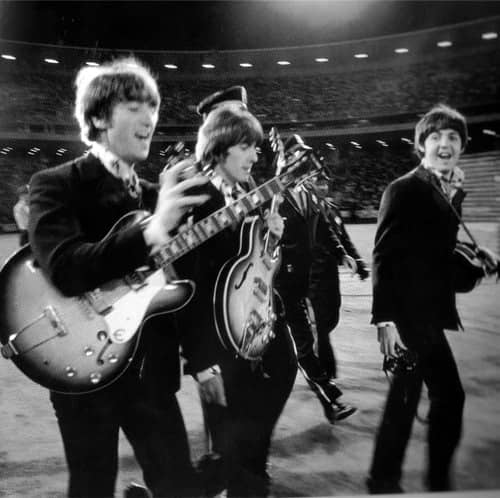
Indeed, barely three weeks after the release of Revolver, the Beatles performed their final commercial concert at San Francisco’s Candlestick Park. Although the road-weariness brought on by years of relentless touring was the primary factor driving the group’s decision to call time on their career as live performers, they must have also taken account of the technological limitations of the era that prevented them from presenting their extremely inventive new music to live audiences.
With Revolver, the Beatles had entered their most intensively creative and experimental era and they would dedicate the remaining three-and-a-half years of their career as a group to being a full-time “studio band” bent on pushing the limits of recording technology to realise their artistic ambitions. Revolver is a timeless album, containing unforgettable songs, uniquely “fresh” production that manages to sound contemporary even today and an audacious artistic vision that is arguably yet to be bettered.
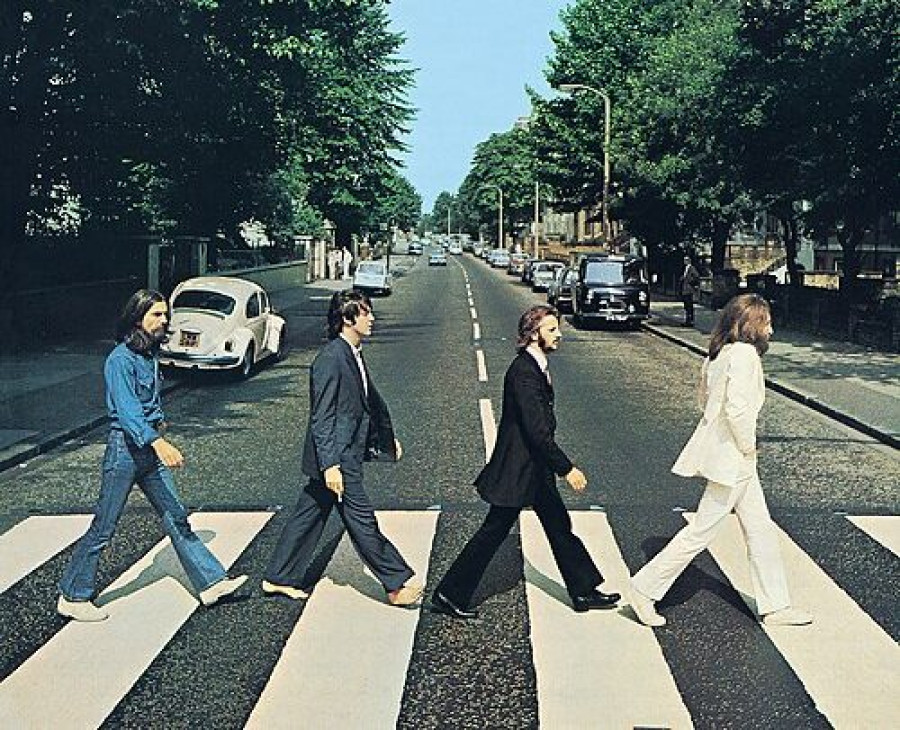
Album cover of ‘Abbey Road’
The following is a breakdown of the album.
Taxman
George Harrison opened the album with an infectious rocker that belied an unexpectedly downbeat sentiment, the Beatles’ unhappiness at being taxed at a rate of 95% – yes, ninety five percent!! – of their earnings, a result of the then-recent election of Labour Prime Minister Harold Wilson (who is name-checked in the song alongside his Tory rival Edward Heath). The group’s unhappiness at the prevailing tax rate didn’t prevent them from continuing their relentless musical innovation, with Harrison using a 7#9 chord – the so-called “Hendrix chord” – months before it was popularised by Jimi Hendrix himself and Paul McCartney playing a coruscating guitar solo influenced by Indian classical music.
Eleanor Rigby
A total change of pace from the opening track, McCartney’s sparse, desolate, yet vivid ballad about a lonely old woman completely defied expectations of pop groups in 1966, both in its lyrical theme and its musical setting; surprisingly for such a poignant piece of music, the whole composition is built on just two chords! Producer George Martin’s expertise in producing classical music proved invaluable in bringing this track to life, with an innovative double string quartet arrangement featuring stark, staccato chords that echoed composer Bernard Hermann’s iconic score for Hitchcock’s Psycho.
I’m only sleeping
John Lennon’s first track on the album conjured up an enticingly languorous mood, with its passionate defence of the simple pleasure of lying in bed contrasted with the outside world’s mechanical tendency to bustle about – ultimately, to no great end.
“running everywhere at such a speed, till they find there’s no need”
However, such a sentiment did not prevent the Beatles from continuing to innovate musically and so they did with a guitar solo by Harrison recorded normally but played “backwards,” a technique that would become a staple of psychedelic rock.
Here, there and everywhere
One of multiple McCartney masterpieces on this record, this gorgeous ballad was written in surprisingly short order when the author arrived early one morning at Lennon’s home and had to wait for him to wake up. McCartney claimed to have been inspired by the Baroque form of the Beach Boys’ recently-released song “God Only Knows,” which he would himself later rate as the greatest song ever written, but he also drew from his own bag of songwriting tricks with the bridge sections featuring a masterfully executed modulation to G-minor, the parallel minor to the song’s home key of G-major.
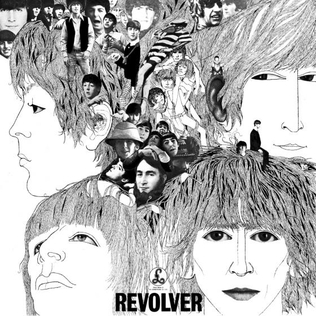
Album cover of ‘Revolver’
Yellow submarine
The album’s designated “Ringo track” proved over the years to be a timeless classic with its evocative vision of a utopian shared existence on the titular vessel. This was also the first Beatles track unabashedly intended to be a “children’s song”; this, along with the sing-along “All Together Now” recorded the following year, hinted at a “return to childhood” theme that played an important part in the emerging counterculture.
Good day sunshine
The Beatles were as adept at absorbing outside musical influences as they were at influencing others, a point well illustrated by this McCartney track, which the author claimed was inspired by the sound of contemporary group The Lovin’ Spoonful and the microgenre of “sunshine pop” which they popularised (and which reached its zenith in 1966). A pure expression of McCartney’s musical personality, which exuded a relentless optimism and zest for life, this track also deftly incorporated many of his trademark songwriting tricks, including a syncopated chorus that is in a different key to the verses, and a startling key change in the outro.
And your bird can sing
An urgent, driving rocker, this enigmatic Lennon composition is among the album’s most memorable moments, and its cryptic lyrics have encouraged much speculation about who Lennon’s subject might have been (Frank Sinatra? Mick Jagger?). Although this track is rightly lauded for Lennon and Harrison’s technically complex twin-guitar lead line, an earlier attempt at the riff using only Harrison’s 12-string electric guitar may have been the better choice in retrospect; this version of the song was likely rejected by the group for sounding too much like The Byrds and was subsequently made available on The Beatles Anthology 2 and the “super deluxe” version of Revolver released in 2022.
Doctor Robert
This catchy Lennon track’s lively rhythm complements its narrative about a co-conspiring doctor who is not averse to supplying his patients drugs (not necessarily always of the prescription variety) that promise to “pick you up” and “make you a better man”, possibly inspired by a real-life acquaintance who enabled the group’s early experiments with LSD the previous year.
Got to get you into my life
Another upbeat McCartney track featuring an irrepressible, exuberant chorus, the Beatles decided to use a full horn section on this track, perhaps inspired by R&B music coming from American labels like Stax and Motown Records; this may have inspired a sub-genre of its own, as later rock groups like Chicago permanently incorporated a horn section into their own sound. McCartney’s aggressive side as a vocalist is on full display here, but the guitar solo appears to be a reheated version of the main riff from “Paperback Writer”, released as a single a few months prior.
Tomorrow never knows
One of the biggest leaps forward ever taken by the Beatles and one of Lennon’s unequivocal masterpieces, Revolver’s startling closing track was actually the very first track to be recorded for the album.
Although the title was taken from one of the malapropisms for which Ringo Starr had become notorious within the group, the lyrics were inspired by Lennon’s own explorations of eastern philosophy (in his case, of Tibetan rather than Indian origin) and the Beatles pulled out every sonic trick that the recording technology of the time could offer, including tape loops (a forerunner to modern sampling), another meticulously-constructed “backwards” guitar solo by Harrison and Lennon’s voice being fed through a Leslie rotating speaker – originally intended for use with Hammond organs – to give it an otherworldly nature.
To this day, “Tomorrow Never Knows” retains its power to astonish and mesmerise the listener; the pioneering recording techniques have held up surprisingly well over the decades, and still sound modern. Indeed, there is a good case to be made that, even sixty years later, “Tomorrow Never Knows” still sounds like the future.
This story was originally published in The Wire and is republished here with permission, under a special arrangement with The Wire.




 26.08°C Kathmandu