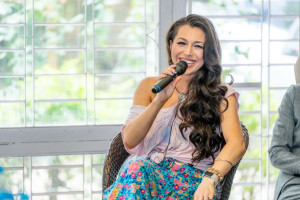
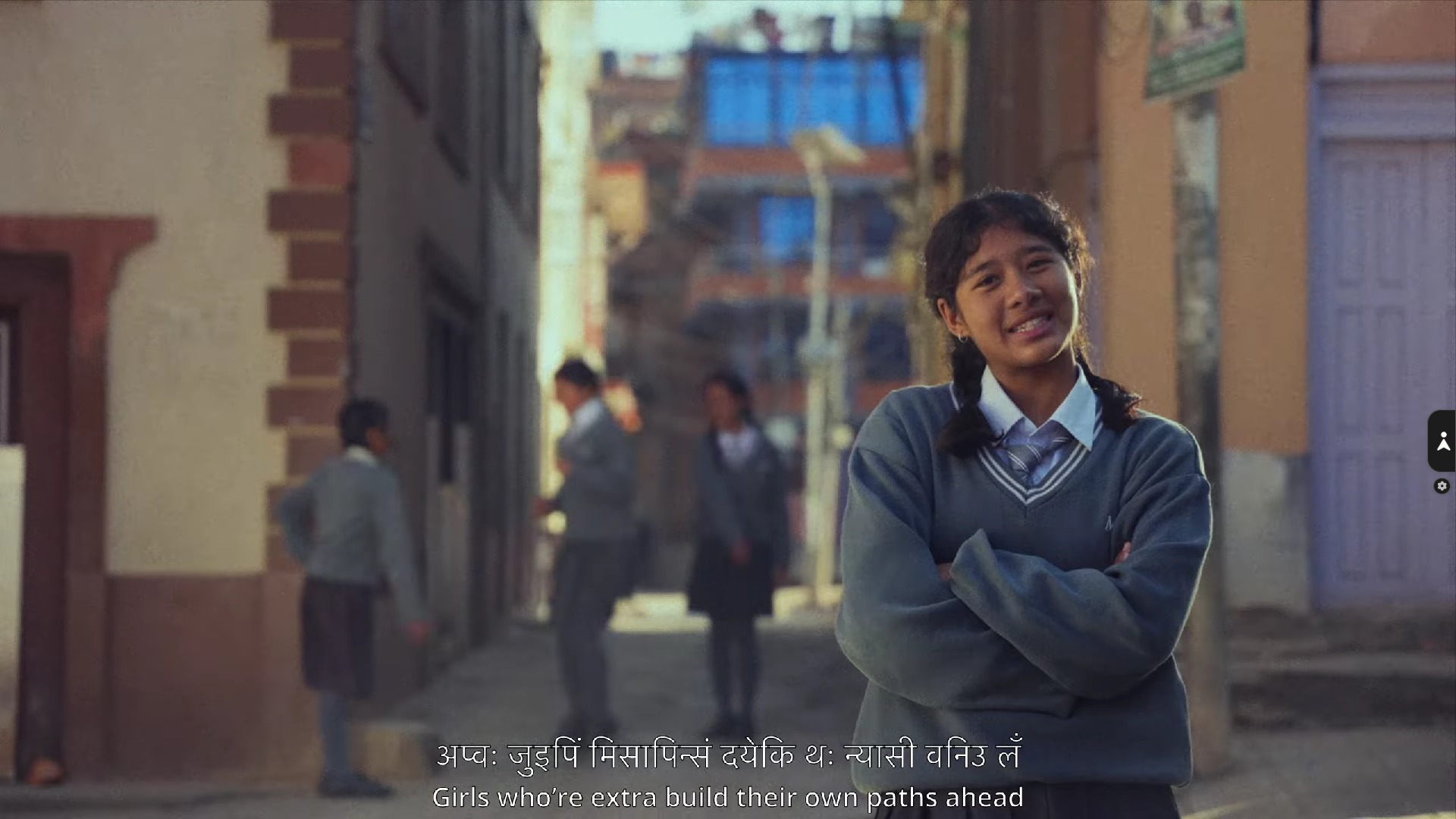
“Girls shouldn’t be running like that! Should I remind you what happens to girls who’re extra?” This line marks the beginning of ‘Apwoh Misa’, a Newa rap music video recently released by Ujjwala Maharjan, a poet and performer who presents rap inspired by spoken-word poetry and her journey as a woman, while highlighting her Newa heritage through rhythm and visuals.
Tauntingly said by an older lady to a young girl who is seen running in the music video, ‘girls who are extra’ is a phrase to criticise girls when they are walking too loudly or behaving in ways that are considered ‘bold’.
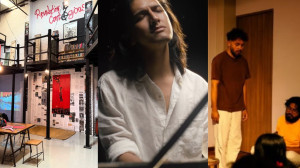
Before ‘Apwoh Misa’ was released, ‘Apwoh Misa: Marching On’, a performance of monologue, spoken-word poetry, and music, was performed on March 28 at Shilpee Theatre, Battisputali. The song falls under the umbrella of the ‘Apwoh Misa’ project.
The music video is directed by rapper Suskihanna Gurung and produced by musician Rahul Giri, and it features Newa folk percussionist Sarada Dongol.
Growing up, Maharjan mostly lived in her mother’s maternal home and was raised by her aunt, grandmother, and mother. Together, they dreamt of her as someone who could speak English, a symbol of their desire for her education.
“My aunt always pushed me to pursue anything that was creative. When I used to create art, she used to praise me,” says Maharjan. Her curiosity about poetry bloomed early on, when she used to read poems from her school curriculum, even before the yearly course formally started.
Photo: Courtesy of Brae Lawren
Knowing she wanted to pursue a creative field, she went on to pursue her undergraduate studies in Journalism and English at Tribhuvan University.
In 2010, she co-founded a spoken-word poetry group, ‘Word Warriors’. The community she put together became a driving force in helping her continue what she was doing. Conducting poetry tours across different parts of Nepal for the campaign ‘Write to Speak’, exposed her to the power of spoken word poetry. Consequently, she describes the group as a place where her artistic side developed.
Maharjan also holds a Master’s degree in Education from the University of Pennsylvania. While working as an educator in the US and participating in workshops for an after-school programme, her understanding of and connection to rap were shaped by the African American children she worked with.
‘Apwoh Misa’ began with a simple poetry challenge called the Eleven:11 Poetry Challenge, conducted by Word Warriors in April 2020.
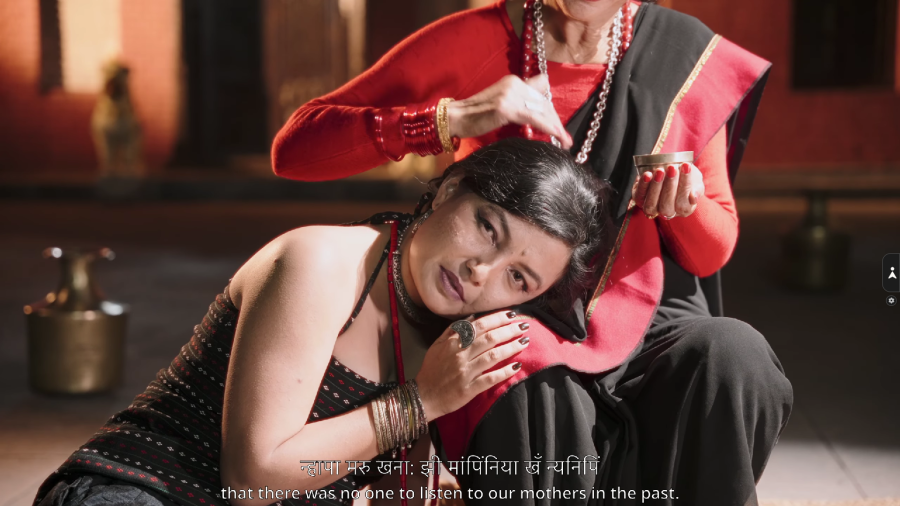
Screengrab from YouTube
“One of the prompts in the challenge was, ‘When was the first time you became aware of your gender?’ That’s when I remembered that, as a child, one of the Ajis used to tell me not to run in a certain way. In Newa Bhasa, the line sounded so rhythmic,” Maharjan recalls.
The first verse came together in this playful manner. But the second verse took more time, as she carefully considered the themes she wanted ‘Apwoh Misa’ to explore.
As the lyrics became more personal, she found herself thinking of her grandmother and the struggles women in her lineage had endured.
One line, in particular, reflects a deeper question of belonging. ‘Thase’, which translates to ‘husband’s home’ in Newa, becomes a point of reflection in the song, as Maharjan questions: to which home do women truly belong?
Screengrab from YouTube
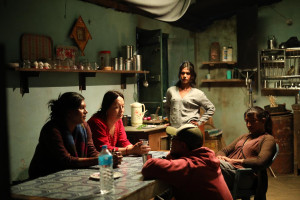
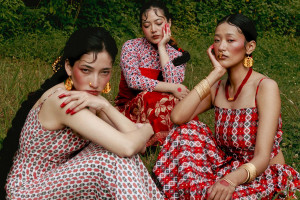
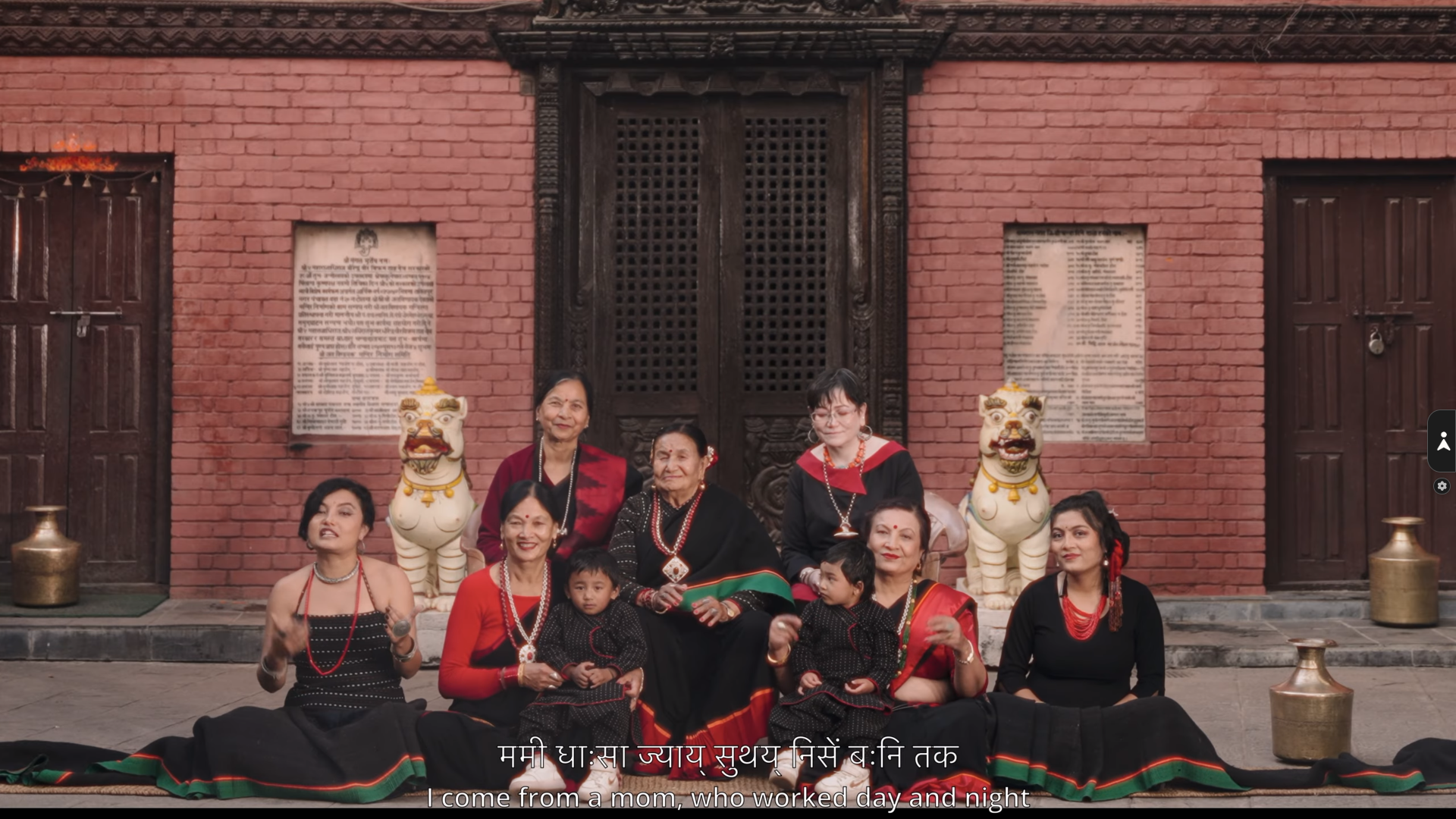
The transition from a playful atmosphere with young girls to adult women in the music video shows an apparent shift that plays on duality: the first chorus feels more light-hearted, but the second part is where the serious rebuttal happens.
“The scene where we are drinking Aylā might be seen as controversial, but I also wanted to show women serving it because that is an integral part of Newa culture,” says Maharjan.
Similarly, the song is layered with issues that Maharjan—and many others—grapple with. According to her, the Newa community also faces internal hierarchies, where discrimination exists along caste lines, often reflected in tonal distinctions in speech. This was one of the reasons she initially hesitated to write in the language.
Photo: Courtesy of Rahul Badu and Monika Limbu
“I intentionally chose to work with female and queer collaborators because you can see a heavy male gaze in movies and songs. But sadly, there are not many women in the music-tech industry,” says Maharjan.
This choice, however, proved costly, particularly in the time it took to find the right collaborators.
‘Apwoh Misa’ represents Newa culture through a female voice that speaks about the place of women in society. At the same time, Maharjan ensures that cultural elements remain intact: the khee (a traditional musical instrument) features in the song, and its subtle presence complements the wordplay in her lyrics.
Another striking aspect of her music is how she uses rap as a form of empowerment, pushing back against the unspoken expectation of silence around anger, desire, and autonomy.
“Rap is generally a male-dominated field, but for me, I wanted to approach this project with femininity and tenderness,” claims the singer. The hair-oiling moment and the portrayal of womanhood through traditional alleyways in the music video are a few elements that contribute to her specific approach.




 20.12°C Kathmandu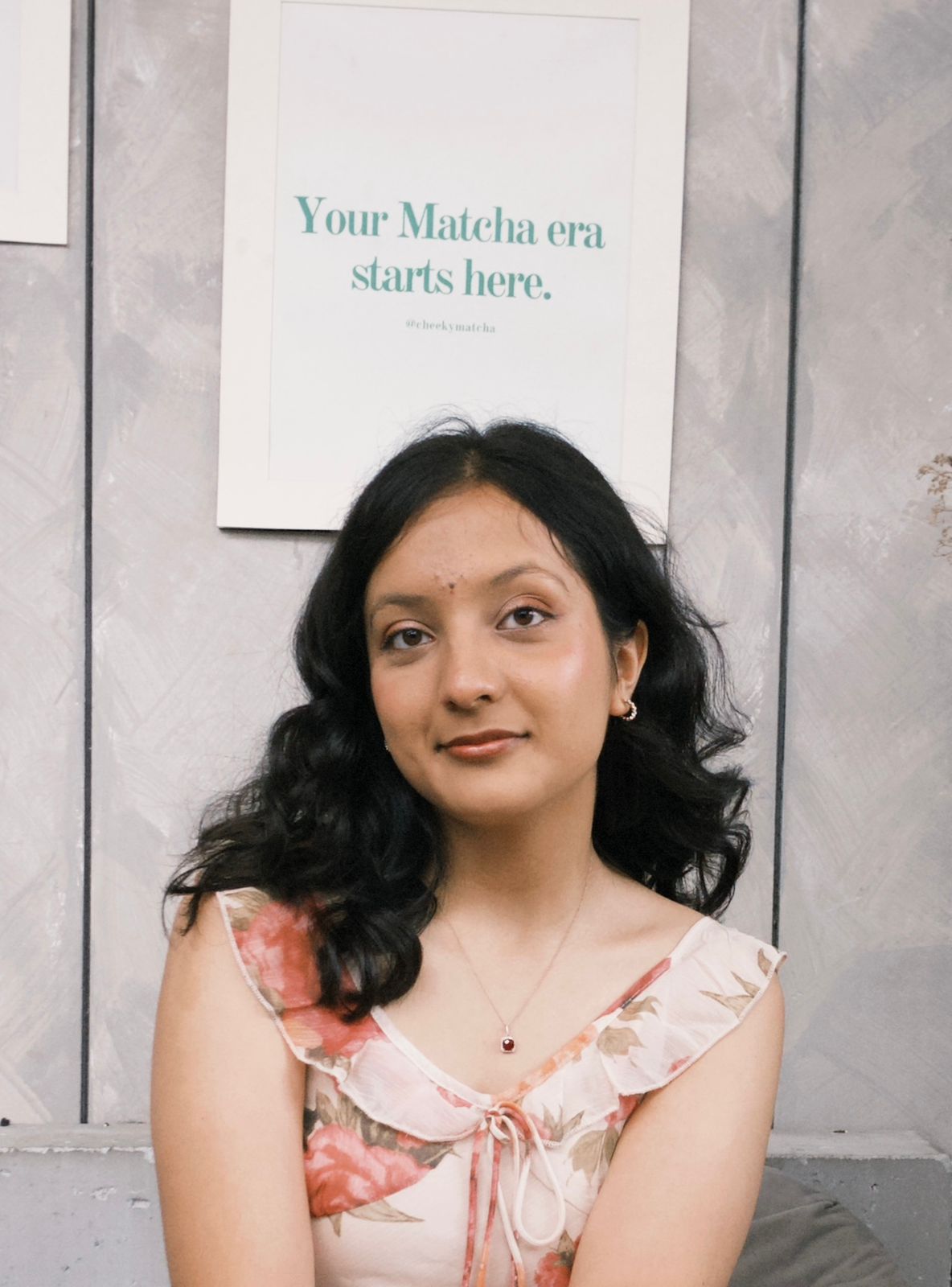

.jpg)