Australia cracks down on student and backpacker visas to curb migration
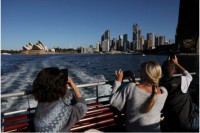
The measures tighten rules for international students and backpackers as the government seeks to bring net migration down from about 300,000 to 225,000 a year by 2028. People take photos of the Sydney Opera House and Central Business District (CBD) skyline in Sydney, Australia, July 9, 2025. Reuters
Australia will stop foreignstudents from bringing partners and children to accompanythem while they study and tighten working holiday visa rules, a seniorminister said on Thursday, amid growing debate over high migration levels.
The government’s move comes afterthe hard-right One Nation party, which has been surging in recent polls, saidthis week that it would slash the number of temporary migrants by 750,000 over three years, togive Australians “breathing space.”
Home Affairs Minister Tony Burkedismissed suggestions the changes were politically motivated by the One Nationparty, which describes its approach as “Australia first” and whose policies have drawncomparisons to those of US President Donald Trump.
“It’s simply demonstrably wrong tosuspect that somehow this is a recent bit of work done to deal with a politicalclimate - it’s not,” Burke told reporters.
The reforms are expected to bring annualnet migration down to about 225,000 by 2028 - broadly in line with pre-pandemiclevels - from around 300,000 now. The cost of living and immigration haveconsistently ranked among voters’ top concerns in recent polls.
Ballot for backpackers
Under the new measures, a ballotsystem will beintroduced for backpackers seeking to extend their working holiday visas. Allvisitor visas will carry a “no further stay” provision preventing holders fromremaining in Australia while applying for another visa category such as apartner visa.
International students will only be permitted torenew their student visas if they move up the qualification scale.
Some students from Pacific Islandnations and Southeast Asia will be able to bring their partners and children,but secondary applicants will not be allowed on most student visas.
Spouses and partners ofinternational students can currently work in Australia, although the number ofhours they are permitted varies depending on the course ofstudy.
International educationcontributed A$53.6 billion ($38 billion) to the Australian economy in the yearto June 2025, making it the country’s fourth-largest export. Despite this,foreign students have been a central focus of the centre-left Labor government’smigration reduction efforts.
Student visa application fees haverisen by nearly 300percent to A$2,500 overthe past four years, while English-language requirements and minimum savingsthresholds for graduate visa applicants have also been tightened.
Migration surged after Australiareopened its borders in February 2022 following nearly two years of COVID-19closures, driven largely by international students, backpackers and temporary workers.
However, numbers have beendeclining over the past two years. Net overseas migration stood at306,000 in the year to June 30, 2025, with international students accountingfor more than half, down from a peak of 518,000 in 2023.




 27.12°C Kathmandu