Leaked diplomatic cable links US pressure to Imran Khan’s removal
A Drop Site News investigation citing a diplomatic cable reports that US officials indicated grievances could be set aside if Imran Khan were removed through a constitutional process, amid escalating tensions between the US and Pakistan in early 2022. Reuters File Photo
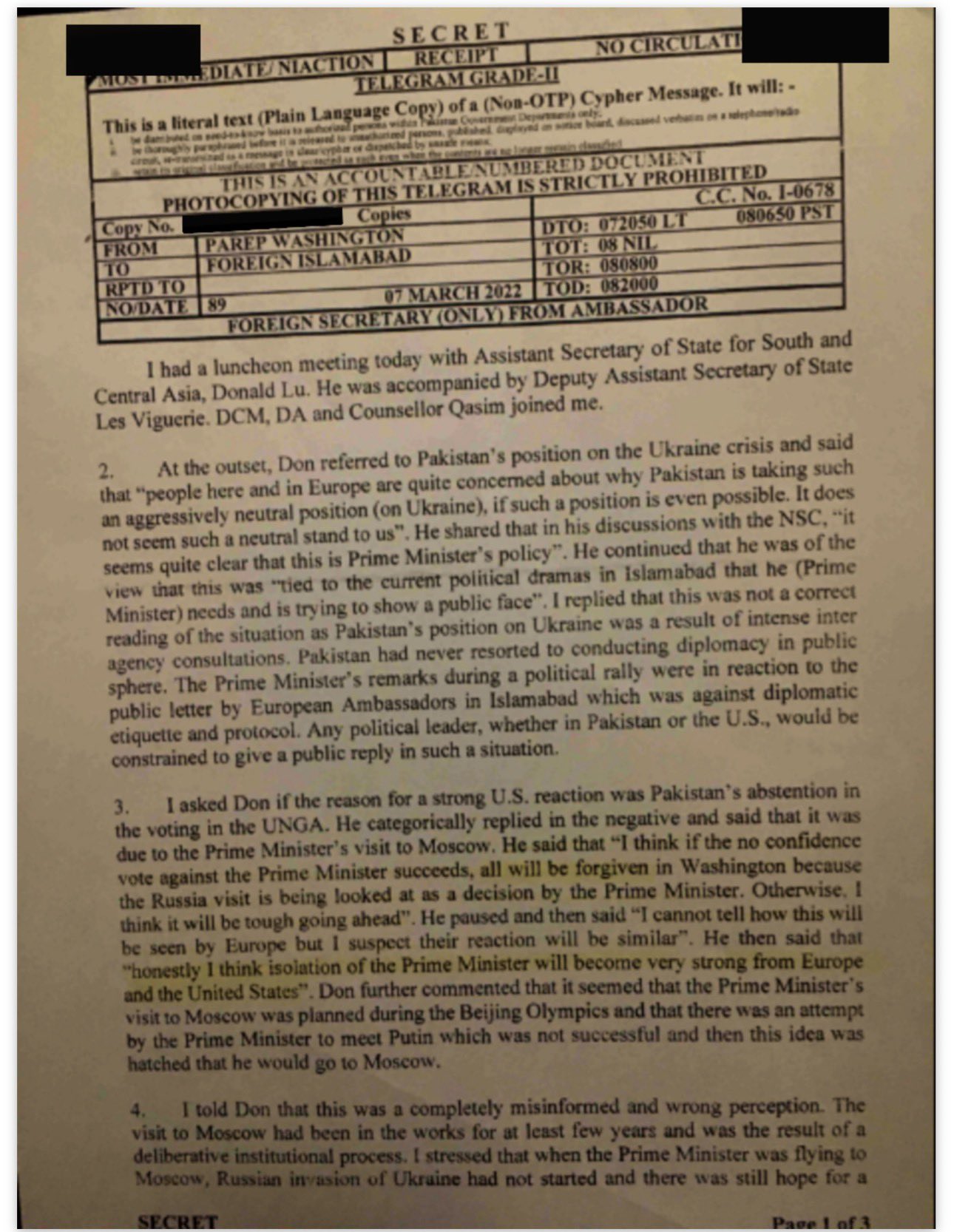
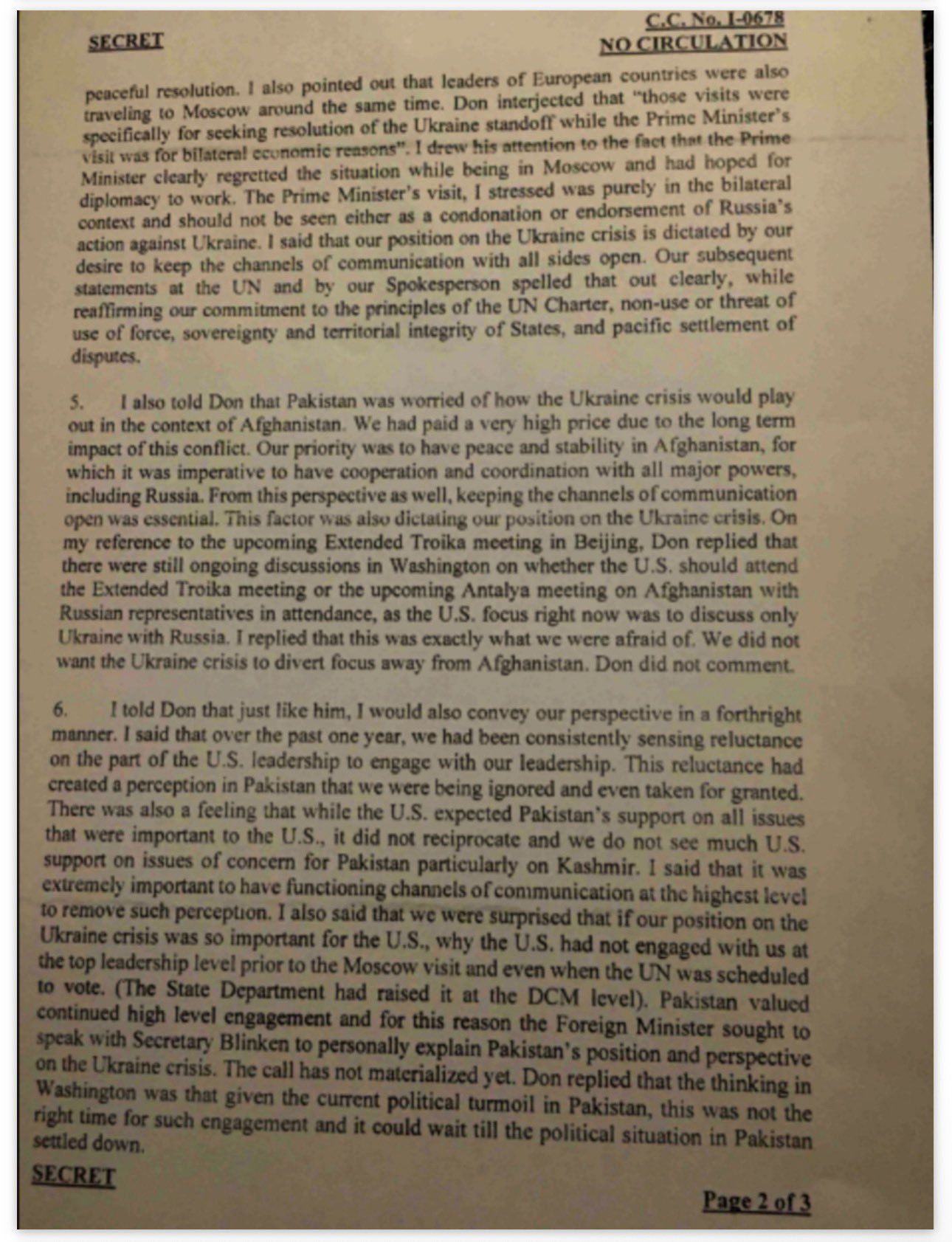
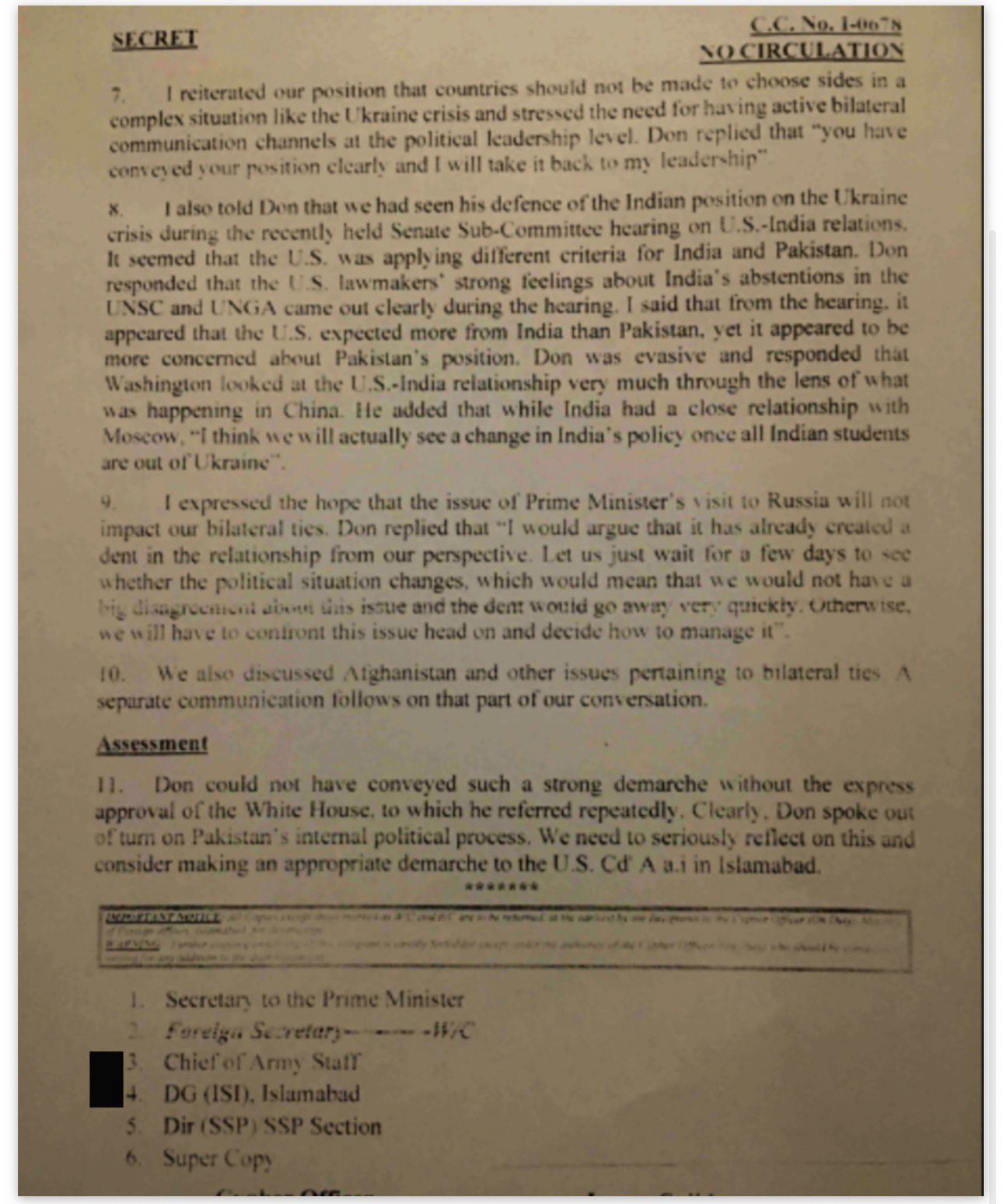
A leaked Pakistani diplomatic cable, cited in an investigation by Drop Site News, points to US political signalling that coincided with the removal of former Prime Minister Imran Khan in April 2022, suggesting that Washington indicated its grievances with Pakistan could be set aside if he was ousted through constitutional means.
The report focuses on a March 7, 2022, meeting in Washington between Pakistan’s then-ambassador, Asad Majeed Khan, and US Assistant Secretary of State for South and Central Asian Affairs, Donald Lu, where the latter suggested that the Pakistani prime minister be removed through a no-confidence motion.
According to the cable cited by Drop Site News, Lu told the ambassador that Washington’s grievances with Khan’s government could be set aside, “all will be forgiven,” in the phrase the Pakistani ambassador would later cite, if Khan were removed from office through a no-confidence vote.
The US State Department has previously rejected claims that Washington sought to influence Khan’s removal. However, the Drop Site report argues that the diplomatic communication reflects a period of sustained friction between the two countries.
Tensions had already escalated earlier in 2022 after Imran Khan travelled to Moscow in February for a long-planned meeting with Russian President Vladimir Putin, just as Russian forces launched their invasion of Ukraine. Days before that meeting, Jake Sullivan, national security advisor to Biden, had called his Pakistani counterpart, Moeed Yusuf, urging him to persuade Khan to cancel the trip. The details of that call, later leaked to Drop Site, show Sullivan warning against the visit and pressing Islamabad to side clearly with the US in the Ukraine war. Khan ignored the warning.
Shortly afterwards, Pakistan abstained from a United Nations General Assembly resolution condemning Russia’s invasion, aligning itself with a group of countries including China and India. The Drop Site reports that US diplomats, already furious over the Moscow visit and Khan’s refusal to clearly align with Washington, began telling Pakistani interlocutors privately that the relationship could not continue on its existing terms.
Against this backdrop, the March 7 meeting between US and Pakistani officials is presented in the report as a pivotal moment. It cites the leaked cable as evidence that Washington communicated its political preferences regarding leadership in Islamabad, although it does not claim direct US orchestration of the subsequent parliamentary process.
On April 9, 2022, Imran Khan was removed from office following a no-confidence vote in the National Assembly supported by opposition parties. His removal came after months of political confrontation with opposition groups and growing tensions with Pakistan’s powerful military establishment, which later backed the transition of power.
Under the new government, installed with the military’s backing, Islamabad began delivering to Washington what it had refused to deliver under Khan. Within months, Pakistan emerged as a quiet but significant supplier of artillery shells and other munitions to Ukraine, the reports said.
The report also places the episode within a broader pattern of strained US–Pakistan relations, noting long-standing disagreements over Afghanistan, counterterrorism cooperation, and Pakistan’s foreign policy alignments. It highlights how these tensions intensified after the US withdrawal from Afghanistan and the Taliban takeover in 2021.
In June 2021, then-CIA Director William J. Burns travelled to Islamabad to meet Khan, but the meeting did not take place. It adds that US requests for counterterrorism basing rights in Pakistan were rejected by Khan’s government, further widening the divide.
Burns had come to secure Pakistani territory for US drone bases to use against targets in Afghanistan after the planned American withdrawal. He left with neither the bases nor an audience with the prime minister, the report said. The episode strained the relations, the report said.
Drop Site’s reporting claims that Pakistan’s military leadership was already conducting its own contacts with US officials, independent of Imran Khan’s civilian government, in the period leading up to his ouster. In July 2021, without the prime minister’s knowledge, the military quietly retained a former CIA Islamabad station chief as a lobbyist in Washington, an early sign that Pakistan’s generals were beginning to move independently of their own elected government, the report said.
Under the new government, installed with the military’s backing, Islamabad began delivering to Washington what it had refused to deliver under Khan. Within months, Pakistan emerged as a quiet but significant supplier of artillery shells and other munitions to Ukraine.
Leaked documents also show the weapons were routed through US defence contractors and third-country intermediaries, easing shortages in Ukrainian stockpiles during the first year of the war.




 16.87°C Kathmandu