Butwal-Gorusinge road upgrade is just 28 percent complete with a year left
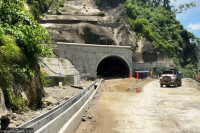
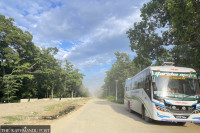
Shortages of soil and riverbed materials, delays in relocating utility poles and a sharp drop in the workforce are slowing the Rs13.55-billion project to build a climate-resilient four-lane highway. A general view of the under-construction road. Post Photo
The Butwal-Gorusinge road upgrade is running behind schedule, with physical progress at just 28 percent as the three-year construction deadline approaches.
The World Bank-supported project is intended to improve road safety and connectivity and reduce travel time along a key East-West Highway corridor.
But the project’s slow pace has raised doubts about whether the 49-kilometre section of the East-West Highway can be completed on time. Only about a year remains before the project’s contract expires.
“Work is under way, but looking at the time remaining and the progress achieved, it will be difficult to complete the project by the deadline,” said Ashok Paudel, information officer of the Butwal-Gorusinge road project.
The contract worth Rs13.55 billion was awarded to China’s Shaanxi Construction Engineering Group Corporation and Chitwan-based Ashish Nirman Sewa JV. The Department of Roads says the contract was signed in October 2024, with three years allowed for construction. The project covers the Butwal-Gorusinge section, while work at the 20-kilometre Gorusinge-Chandrauta section is also ongoing concurrently.
The road is part of a 69-kilometre project to upgrade the existing two-lane Butwal-Gorusinge-Chandrauta stretch into a climate-resilient four-lane highway.
The forest ministry had approved the felling of 7,175 roadside trees needed for the upgrade.
Project officials say the main obstacles now are shortages of soil and river-bed materials, difficulties relocating electricity poles and a reduced workforce. At the beginning, contractors had deployed as many as 900 workers. That number has now fallen to around 300, said Paudel.
Gaurishankar Mahato, a representative of the construction company, attributed the reduction to shortages of fuel and construction materials and rising costs.
“We need 3 million cubic metres of construction material, but we have been able to manage only 580,000 cubic metres so far,” Mahato said. “We are facing difficulties ranging from higher fuel prices to relocating electricity poles. With construction materials unavailable, we have been forced to reduce the workforce.”
The shortage of soil is particularly serious. Although the project reached an agreement with Gaidahawa Rural Municipality in Rupandehi to extract soil, excavation has yet to begin, according to officials. Riverbed materials have also been difficult to obtain.
A government directive to halt unregistered crusher plants had disrupted supplies of riverbed materials across Lumbini Province, forcing the project to reduce its workforce. Project chief engineer Kushalata Neupane said at the time that the project was facing a “severe shortage” of riverbed materials and soil.
Utility relocation is another major bottleneck. Nearly 1,900 of about 2,300 electricity poles requiring relocation along the project remained to be moved. Project officials said poor coordination over transferring power lines had delayed road expansion.
According to Mahato, even after procedural requirements were completed, restrictions linked to forest areas and delays in facilitating pole relocation continued to hamper construction.
The project’s first lot alone requires about 879,169 cubic metres of soil and spoil and 871,046 cubic metres of riverbed material. Mahato said only about 300,000 cubic metres of soil and spoil had been obtained, leaving substantial shortages.
Despite the delays, construction is continuing on bridges, culverts, vehicle underpasses, drains, animal crossings and retaining walls. Nine of the 10 bridges planned in Kapilvastu are under construction, while 56 of 67 culverts planned in Rupandehi are being built. Sixteen of 18 animal crossings in the two districts have already been completed.
The Department of Roads says the project is expected to improve a major trade and transport corridor. But unless material shortages, utility relocation and labour constraints are resolved quickly, officials acknowledge that substantially faster work will be needed to meet the deadline.




 24.67°C Kathmandu