Sindhupalchok villagers spend nights at school as landslides threaten homes
Nine families have moved into a school building for safety as cracks spread across the land, while residents in other parts of the district face similar landslide threats and demand urgent relocation.
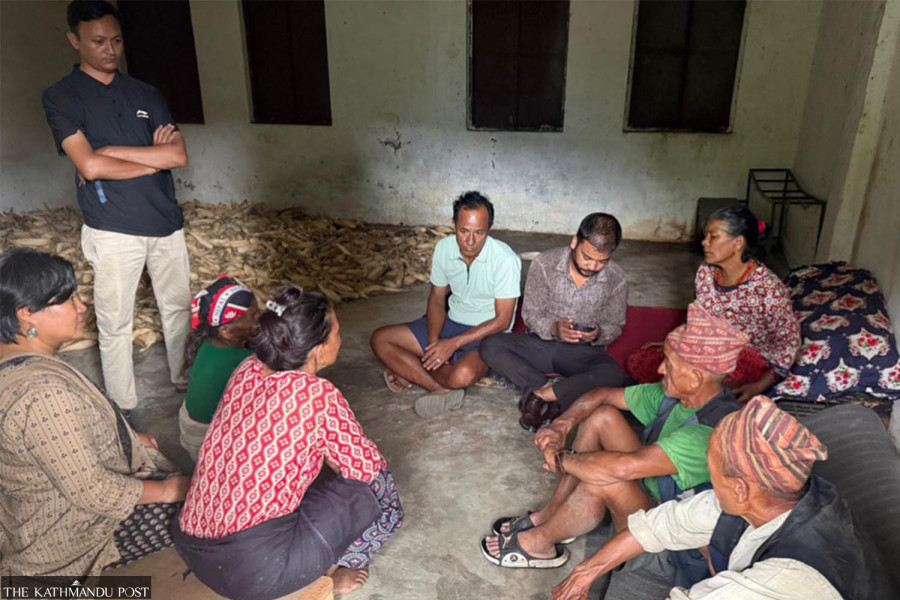
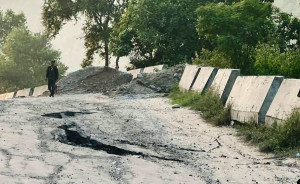
Residents of Thapagaun Pahire in ward 1 of Balephi Rural Municipality in Sindhupalchok are living through a daily ordeal as a landslide continues to creep downhill. Fearing that their homes could be buried at night, families sleep in a local school and return home during the day to tend their farms and manage household chores.
For 66-year-old Ganesh Bahadur Thapa, nearly two months have passed since his family began taking shelter at the school. With the risk of sleeping at home too high, Thapa and several other families spend their nights in classrooms before returning home in daylight.
“We come to the school as we are afraid to sleep at home at night. During the day, we have no choice but to return home. We have to look after the house and work the fields,” Thapa said.
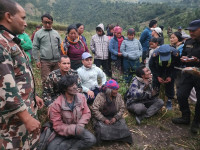
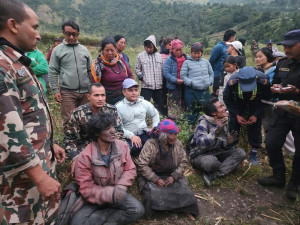
The residents poured out their frustrations on Sunday when a delegation from the Rastriya Swatantra Party, including district chair Maya Gurung, leader Megh Ale, district secretary Bidur Khadka, Balephi rural municipality chair Ghamesh Thapa and former regional chair Umesh Lama, visited the school shelter.
Some residents broke down as they described the uncertainty they face.
“Where are we supposed to go? What are we supposed to do? Cracks are spreading, and we can no longer even farm the land. Who will listen to us?” Thapa said. “Please take our message to the prime minister.”
The landslide has put nine houses at high risk. Thapa’s family has five members.
Laxmi Khatri’s two-member family and four other families, including Ram Sundar Thapa’s, have also been taking shelter in classrooms after their homes were deemed unsafe.
“The school has been merged, so there is no immediate problem staying in the building. But we are becoming increasingly desperate because we do not know how long we will have to live like this,” Khatri said.
Thapa said the land above the settlement had been gradually sinking and sliding since 2014. The 2015 earthquake and its aftershocks further fractured the ground, accelerating the landslide.
After hearing about the Jure landslide of August 2014, whichkilled 156people across several villages, residents began spending nights elsewhere throughout the monsoon season as a precaution, she said. Earlier, when the landslide put four houses at high risk, some families had already moved to Kathmandu. The renewed movement of the slope has now left those still in the village deeply anxious.
Agriculture is the main source of livelihood for residents. They fear that being forced to abandon their homes and farmland would leave them without a means of supporting themselves.
They are demanding immediate relocation to safer ground and measures to reduce the risk before the situation turns into a disaster.
For now, their lives have been reduced to a precarious routine: school at night, home by day, and the constant fear that the slope could give way at any moment.
A study conducted by the International Centre for Integrated Mountain Development (ICIMOD) after the earthquake identified areas around the Bhote Koshi corridor as highly vulnerable to landslides. Experts consider the region a hotspot for landslides and floods triggered by glacial lake outbursts.
According to data previously presented by the National Disaster Risk Reduction and Management Authority, under the Ministry of Home Affairs, 3,375 households in Sindhupalchok are at risk from landslides.
Balephi Rural Municipality chair Ganga Bahadur Tamang (Prabesh) said the local government had already discussed the situation and taken decisions on immediate management and relocation.
“We are taking this seriously. We have made the necessary decisions and forwarded them to the higher authorities. We have also visited the displaced families to assess their situation,” he said.
RSP district chair Gurung, who visited the affected families, said she would push for their relocation and a permanent solution.
“Their situation is serious. There are examples of major disasters happening because similar warnings were ignored in the past. We will take this issue to the higher levels of government,” she said.
More families living under unstable slopes
The crisis is not confined to Thapagaun.
In Bhote Koshi Rural Municipality, 51 families in Paungumba, Hindi and Listikot, Bosisa and Namanang villages of ward 1, are also living beneath unstable slopes.
“The landslide has surrounded the entire village. There is not even an inch of land where we can move elsewhere,” said Ram Krishna BK, a local community leader.
“I am terrified that we could meet the same fate as the people of Lidi and Ghumthang. That thought keeps haunting me.”
Government promises, repeated neglect
Residents say they have been asking authorities for years to move settlements out of danger, but successive governments have failed to act before disasters strike.
On August 14, 2020, a landslide in Lidi in ward 2 of Jugal Rural Municipality destroyed 29 houses and killed 37 people.
Just over a month later, on September 13, 2020, another landslide buried 30 houses in Nagpuje and Bhirkharka in ward 7 of Barhabise Municipality. Fifteen people were killed, and 16 were never found.
After deaths and destruction from floods and landslides, governments and political leaders have repeatedly promised to relocate affected communities and build new homes. But once the immediate crisis passes, residents say those promises are largely forgotten.
Even funds collected in the names of disaster victims have often remained undistributed. Relief collected for the Jure landslide victims, for instance, was released only after a prolonged delay.
For the families now sleeping in schoolrooms in Thapagaun, the concern is no longer whether the government will promise relocation. They want to know whether it will happen before the slope above them gives way.




 18.6°C Kathmandu