Five takeaways from Prime Minister Balendra Shah’s UN address
The prime minister linked Nepal’s floods to climate risks, proposed cooperation in the Himalayas, and called for fairer climate finance and a more equitable global order.
Addressing the 81st Session of the United Nations General Assembly in New York, Prime Minister Balendra Shah placed Nepal’s recent devastation in the Himalayas at the centre of a much larger global conversation. He described the Bhotekoshi–Trishuli disaster as a warning of what a warming and increasingly fragile Himalayan region could mean for the world, while calling for greater international cooperation, climate justice and support for vulnerable countries.
But Shah’s address went beyond climate change. He questioned the priorities of the existing global order, contrasting the world’s ability to move weapons rapidly across borders with its failure to ensure timely access to food, fertilizer and fuel. He called for a fairer multilateral system in which the voices of small and vulnerable countries carry greater weight, and linked that call to the aspirations of a new generation demanding accountability, opportunity and a more responsive state.
Here are five key points from his address.
1. A disaster Nepal sees as a warning for the Himalayas
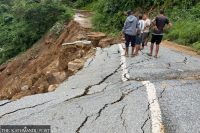
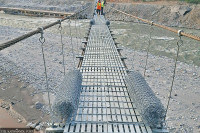
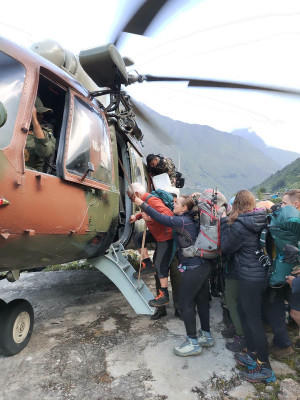
Shah opened with Nepal’s devastating Bhotekoshi-Trishuli floods, describing the disaster as a warning far beyond Nepal’s borders. With at least 1,400 deaths and more than 6,000 people still missing, he said Nepal’s recovery needs were estimated at about 10 percent of GDP. He argued that a warming climate is making the Himalayas more fragile, increasing the risks of ice-rock avalanches, floods, landslides and other cascading hazards. His central message was that climate change is already disrupting development in Nepal.
2. A proposed system to share Himalayan warnings before disasters strike
Shah proposed a Himalayan Climate Resilience Mechanism involving Nepal, India and China. He said the mechanism should allow the countries to share satellite data and expertise, monitor dangerous glacial lakes, strengthen early-warning systems and coordinate disaster assistance across borders. He said the goal should be to make the Himalayas a “laboratory of international cooperation” rather than an area where information remains fragmented.
3. Climate money should arrive as support, not another debt burden
A major part of Shah’s appeal was for more grant-based climate finance. He said Nepal could not build resilience to a crisis made worse by failures of global governance through loans alone. He called the Loss and Damage Fund, the Global Environment Facility and other climate-financing mechanisms inadequate, and argued that vulnerable countries should not have to navigate complex procedures before receiving help after disasters.
4. From climate justice to an unequal global system
Shah broadened his speech beyond climate change, arguing that the international system has become better at moving weapons than delivering essential goods to poorer countries. He contrasted the rapid movement of missiles, rifles and ammunition with Nepal’s difficulties in securing fertiliser, fuel and bitumen. His point was that countries such as Nepal are being hit by climate shocks they did little to cause and by wars they did not start. He called for a fairer global economic order and reaffirmed Nepal’s commitment to multilateralism.
5. A new generation demanding a state that delivers
Shah also presented Nepal’s recent political change as part of a broader generational demand for greater integrity and accountability. He said his government’s goal was to create a state that delivers jobs, social protection and opportunities at home. On climate disasters, he called for a shift from ad hoc response to preparedness, with stronger infrastructure and institutions, better warning systems, greater investment in insurance and innovation, and lower dependence on fossil fuels.




 23.32°C Kathmandu