South Asian lawmakers call for stronger regional climate cooperation
Parliamentarians back proposals for a regional climate council, electricity grid and cross-border disaster-warning system after Nepal’s recent glacial-related disaster.
Parliamentarians from Nepal, India, Sri Lanka, Bhutan and Bangladesh have called for concrete institutional measures to strengthen regional cooperation on climate change and energy, saying existing agreements need to be translated into working mechanisms.
The call came at the two-day South Asian Parliamentary Dialogue on Environment, Climate and Sustainable Development, which concluded in Thimphu on Sunday. Organised by the South Asia Regional Parliamentary Forum for Climate, Energy and Environment (SARPF) and hosted by Bhutan’s National Assembly, the September 5-6 dialogue brought together lawmakers, government officials and technical experts.
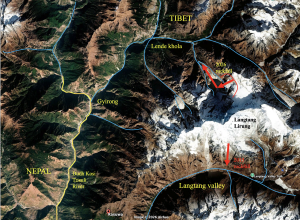
The proposals come in the wake of the devastating glacial-related disaster in Nepal, which has killed at least 1,355 people and left nearly 5,000 missing, according to the latest figures. The disaster has underscored the scale of the climate risks shared across the region.
In a press release, SARPF said participants had agreed to explore a range of measures for regional climate and energy cooperation, including the possible establishment of a South Asia Climate Cooperation Council (SACCC).
The proposed council would seek to sustain political attention on climate, energy and the environment and connect existing initiatives to implementation without duplicating SAARC, BIMSTEC, BBIN or SACEP.
They also backed steps towards a South Asian regional electricity grid, citing the region’s complementary energy resources. Nepal has an estimated 42,000 MW of hydropower potential, while Bhutan has more than 30,000 MW of technically feasible hydropower potential, of which barely 12 percent is harnessed. India has more than 253,000 MW of installed renewable capacity.
Another proposal was a regional disaster-preparedness and data-sharing mechanism covering shared early-warning systems, glacial-lake and flood monitoring across Himalayan basins, and the exchange of climate-risk data across borders.
Participants said countries sharing vulnerable ecosystems need stronger cooperation on monitoring and early warning so they can respond quickly when disasters strike.
SARPF co-directors Prof Mukul Sharma and Sumedha Basu, and Samantha Stratton-Short, chief climate officer at UNOPS, stressed the need for stronger cross-border early-warning arrangements and greater sharing of climate-risk data. Stratton-Short presented the South Asia Energy Transition Status Report 2026 at the dialogue.
Parliamentarians called on SARPF to work towards a possible blueprint for the SACCC and advance the other proposed measures through national, regional and multilateral engagement, including with SAARC, BIMSTEC, BBIN, SACEP, the Asian Development Bank, the World Bank and the Asian Infrastructure Investment Bank.
Bhutanese Prime Minister Dasho Tshering Tobgay, Energy and Natural Resources Minister Lyonpo Sonam Tashi, Agriculture and Livestock Minister Younten Phuntsho and Deputy Speaker of the National Assembly Sangay Khandu were among the senior Bhutanese officials who addressed the dialogue.
Sanjay Jaiswal, chairperson of SARPF and a member of India’s Lok Sabha, and SARPF co-directors Sharma and Basu presided over the two-day meeting.
SARPF is a non-partisan platform of parliamentarians and legislators from Bangladesh, Bhutan, India, Nepal, the Maldives and Sri Lanka, established to promote regional parliamentary cooperation and policy dialogue on climate, energy and the environment.




 15.15°C Kathmandu