Nepal’s Bhotekoshi flood: What we know on day three as death toll crosses 500
Government says 538 lives have been lost, hundreds remain missing, and bodies are being recovered far downstream. Here is what we know about Nepal’s worst flood disaster in years. Nepal’s Department of Hydrology and Meteorology, drawing on satellite images shared by the Chinese side, reached a similar conclusion. Angad Dhakal/TKP
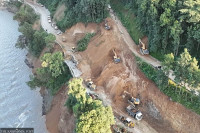
A sudden and powerful flood swept through Nepal’s northern border region on Wednesday morning, devastating communities along the Bhotekoshi river in Rasuwa and sending a wall of water and debris downstream.
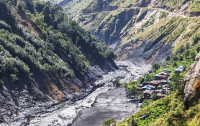
The flood struck around Timure and Syaphrubesi, close to the Nepal-China border, damaging roads, bridges, buildings and other infrastructure before rushing into the Trishuli river system. The force of the flood swept away people, vehicles and structures, and cut off parts of the area.
Three days later, the disaster is still unfolding. Search teams are continuing to scour riverbanks and downstream settlements, while authorities are dealing with a rapidly growing number of bodies recovered far from the original flood zone.
How many people have died?
The death toll had reached 538 by Friday afternoon, according to the National Disaster Risk Reduction and Management Authority.
The figure includes people who died in Rasuwa and those whose bodies were recovered in districts far downstream.
The toll is not necessarily final. Search operations are continuing, and authorities are still reconciling records from different districts. Hundreds of people are still missing.
Why are bodies being found so far from Rasuwa?
The Bhotekoshi is part of the Trishuli river system, so the flood carried people and debris far downstream.
What began as a disaster concentrated in Rasuwa has therefore become a much wider search and recovery operation. Bodies and human remains have been found in Nuwakot, Dhading, Gorkha, Tanahun, Chitwan and Nawalparasi.
The distance over which remains have travelled has also created a problem authorities were not prepared for: where to take and preserve them.
Are hospitals running out of space for the dead?
In several districts, yes.
Chitwan has been particularly hard hit. By Friday afternoon, 186 bodies had been recovered there, but hospitals in the district can collectively accommodate only about 30 to 50 bodies in their existing morgues.
Authorities are therefore converting an unused building of the Industrial Enterprise Development Institute in Bharatpur into a temporary body-storage centre. The facility is expected to accommodate around 250 bodies. Bharatpur Metropolitan City is repairing and equipping the building, while local business organisations have agreed to arrange dry ice.
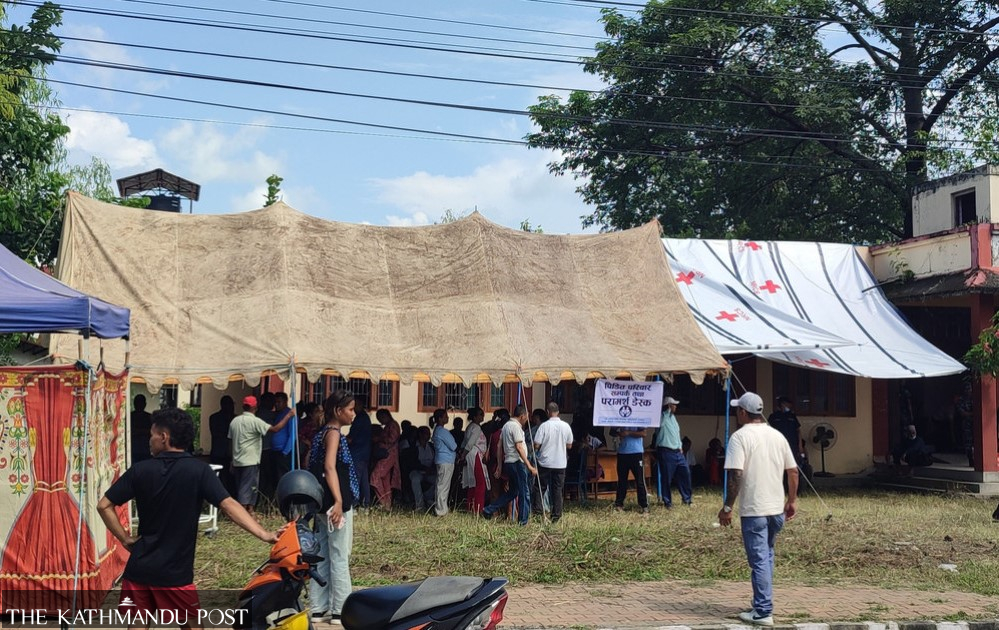
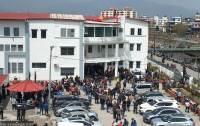
Relatives of people missing after the Bhotekoshi flood gather at a temporary body management centre in Bharatpur seeking information about their loved ones. Ramesh Kumar Paudel/TKP
Authorities have also identified the electric crematorium at Devghat as an additional option if the temporary facility reaches capacity.
Nawalparasi East faces a similar problem. Bodies have had to be transferred to Pokhara, Butwal, Bhairahawa and Palpa because hospitals and other health facilities could no longer accommodate them. A community forest hall in Kawasoti has also been turned into a temporary morgue.
Pokhara has become another major destination for bodies recovered downstream.
Authorities have transported 93 bodies to the city from Tanahun, Gorkha, Nawalparasi East and Dhading. Hospitals in Kaski have a combined morgue capacity of 88 bodies, meaning the existing capacity has already been exceeded.
The bodies are currently being stored at temperatures between 2 and 6 degrees Celsius. Hospital officials say that is generally enough to preserve remains for around 10 days to two weeks.
Beyond that, much lower temperatures would be needed. Pokhara does not currently have a facility capable of maintaining sub-zero temperatures for large numbers of bodies.
How are authorities identifying the dead?
The identification process is becoming one of the biggest challenges of the disaster.
Police photograph the bodies, collect fingerprints, conduct post-mortems and take DNA samples where necessary. Where facial identification is possible, photographs can be used to help families determine whether a missing relative has been found.
DNA samples are being sent to Kathmandu for testing at the Nepal Academy of Science and Technology and the Nepal Police Central Forensic Science Laboratory.
Authorities are also preparing for the possibility that some bodies may remain unidentified.
What happens to bodies that cannot be identified?
Police say unidentified remains cannot be kept indefinitely.
Under the Unidentified and Unclaimed Bodies Management Guidelines, authorities are preparing to coordinate with local governments to designate secure burial sites.
Each body will be given a tag number and the burial details will be recorded. The system is intended to allow authorities to trace the remains later if a person is identified through DNA or other evidence.
Officials expect the number of unidentified bodies to increase as search teams recover more remains from downstream areas.
Are families still searching for missing relatives?
Yes.
Relatives of missing people have started travelling to downstream districts, especially Chitwan, as more bodies are recovered.
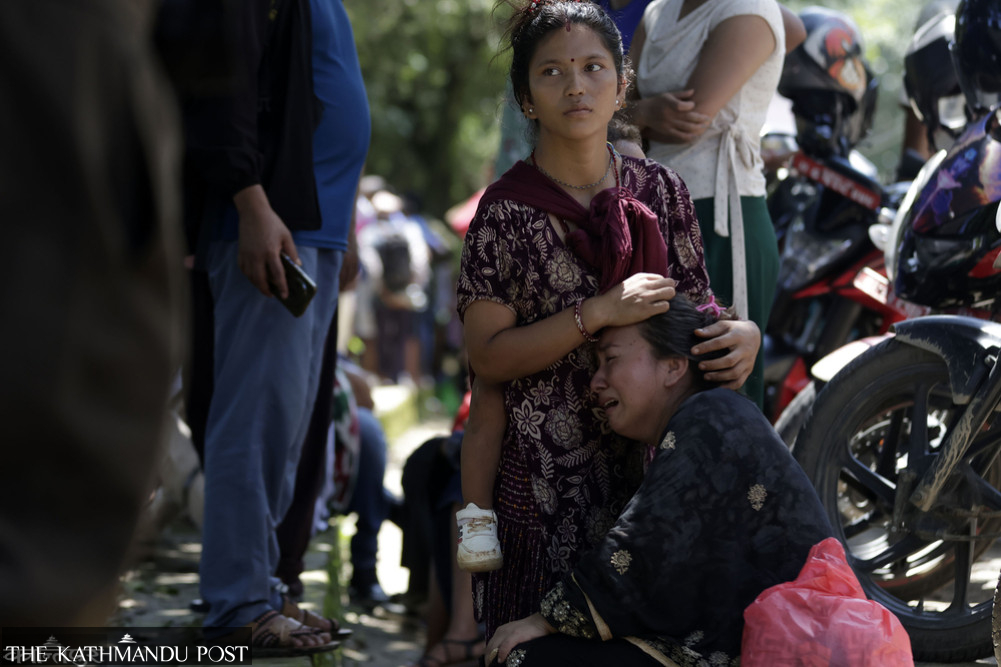
Yamuna Rokaya, who reached the Nepali Army Training Centre in Bidur, Nuwakot to search for her missing relative, breaks into tears. Hemanta Shrestha/TKP
Some have arrived carrying photographs of family members who disappeared during the flood. They are gathering near temporary body-storage facilities even before those centres are fully operational, hoping to find information.
For these families, the expanding recovery operation offers the possibility of finally learning what happened to relatives who remain unaccounted for.
How many people are still missing?
As many as 977 people, including 517 foreigners, are still missing, according to the National Disaster Risk Reduction and Management Authority, Nepal’s disaster management agency.
Nepal Police says 28 police personnel who lost contact during the disaster are still unaccounted for. There are also civilians, tourists, trekkers and travellers whose whereabouts have not yet been confirmed.
Authorities are continuing to verify whether some of those listed as missing have already reached safety but have not yet been accounted for.
Have foreign tourists been rescued?
Yes.
The Tourism Board said 117 foreign tourists had been rescued from flood-affected parts of Rasuwa. They include 85 Indians, 16 Chinese, nine South Koreans, two Americans and two Italians. The nationalities of three others were still being established.
Helicopters have been used to evacuate people from isolated areas, while security forces on the ground continue searching settlements and riverbanks.
How large is the rescue operation?
More than 4,400 police personnel have been mobilised for search and rescue operations, while the Nepali Army and Armed Police Force are also involved.
Security forces have rescued or provided primary assistance to 1,473 people in Nuwakot, Rasuwa and Dhading, according to Nepal Police.
Roads and bridges destroyed by the flood have made access difficult, forcing authorities to rely heavily on helicopters in some locations.
Is there a new flood threat from China?
There is concern about another possible surge, but the situation remains unclear.
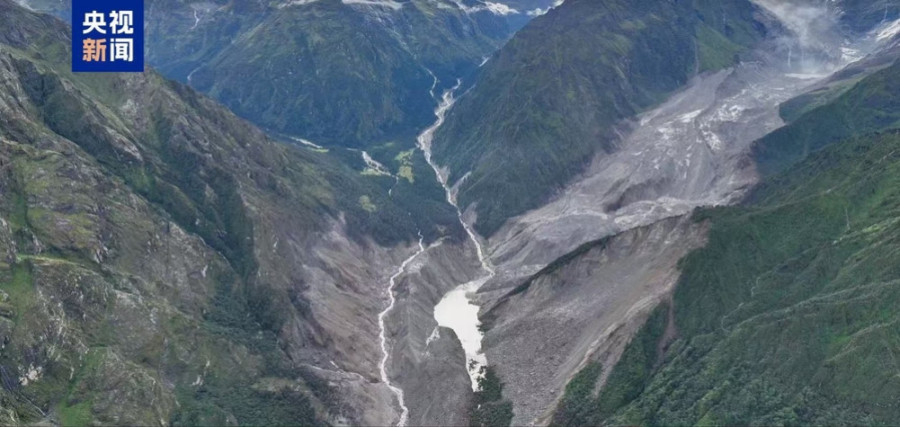
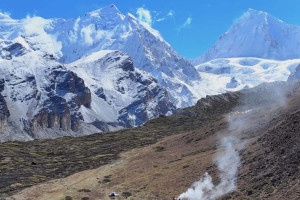
A large barrier lake has formed near the confluence of the Chhochen Khola and Purepu Tsangpo rivers on the Chinese side of the border. China’s Ministry of Water Resources estimated the lake’s volume at around 2 million cubic metres on Thursday morning and warned that another 3 million cubic metres of water could flow into the lake over the following three days.
Local authorities later received information that the lake had breached.
A barrier lake formed near the confluence of the Chhochen Khola and Purepu Tsangpo rivers. Photo: CCTV
But the Nepali government has not confirmed that a major lake or dam collapse occurred.
Government spokesperson and Education Minister Sasmit Pokharel said Nepal had received information that glaciers had broken, causing water mixed with debris to overflow. He said there was no information that a dam itself had collapsed and that China had indicated there was no immediate major threat.
The two accounts have not yet been fully reconciled.
Could more water flow into Nepal?
Authorities are taking the possibility seriously enough to prepare for it.
The Chhochen Khola and Purepu Tsangpo originate in Tibet and merge before entering Nepal, where the river is known as the Bhotekoshi.
Nepal’s National Disaster Risk Reduction and Management Authority has reported that the Bhotekoshi water level has risen.
Helicopters already stationed in Dhunche and other parts of Rasuwa are being prepared for aerial reconnaissance to assess the river and surrounding areas. Authorities are also moving people living close to the river towards safer locations.
The aim is to determine whether any additional water released upstream could create another dangerous surge through areas already devastated by Wednesday’s flood.
What is the government doing now?
The Cabinet has decided that the prime minister and all ministers will contribute one month’s salary and remuneration to the Prime Minister’s Natural Disaster Relief Fund.
The government has also directed the finance ministry to prepare relief and rehabilitation packages for people and businesses affected by flooding along the Nepal-China border, the Bhotekoshi river and downstream areas.
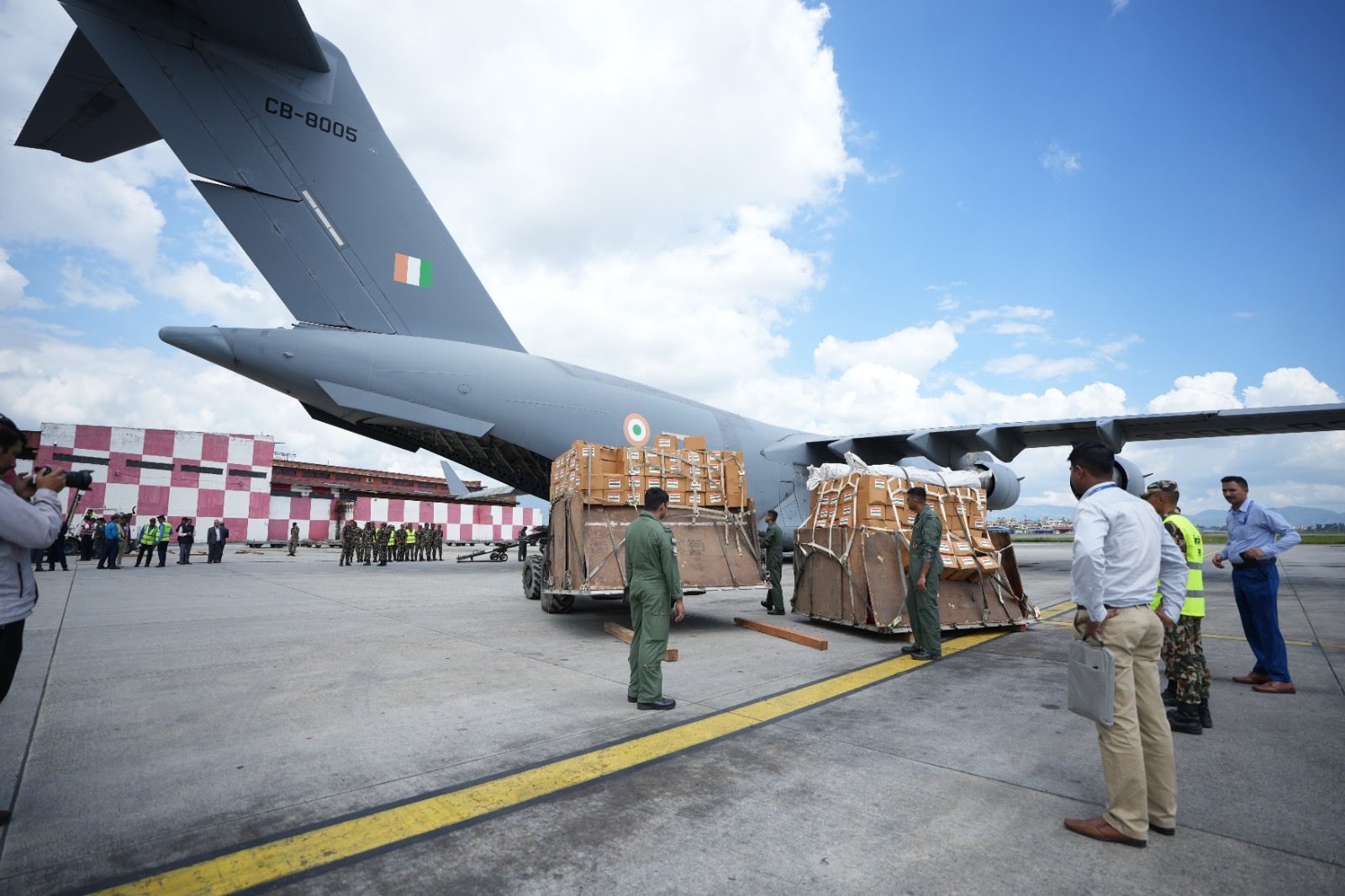
India on Thursday handed over a second consignment of 37.5 tonnes of humanitarian assistance and disaster relief materials, including medicines and food packets, to Science, Technology and Innovation Minister Mahabir Pun to support Nepal’s flood relief and rescue efforts. Photo: Indian embassy in Kathmandu
India is sending additional humanitarian assistance, with a third military aircraft carrying 12 tonnes of relief materials expected to arrive in Nepal. Two earlier consignments brought more than 47 tonnes of relief supplies.
The United States has also offered assistance. US President Donald Trump said Washington had contacted Nepal and would provide whatever help was needed. The US State Department said it was tracking 90 Americans who may have been affected and remained unaccounted for, while three had been rescued. Washington has also announced $500,000 in assistance and said it would send a disaster response adviser.
What happens next?
The immediate task is still to find survivors and missing people. But by the third day, the disaster has become much more than a conventional search-and-rescue operation.
Authorities are now trying to manage a growing number of recovered bodies, establish their identities, support families searching for relatives and maintain temporary storage facilities across several districts.
At the same time, damaged roads and bridges continue to complicate access, while authorities are monitoring the Bhotekoshi for any new rise in water.
The reported development involving the barrier lake on the Chinese side has added another layer of uncertainty. Nepal has not yet established exactly how much water, if any, has been released downstream.
For now, officials are urging people living along the Bhotekoshi and Trishuli river systems to remain alert.
Three days after the flood struck, the full scale of the disaster is still emerging. The death toll has already reached 538, hundreds remain missing, and the search for survivors and answers is continuing far beyond the area where the flood began.




 21°C Kathmandu