Bara girl was missing for three days. The police response is now under scrutiny
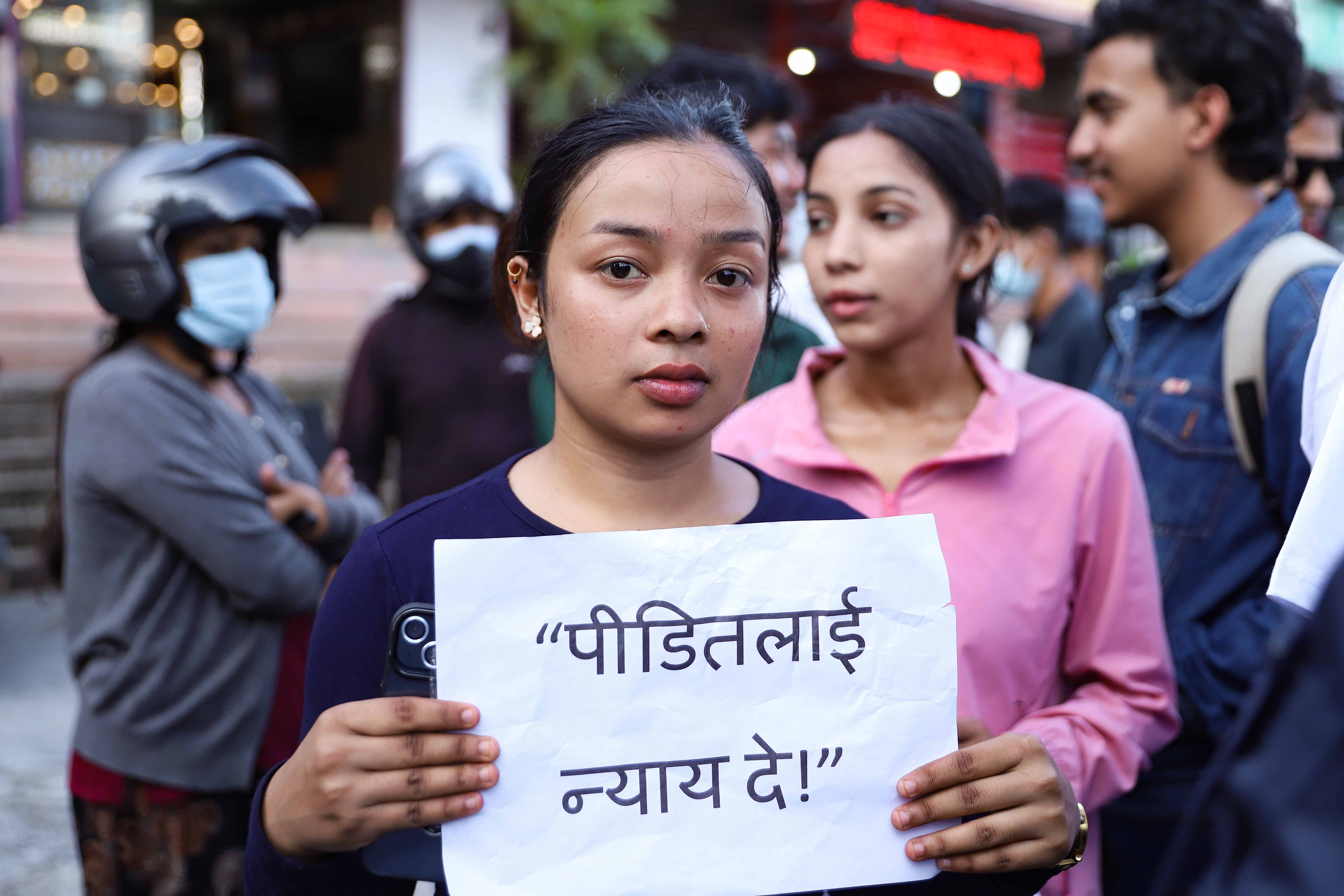
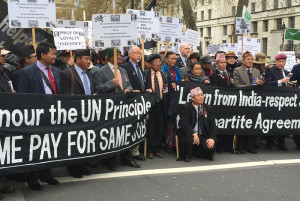
Family, lawmakers and rights activists question whether police acted swiftly after the three-year-old was reported missing. People stage a demonstration at Maitighar Mandala in Kathmandu on Sunday, demanding justice for the three-year-old victim of sexual assault and murder. The child disappeared on August 16 and her body was found two days later on August 18. Nepal Photo Library
Initial information is often the most critical element for investigators attempting to prevent serious crime and rescue victims. Yet, recurring incidents across the country point to a disturbing pattern in which law enforcement agencies fail to demonstrate basic sensitivity when distraught family members approach them for help. The horrific rape and subsequent murder of a three-year-old girl in Bara has once again put investigation system under scrutiny.
On August 16, the three-year-old disappeared from her home at Bhaktinagar in ward 1 of Jeetpur-Simara Sub-Metropolitan City at around 8:30am. Her parents searched with neighbours before her mother submitted a written request to the Area Police Office in Simara at about 11:15am.
The family says police did not respond with urgency. The girl’s father said the family had searched everywhere, including a nearby locked house the child often visited. When he questioned why it had not been searched, they became angry and blamed the family.
“I also raised the matter with the police,” he said. “But they said they could not proceed merely on what I was saying and asked me to file a formal complaint by naming suspects.”
The father also told police the following day that another local man was missing and gave them his phone number, asking officers to trace his location. He said he could not understand why police did not act promptly on that information.
Three days after the child disappeared, neighbours noticed foul smell coming from the abandoned house, about 200 metres from her home. The family and locals alerted police. At around 5:45pm, officers entered the building and found the child’s body.
Police later arrested a 16-year-old helper on a local passenger vehicle and 24-year-old owner.Several others were detained. Police say the teenager lured the child with chocolate before assaulting and killing her.
A post-mortem examination indicated that the child had likely been sexually assaulted and strangled with a rope, according to a doctor involved in the examination. The doctor said rumours of mutilation were inaccurate and that insects had caused the reported disfiguration.
The case triggered protests in Simara, with residents demanding punishment and action against police officers accused of mishandling the search. The protests revived demands for the death penalty for heinous crimes.
Rights activists say the immediate concern is whether the state responds quickly enough when a child is reported missing.
Mohna Ansari, a former member of the National Human Rights Commission, said police should have treated the initial report as an emergency. “The police response expected in such a heinous crime was not visible from the beginning,” she told Kantipur. She also criticised the later decision to make the child’s name, photograph and other details public.
“The entire society became agitated and people came to the streets, but the police showed further insensitivity by making public the child’s name, photograph and other details,” said Ansari. “We also need to examine how the family was treated when it first approached the police.”
Ansari said police becoming active only after locals reported a smell roughly 58 hours later was particularly serious. “As soon as information about any incident comes in, Nepal Police must become active,” she said.
Lawmaker Rahbar Ansari representing Bara also questioned the initial response. “Police did not search for the body. For 24 hours after being informed that the child was missing, no police personnel were mobilised,” he said. “Only after neighbours noticed a smell did police and a sniffer dog arrive.”
Youths stage a protest demanding justice for the three-year-old rape victim, in Pokhara on Monday. Nepal Photo Library
Police have rejected the claim that no search was conducted. Nepal Police spokesperson Abi Narayan Kafle said missing-person alerts were circulated and officers searched nearby forests and other possible locations.
“The police did not imagine that such a thing could happen in a nearby empty house,” Kafle told Kantipur. “Everyone should have checked and searched the vacant house nearby. That was overlooked. But it is not that the police did not conduct any search.”
He said investigators initially focused on the possibility that the child had been abducted or taken elsewhere. “Everyone in the police wanted to rescue her quickly, find her safe and identify the offender,” he said. “All mechanisms were mobilised with sensitivity, but a tragic incident occurred.”
The handling of the case also came under scrutiny after a video of the teenage suspect giving a statement during a medical examination was leaked on social media. Police arrested a head constable accused of recording the video and said four others were under investigation.
Two officers from the district police office and two other police personnel deployed at the hospital were also present when the statement was recorded. The room is where doctors privately ask patients about their health. “But we don’t know who leaked the video or why,” said Rahul Mandal, the hospital’s medical superintendent.
Home Minister Sudan Gurung himself said at the initial stage that serious questions had been raised over police negligence and that the process of investigating and taking action initiated against the officials concerned. Deputy Superintendent of Police Sandeep Chhetri of the Area Police Office in Simara and Police Inspector Prakash Thapa have been recalled to Police Headquarters.
The leak raised questions about whether officers understand that sensitive statements involving minors must remain confidential. The Press Council Nepal also criticised the footage, saying an accused person’s statement should not become viral material before a court reaches a verdict.
The most prominent example is the 2018 rape and murder of 13-year-old Nirmala Pant in Kanchanpur. Her family reported her missing on July 26, 2018, and she was found dead the following day. A Home Ministry probe blamed police for a lackadaisical approach and serious investigative weaknesses. Another police inquiry found negligence and attempts to frame an innocent man.
When Durga Devi, the victim’s mother, went to the temporary police post in Bhagatpur at the time, a police officer told her, “She may have eloped; she will probably come home tomorrow.” At the time, she said of the police response, “Perhaps this day would never have come if the police had started searching for her then.”
Eight years on, Nirmala’s case remains unresolved.
The case of 23-year-old Sujita Bhandari in Chitwan in 2021 provides another warning. Bhandari disappeared on June 25. Her family reported her missing, but police initially said there was insufficient basis to suspect abduction. Her body was found nine days later in a forest near her home, sparking protests and accusations of police inaction. Police said they had tracked her phone and conducted searches based on the information provided by the family.
Retired Nepal Police AIG Uttam Subedi said the first response is crucial. “Victims must be made to feel that the police are with them and that a search is under way,” he said. “The police’s first response is the most important thing for a family.”
He says that although personnel at all levels had been briefed to verify any information as soon as it came in, the matter sometimes also depended on the role played by the commander in charge at the time. “That weakness should be treated as an individual failing, and those responsible for such negligence should be punished,” said Subedi.
Advocate Kunjani Pyasi Pariyar said the problem goes beyond resources and technology. “There is a mindset within the police that if a girl of a certain age is a victim, she must have eloped or been in a relationship,” she said. “Police often say they lack resources and technology. But they have not improved basic behaviour.”
Rights activist Durga Sob said the Bara case was shocking. “When police fail to show sensitivity in such a case, it adds pain to the suffering,” she said. Investigators should be especially careful with children and give families confidence that the state is standing beside them.
The Bara tragedy has become a test of whether lessons from earlier cases have been absorbed. Arrests and punishment may satisfy public demands, but the deeper question is whether the first call for help is treated as the beginning of an emergency investigation rather than a routine complaint in all similar future cases.




 23.05°C Kathmandu