Over 50 Bajhang schools shut as students head to highlands for yarsagumba harvest
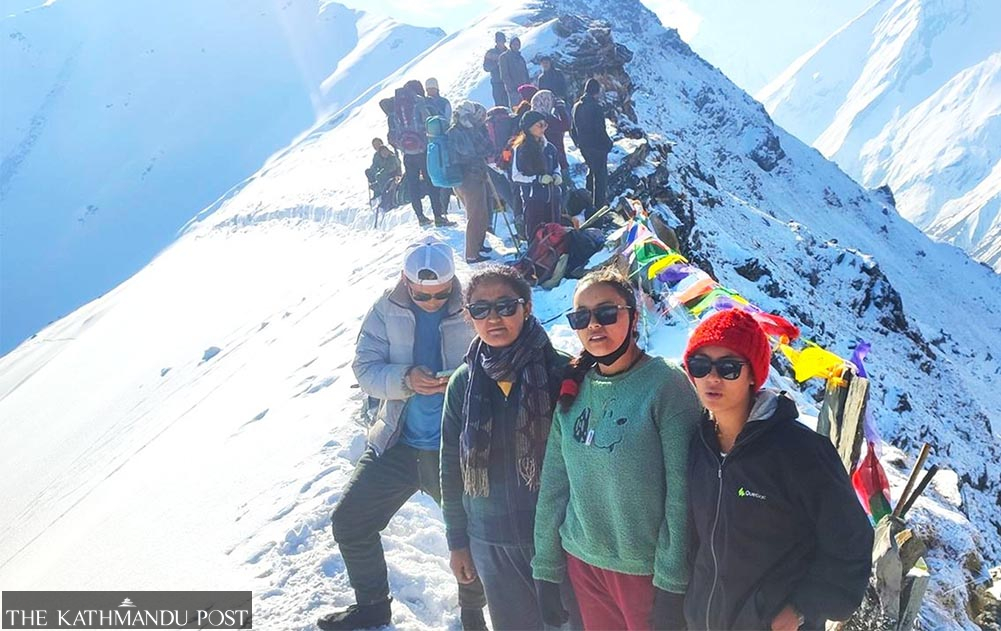
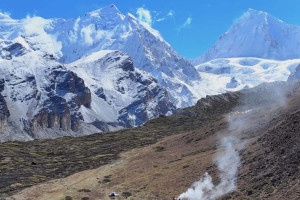
The villages in Bajhang’s northern belt lie deserted as families, including children and teachers, move to alpine pastures in search of yarsagumba. In the high-altitude areas of Saipal, the weather remains unpredictable. Short spells of sunshine are often followed by clouds, thunder and snowfall. Basant Pratap Singh/TKP
While the government runs a nationwide school enrolment drive, dozens of schools in Bajhang have shut to allow communities to collect yarsagumba (caterpillar fungus). Most schools will remain closed until mid-June as nearly all students have moved to high-altitude pastures.
All schools in Surma and Saipal rural municipalities, as well as those in Talkot, Masta and Kedarsyu rural municipalities, and the northern parts of Bungal and Jayaprithvi municipalities, have suspended classes until June 14. Locals said more than 50 schools are affected. Enrolment for the new academic session will begin on June 15.
As yarsagumba is the main source of income in the region, residents aged seven and above who can make the journey have left for the highlands. With classrooms empty, many teachers have also headed to the alpine meadows, locally known as patans.
“We plan to leave for the highlands within a couple of days,” said Jiban Bohara, a teacher at Kanda Secondary School in Saipal. “With schools closed, it makes more sense to use this time to earn rather than remain idle.” He said several teachers whose homes are outside the area have also joined their students in the pastures.
Gyan Bahadur Bohara, head of the education and sports division of Saipal Rural Municipality, said enrolment will begin on June 15 as students have travelled with their families. Surma Rural Municipality follows a similar schedule. Schools in this belt close for six to eight weeks each year during the harvest season, with the break adjusted against summer holidays.
“Most families have already left, and the rest will follow within days. Soon, the villages will be empty,” said Rajendra Dhami, former chair of Saipal Rural Municipality.
In the high-altitude areas of Saipal, mid-April weather remains unpredictable. Short spells of sunshine are often followed by clouds, thunder and snowfall. Since the second week of April, repeated snowfall has covered the pastures and blocked trails leading to them.
The difficult conditions have made travel risky. “The route was buried in snow. A journey that usually takes two days took us three,” said Tashi Tamang of ward 4 of Saipal, who reached Syangwon Patan with relatives and neighbours. “The trails along cliffs were extremely slippery. It was particularly hard for women and children, but we managed to reach the camp.”
As yarsagumba is the main source of income in the region, residents aged seven and above who can make the journey have left for the highlands. Basant Pratap Singh/TKP
Collectors, who usually arrive by the third week of April, are about two weeks behind this year due to persistent snow. Despite the risks, they continue the journey, hoping clearer weather will melt the snow and expose the harvest. Many had already moved supplies to high camps in mid-April before returning to wait for better conditions.
“This is the peak period for collection. Once the sun comes out, the snow will melt quickly,” said Dhansara Bohara of Dhalaun, who was heading to Raidhugi Patan. “We will wait in tents until conditions improve and start searching as soon as the snow clears.” She said some early arrivals have already begun collecting.
The movement is not limited to Saipal. People from Talkot, Surma, Masta, Chhabispathivera, Durgathali, Bungal and Jayaprithvi have also left later than usual. As families leave the place with livestock, tents, food and supplies, the northern settlements appear deserted. Those with pack animals transport goods, while others carry loads themselves.
The season also draws back migrants from urban areas such as Dhangadhi, Mahendranagar and Kathmandu. Many who work in India return home for the harvest, said Birendra Rokaya of Talkot. From mid-April to mid-June, only the elderly, the frail, new mothers and very young children remain in the villages.




 25.89°C Kathmandu