



 14.72°C Kathmandu
Sun, Oct 25, 2026
Money
India approves additional 654 MW power exports to Nepal
The additional supply is expected to help Nepal manage winter power shortages after floods damaged hydropower plants and transmission infrastructure.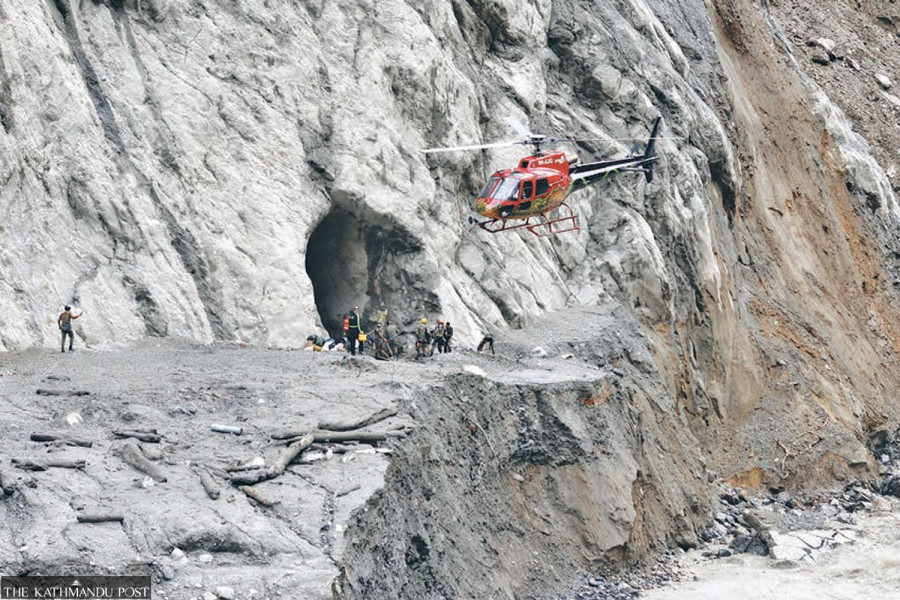
bookmark
Anil Giri
Published at : September 14, 2026
Updated at : September 15, 2026 06:40
Kathmandu
India has approved the export of up to 654 megawatts of electricity to Nepal for 18 hours a day until December 31, following the devastating floods in the Bhotekoshi River on August 26 that damaged a dozen power projects, including transmission infrastructure.
India’s Ministry of Power said in a statement on Monday that it had approved the export of electricity to Nepal’s power utility, the Nepal Electricity Authority, for 18 hours a day, from midnight to 6pm, from September 13 through December 31. The period coincides with the dry season, when Nepal typically faces a deficit in power production.
The recent floods in the Bhotekoshi River have caused a power shortfall of between 350 MW and 400 MW, and it remains uncertain when the damaged plants will be restored.
Dirghayu Kumar Shrestha, acting managing director of the Nepal Electricity Authority, said Nepal could face a power shortfall during the winter season due to the damage to hydropower projects.
“For the dry season, we had requested India to export additional power to Nepal to meet our demand. They have approved it,” said Shrestha.
Nepal imports electricity from India every winter, when low river and stream flows reduce domestic hydropower generation. The additional approval is therefore expected to help the country manage peak demand during the coming dry season while damaged hydropower projects remain out of operation.
At least six hydropower projects—including Trishuli 3A, Devighat, Middle Trishuli Ganga and Nepal’s largest solar farm, the Nuwakot Solar Electricity Project—were completely damaged by the floods, according to the Independent Power Producers’ Association Nepal.
Likewise, Upper Trishuli 1, Rasuwagadhi, Rasuwa-Bhotekoshi, Langtang Khola, Chilime and Maillung Khola hydropower projects were partially damaged by the floods.
The floods caused an estimated damage of Rs134.69 billion in the energy sector, with losses estimated at Rs17.69 billion, according to the Rapid Damage and Needs Assessment report released by the government recently.
The floods damaged not only generation facilities but also access roads, transmission lines and other supporting infrastructure, making restoration more difficult. The government estimates that restoring the energy and power-grid systems alone will require about Rs390.62 billion.
The disaster has also left hundreds of hydropower workers unaccounted for, while search and rescue operations have continued at several affected project sites.
“The recent floods have caused significant damage to hydropower infrastructure in Nepal, reducing its domestic power generation capacity and creating an additional requirement for electricity. The approval will help Nepal meet its power requirements during this difficult period and further strengthen the close and longstanding energy cooperation between India and Nepal,” India’s Ministry of Power said in its statement.
Despite the damage, Nepal has continued exporting electricity to India during the monsoon season, when domestic hydropower production is normally at its highest.
As the rainy season is not yet over, Nepal is currently exporting around 500 MW of electricity to the Indian market, Shrestha said. The additional power approved by India will be used during the winter season.
At the 13th Nepal-India Energy Secretary-level Joint Steering Committee (JSC) meeting in July, India agreed to allow Nepal to export up to 1,650 MW of electricity to India.
India has approved exports of up to 600 MW through the Muzaffarpur-Dhalkebar 400 kV double-circuit line and up to 54 MW through the Tanakpur-Mahendranagar 132 kV single-circuit line, the Indian Ministry of Power said. The quantum of power to be exported from January 2027 will be reviewed in December 2026.
Multiple cross-border transmission lines of different capacities are under construction between Nepal and India to facilitate future power cooperation. India remains committed to supporting Nepal and strengthening bilateral cooperation in the energy sector, the ministry said.
Nepal and India signed an agreement on January 4, 2024, setting a target of exporting up to 10,000 MW of electricity to India over the next decade. The two countries also agreed to build multiple cross-border transmission lines to facilitate electricity trade.
India’s approval of additional electricity exports is therefore significant not only for Nepal’s immediate winter power requirements but also for the broader bilateral energy relationship.
Anil Giri
Anil Giri is a Chief Sub Editor covering diplomacy, international relations and national politics for The Kathmandu Post. Giri has been working as a journalist for more than two decades, contributing to numerous national and international media outlets.




Most Read from Money

Why does an hour long flight to Dhangadhi cost more than a flight to New Delhi?

Nepal travel agents threaten to stop selling Thailand trips over visa rules
Malaysia rejects Nepal’s demand to open recruitment to all manpower agencies

No school, but a graduation cap for women dairy farmers
Nepal arrests four medical service providers as Malaysia recruitment row deepens
Editor's Picks




E-PAPER | October 25, 2026

×