



 24.12°C Kathmandu
Fri, Sep 4, 2026
Money
Half-filled LPG policy leaves consumers paying more as supply fears ease
Consumers, dealers and bottling companies say the emergency measure introduced during the West Asia conflict has outlived its purpose, adding transport costs and operational burdens while full gas supplies remain unavailable.
bookmark![]()
![]()
![]()
Janak Raj Thapaliya
Published at : July 9, 2026
Updated at : July 9, 2026 14:32
Kathmandu
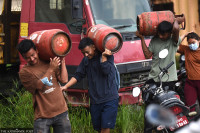
Ram Prasad Chaulagain of Sindhupalchok supports his family by running a tea shop in Shiva Chowk, Gokarneshwor Municipality-6, Kathmandu. These days, his business consumes the equivalent of one cooking gas cylinder every day.
Under normal circumstances, a full cylinder would last him two days. But since the government began distributing half-filled liquefied petroleum gas (LPG) cylinders in mid-March following the escalation of the West Asia conflict, he has had to buy the equivalent of half a cylinder every day.
Each time he transports a cylinder from the depot to his shop, it costs him Rs100. Buying half-filled cylinders has therefore increased his transport expenses by around Rs1,500 a month. Had he been able to purchase full cylinders, he says, he would have saved that amount in delivery charges alone.
Chaulagain's experience is far from unique.
Consumer advocates say the government's continued policy of distributing half-filled LPG cylinders is costing consumers across Nepal millions of rupees every day in unnecessary transport expenses, while also forcing them to spend additional time and effort collecting fuel.
The government introduced the policy on March 13 after the escalating conflict involving Iran, the United States and Israel raised concerns over global petroleum supplies.
As fears of shortages spread, consumers rushed to stockpile LPG cylinders. To prevent panic buying and ensure gas reached more households, the Nepal Oil Corporation (NOC) decided to distribute LPG in half-filled cylinders.
While consumers acknowledge that the policy helped ease shortages at the time, they argue there is no justification for continuing it now that concerns over an immediate gas shortage have eased.
In several hill and mountain districts, the additional transport cost has made the policy even more burdensome. A half-filled cylinder officially costs Rs1,030.
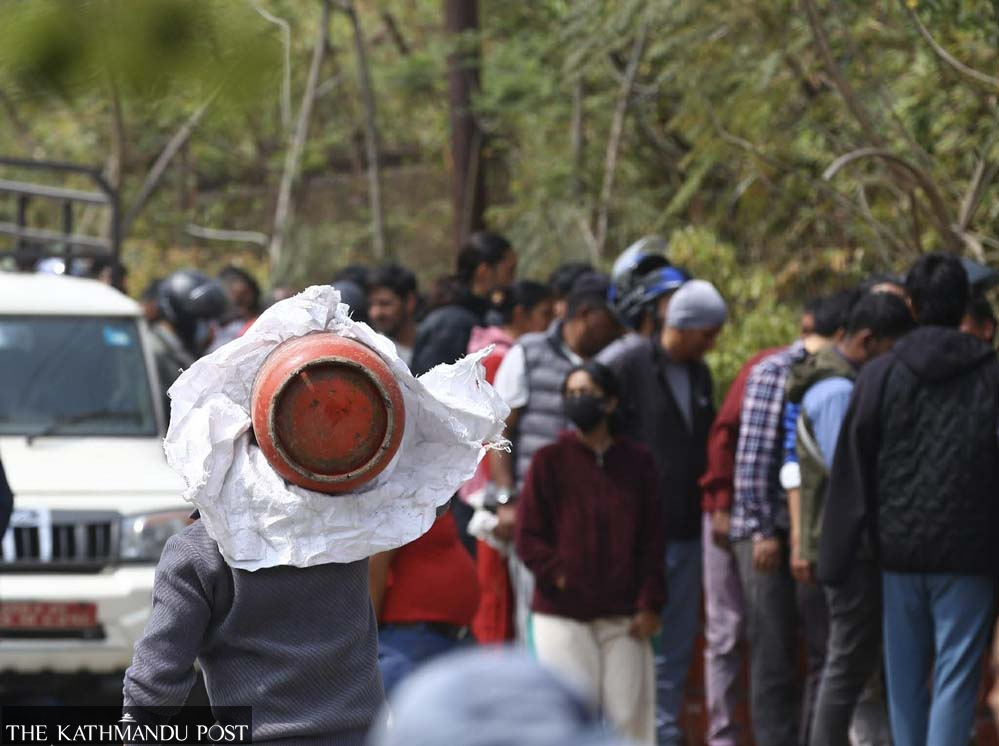
In Simkot, the district headquarters of Humla, consumers pay Rs1,700 for a half-filled cylinder. In Birendranagar, the provincial capital of Karnali Province, the price rises to Rs1,730 after transport charges are added.
“Earlier, a full cylinder cost between Rs2,500 and Rs2,800,” said local schoolteacher Man Bahadur Rokaya. “Now there is no certainty about either the weight or the price. A half-filled cylinder should cost between Rs1,200 and Rs1,400.”
Humla is not the only district affected. Consumers in tourism-dependent mountain districts such as Solukhumbu, Manang and Mustang also face transport charges that are almost equal to the price of the half-filled cylinder itself.
Manoj Thakur, spokesperson for Nepal Oil Corporation Limited, said it was still too early to say when consumers would begin receiving full cylinders again, although discussions on the issue were underway.
According to him, the half-cylinder policy was introduced to manage the gas shortage triggered by the West Asia conflict.
Although the fighting has since eased, India has yet to restore LPG supplies to Nepal to their previous level, he said.
According to Thakur, Nepal will resume distributing full cylinders only after daily imports reach 100 LPG bullet tankers.
“At present, only 70 to 95 bullet tankers enter Nepal each day,” he said. “India has yet to restore the LPG allocation for Nepal and Bhutan to the level it maintained before reducing supplies during the conflict in West Asia.”
Nepal imports LPG from five locations in India. The largest volume comes from the Barauni Refinery, while the remainder is sourced from Mathura, Durgapur, Paradip and Haldia.
Each LPG bullet tanker carries up to 18 metric tonnes of gas, enough to fill around 1,200 cylinders.
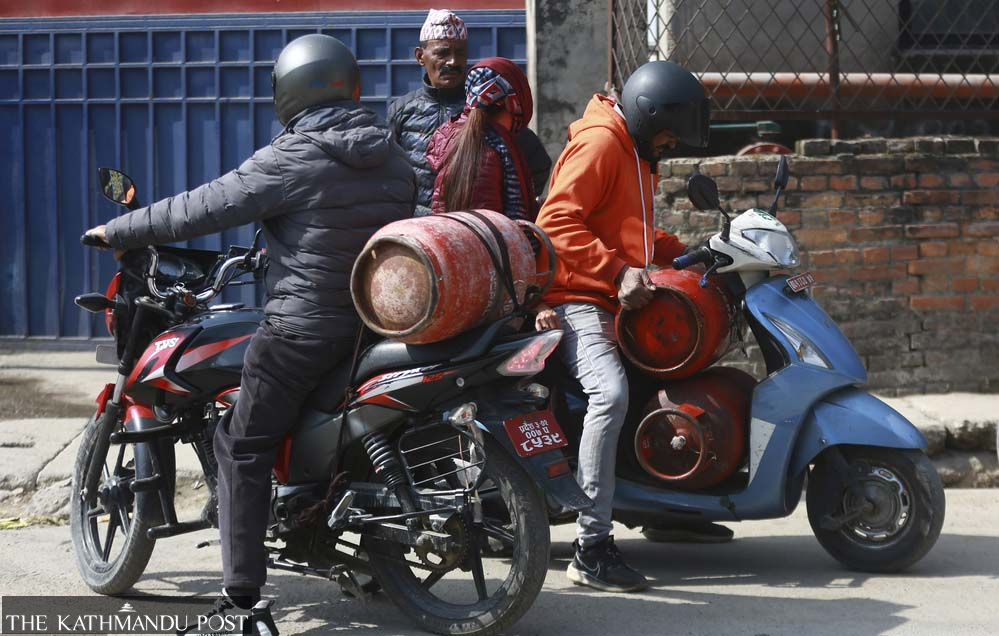
Thakur said the half-cylinder policy was also increasing costs for Nepal Oil Corporation itself.
“Transport costs remain the same regardless of whether cylinders are filled completely or only halfway,” he said.
Madhav Timilsina, chairperson of the Consumer Rights Forum, said the government was unfairly shifting the burden onto consumers by continuing the half-cylinder policy.
He acknowledged that the measure was justified when gas supplies came under pressure because of the conflict in West Asia, but said those circumstances no longer existed.
“Who is benefiting from distributing half-filled cylinders?” Timilsina asked. “Consumers are unhappy. Industrialists are unhappy. Everyone is demanding full cylinders. Who exactly is the government trying to satisfy by continuing this policy?”
According to him, consumers should not have to demand full cylinders because supplying them should already be standard practice.
He said the Ministry of Industry, Commerce and Supplies, Nepal Oil Corporation and LPG industry representatives should immediately hold talks and resolve the issue.
Timilsina also raised safety concerns.
He said LPG is a highly flammable fuel that depends on adequate pressure for proper combustion, and half-filled cylinders do not always maintain sufficient pressure.
Consumers have also complained that cylinders containing 7.1 kilograms of gas do not perform as efficiently as the standard 14.2-kilogram cylinders, he added.
Timilsina said consumers were also being forced to spend more on transporting gas.
During the summer, lower gas consumption has allowed industries to continue supplying half-filled cylinders. However, he warned that the system would become increasingly difficult to sustain during winter, when demand rises sharply.
If Nepal Oil Corporation and the ministry fail to resolve the issue, he said, the Prime Minister should intervene directly.
Diwan Bahadur Chand, president of the Nepal LP Gas Industry Association, said the half-cylinder policy had also created serious operational and financial problems for LPG bottling companies.
According to him, LPG bullet tankers arriving from India are often forced to wait for days, and sometimes weeks, before they can offload because bottling plants take much longer to process half-filled cylinders.
Companies have to bear the cost of keeping those tankers idle while waiting to offload.
Even after the gas is offloaded, the workload inside bottling plants has effectively doubled.
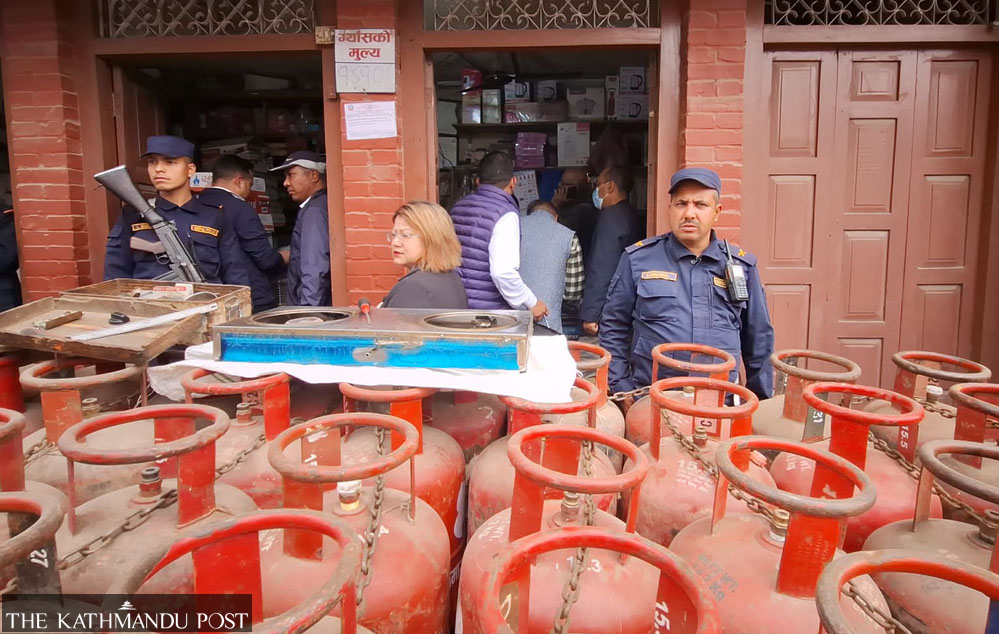
“Instead of filling 2,500 cylinders, we now have to fill 5,000 cylinders to distribute the same amount of gas,” Chand said. “The labour has doubled. Every cylinder has to be sealed twice, capped twice and handled twice. Transport costs have also increased. Whether a cylinder is full or half full, the truck carries the same number of cylinders, so transport costs remain unchanged. Yet Nepal Oil Corporation pays us commission only for half-filled cylinders.”
Although half-filled cylinders are being supplied to the market, overall gas consumption has remained unchanged, forcing bottling companies to hire additional trucks for distribution, he said.
According to Chand, dealers are also bearing additional costs.
They receive commission only for half-filled cylinders even though onloading, offloading and handling expenses remain unchanged. Consumers ultimately shoulder those additional costs.
“Until recently, consumers only had to pay transport charges for one cylinder,” he said. “Now they have to pay transport costs twice. In remote areas, where cylinders are transported more than 50 kilometres, Nepal Oil Corporation even allows dealers to add transport charges. In the end, it is consumers who bear the burden.”
Chand said industry representatives had repeatedly raised the issue with Nepal Oil Corporation.
“We have formally informed the corporation many times,” he said. “We have already held discussions with its representatives 10 or 12 times. But for some reason, they simply do not want to listen. We have informed the secretary at the Ministry of Industry, Commerce and Supplies, who chairs the corporation's board of directors. We have also spoken to the minister. We have taken the issue to everyone within our reach. They never reject our concerns outright, but they also never take any action.”
According to Nepal Oil Corporation data, around 100,000 LPG cylinders are consumed in Nepal every day.
To meet that demand, about 90 LPG bullet tankers enter the country daily, Chand said.


Most Read from Money
Nearly 400 Kailash-bound pilgrims out of contact after Rasuwa flash flood
What is the Nepal government’s ‘one-door policy’ for flood relief?
How Nepal is mobilising funds in flood response
Prithvi Highway shutdown puts Kathmandu supplies under pressure
Rasuwa floods weigh on Nepal’s stock market as hydropower, insurers slide
Editor's Picks

What triggered the Rasuwa flood? Scientists piece together a complex chain of events

The floods keep coming. Nepal keeps starting over

In a settlement destroyed by the Bhotekoshi flood, a disabled couple offer strangers the little they have

Nepal working on detailed assessment as Bhotekoshi flood reconstruction could cost up to $5 billion

Rabindra Dhant gave Nepal a reason to smile. Now his camp wants real action behind the praise
E-PAPER | September 04, 2026

×