Nepal forecast to receive above-normal precipitation this winter
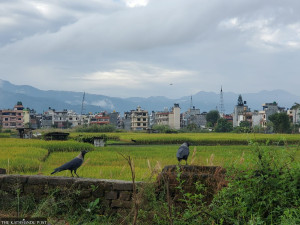
ICIMOD warns of increased rainfall in the foothills and heavier snowfall at higher elevations, raising the risk of floods, landslides and avalanches in parts of the western Himalaya.Post File Photo
Nepal is expected to receive above-normal precipitation this winter, with increased rainfall in the foothills and heavier snowfall at higher elevations, according to a new regional climate outlook by the International Centre for Integrated Mountain Development (ICIMOD).
The HKH Winter Outlook 2026, prepared jointly by ICIMOD, Beijing Normal University and the Institute of Atmospheric Physics of the Chinese Academy of Sciences, forecasts wetter-than-normal conditions across several Hindu Kush Himalaya (HKH) countries, including Nepal, Afghanistan, Bangladesh and northern Myanmar.
The outlook also warns that parts of the western Himalaya could face localised floods, landslides and avalanches as a result of heavy precipitation.
The forecast comes as the US National Oceanic and Atmospheric Administration (NOAA) reports a strong-to-very-strong El Niño, with about a 60 percent chance of it becoming the strongest since records began in 1950. ICIMOD scientists say the climate phenomenon could bring more rain to the Himalayan foothills and more snow to higher elevations.
The projections come after a monsoon season marked by particularly destructive events in Nepal and Bhutan, including disasters linked to changes in glaciers and permafrost in high mountain areas.
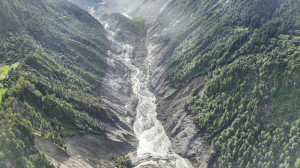
In Nepal, a devastating rock-ice avalanche struck Rasuwa district in August 2026. The disaster is estimated to have cost the country $4.7 billion in relief and reconstruction, according to the National Disaster Risk Reduction and Management Authority.
The outlook also projects deeper-than-normal snow in parts of Nepal, Afghanistan, Pakistan and northern India. In contrast, shallower snow levels are expected in parts of Bhutan and eastern Xizang, China.
Snow depth is an important indicator of future river flows and helps determine water availability for the coming year. Lower-than-normal snow levels can affect irrigation and hydropower production and contribute to reduced spring flows.
Sarthak Shrestha, lead author of the report, said countries needed to share information and coordinate their response because weather systems and rivers crossed national boundaries.
“Weather systems and rivers do not stop at national borders, and neither should the knowledge we use to understand them,” he said. “By combining regional expertise with advanced prediction methods, this outlook gives all eight HKH countries a common picture of the season ahead, which makes it easier to work together across borders.”
Although the outlook forecasts wetter conditions in Nepal and several other parts of the HKH, some areas of the wider region are expected to experience dry spells, leaving grass and other vegetation vulnerable to fires. The report identifies high to very high forest and grassland fire risks in southeastern Xizang and parts of Myanmar.
Manish Shrestha, a hydrologist at ICIMOD, said disaster preparedness should not end with the monsoon season.
“Preparedness cannot end with the monsoon. As rainfall becomes more erratic and intense, local authorities need seasonal outlooks to plan and short-range local forecasts to decide when and where to act,” he said.
ICIMOD will discuss the findings of the HKH Winter Outlook 2026 at an international conference, ‘Advancing Science, Policy, and Regional Cooperation for the HKH Cryosphere’, in Kathmandu from November 25 to 27.
The conference is part of the UN Decade of Action for Cryospheric Sciences (2025–2034). It will bring together scientists and policymakers from across the region and beyond to agree on priorities for monitoring, early warning and regional cooperation.




 21.12°C Kathmandu