United Nations Secretary-General António Guterres on Wednesday called for urgent climate action, increased financial support for developing countries and stronger international cooperation, warning that the climate crisis is advancing faster than efforts to contain it.
Addressing the COP31 Leaders’ Summit in Antalya, Türkiye, Guterres said global emissions reached record levels in 2025 and that the last four years were the hottest on record. He warned that the world would inevitably exceed the 1.5-degree Celsius temperature threshold set by the Paris Agreement, but said it could still limit the scale and duration of the overshoot.
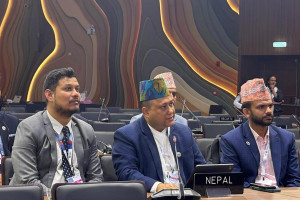
His remarks come as Nepal and other climate-vulnerable countries seek greater international recognition of the threats facing mountain regions, including accelerated glacier melt, permafrost degradation and climate-induced disasters.
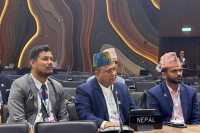
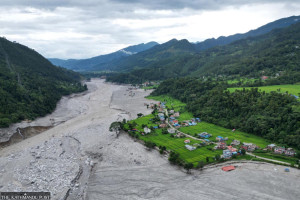
At COP31, Nepal, alongside Kyrgyzstan and other mountain countries, has been pressing for a separate Himalayan agenda, arguing that mountain ecosystems and communities need greater recognition in global climate negotiations. Nepal’s recent devastating floods have further exposed the vulnerability of Himalayan communities and infrastructure to extreme climate events.
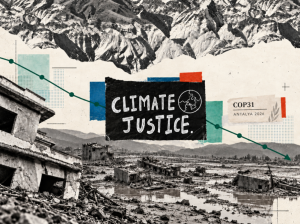
Guterres described climate justice as the defining challenge of the next decade, saying developing countries could not be expected to transform their economies without access to the finance and technology needed to do so.
“Climate justice is the defining challenge of the next decade,” he said.
Emerging and developing economies outside China account for nearly two-thirds of the world’s population but receive less than one-fifth of global clean-energy investment, Guterres said. They also pay two to three times more to borrow, making the shift to clean energy and investment in climate adaptation more difficult.
He proposed a new Climate Justice Compact built around shared responsibility, shared security and shared benefits. Developed countries, he said, must accelerate emissions cuts and deliver promised climate finance and technology, while developing economies should speed up their transition from fossil fuels to renewable energy.
Guterres outlined four priorities: a just transition away from fossil fuels, protection of vulnerable communities, adequate and affordable climate finance, and stronger international cooperation.
He urged developed countries to provide at least $300 billion annually by 2035 and called for adaptation finance to be tripled by the same year. He also stressed that the broader $1.3 trillion climate finance goal must translate into actual funding for developing countries.
For Nepal, greater access to adaptation finance, early warning systems and loss-and-damage support is crucial as climate-related disasters increasingly threaten lives, livelihoods and infrastructure.
Guterres said everyone should be covered by an early warning system and every community protected from floods, droughts and rising seas. He also called for greater support for vulnerable countries when adaptation measures reach their limits.
He urged governments to accelerate the deployment of renewable energy, saying global renewable capacity must at least triple from 2025 levels by 2035, while unabated coal power must fall by at least 75 percent.
Warning that geopolitical rivalries and fragmentation could undermine progress, Guterres said climate negotiations must deliver tangible results.
“Negotiations matter—but success must be measured on the ground,” he said.
Anil Giri is a Chief Sub Editor covering diplomacy, international relations and national politics for The Kathmandu Post. Giri has been working as a journalist for more than two decades, contributing to numerous national and international media outlets.




 8.12°C Kathmandu