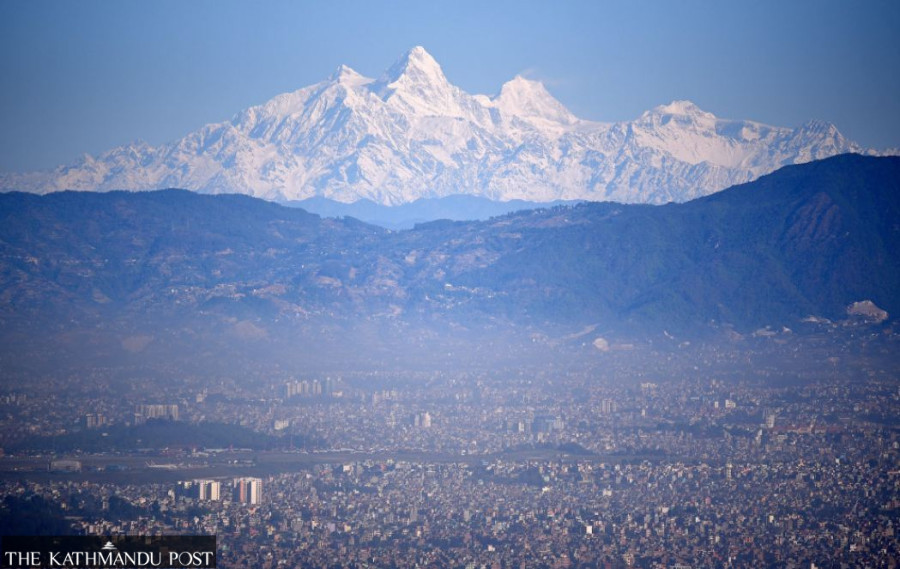
Low rainfall and rising temperatures threaten crops, water supply, and air quality across Nepal, say experts. Nepal is one of the world’s most vulnerable countries to the climate crisis and has witnessed extreme weather events in the past decade and a half. Post file photo
Nepal is likely bracing a dry and warmer-than normal winter this year, marking the fourth consecutive year of such conditions.
According to a winter outlook issued by the Climate Division under the Department of Hydrology and Meteorology, most parts of the country are likely to witness less rainfall than normal during the three months of winter (December to February). Likewise, both minimum and maximum temperatures may remain above average during this period.
Nepal is one of the world’s most vulnerable countries to the climate crisis and has witnessed extreme weather events in the past decade and a half.
Evidence indicates that the maximum temperature in Nepal is rising at a greater rate (0.05 degrees Celsius per year) than the minimum temperature (0.03 degrees Celsius per year).
Experts say below average rainfall, above average maximum and minimum temperatures during winter season causes drought like conditions, which directly affects the agriculture, environment and overall economy of the country.
“Due to the effects of global warming and climate change, Nepal has been experiencing severe adverse effects for the last several years,” said Bibhuti Pokharel, spokesperson at the department. “For the last four consecutive years we have been witnessing dry and warm winters.”
Experts say that drought conditions during winter affects production of winter crops, dried water resources including streams in the hilly regions, which causes drinking water woes to the locals. Continuous drought also affects farmers involved in animal husbandry, increased risk of forest fires and also rises air pollution.
“Less snow in the mountains, and above average temperatures mean snow will not last long,” said Pokharel. “Agriculture in mountainous regions depends on snow, and when snow doesn't fall sufficiently, crop yields decline.”
Moreover, air pollution, which has already been rising, is expected to worsen in the coming weeks.
According to the forecast, northern parts of Sudurpaschim and Karnali provinces and north-western parts of Gandaki province, have an equal chance of below normal, normal, or above normal rainfall. There is 55 to 65 percent chance of below normal rainfall in the eastern and southern parts of Sudurpaschim province, the southern parts of Karnali province, western parts of Lumbini province, southern parts of Bagmati province, northern parts of Madhesh province and in the central parts of Koshi province.
Similarly, other areas, including central parts of Sudurpaschim and Karnali provinces, the central and eastern parts of Lumbini province, eastern parts of Gandaki province, central and northern parts of Bagmati province, southern parts of Madhesh province and some areas of Koshi province have a 45 to 55 percent chance of below average normal rainfall. The rest of the country has a 35 to 45 percent chance of below average rainfall.
Maximum temperatures in most parts of the country are expected to remain above normal during the entire winter. Northern and southeastern parts of Gandaki province, southern parts of Bagmati province and northern and southwestern parts of Koshi province have a 55 to 65 percent probability of above-normal maximum temperature, the forecast said.
Northern parts of Karnali Province, north-eastern parts of Lumbini province and remaining areas of Koshi, Bagmati and Gandaki provinces could also witness above normal maximum temperatures with a 45 to 55 percent probability. Sudurpaschim province, southern parts of Karnali have a 35 to 45 percent chance of above-normal maximum temperatures.
Minimum temperatures are likely to be above normal in most parts of the country during winter.
Erratic weather patterns—extreme rainfall in a short span of time, lack of rains for months, continued rain for several days and other unusual weather events—caused by climate change have become frequent in Nepal, affecting thousands of people and threatening livelihoods.
Hilly areas have been witnessing more incidents of landslides. Scores of people throughout the country get killed and injured in the floods and landslide incidents every year.




 19.64°C Kathmandu